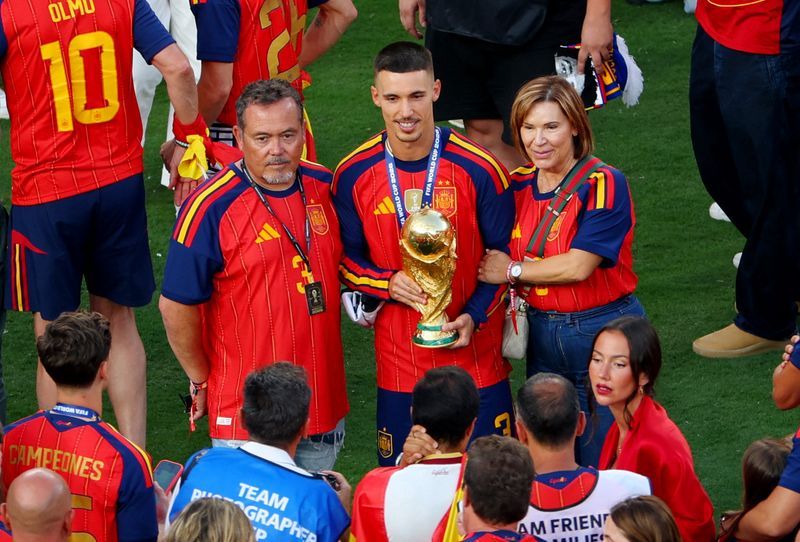
Spain's 1-0 victory over Argentina at East Rutherford, New Jersey on July 19 crowned the Spanish national team as World Cup champions, validating a footballing philosophy that prioritises control, precision and collective responsibility over individual brilliance. The triumph represented far more than a sporting achievement; it demonstrated how a coherent tactical vision, patiently constructed over years, could withstand pressure and deliver when stakes reached their highest. From the opening whistle to the final moment of extra time, Spain's approach remained consistent: pass, probe, maintain possession and protect the ball as though it were a national treasure, refusing to deviate from their core principles even as Argentina pressed and the clock threatened to extend into a penalty shootout.
The winning goal, scored by substitute Ferran Torres after an assist from fellow replacement Nico Williams, encapsulated the values Luis de la Fuente had instilled throughout the tournament. This was the third occasion in the knockout rounds that Spain had struck a decisive blow through players introduced from the bench, illustrating that the side functioned as an orchestrated unit rather than a constellation of star names. No individual player held supreme importance; rather, everyone understood their role within a larger system. The bench players possessed the same tactical literacy and commitment to the passing game as those who started, ensuring seamless transitions and consistent application of strategy regardless of personnel changes.
Statistics painted a picture of overwhelming Spanish control. Spain finished the match with possession exceeding 65 percent, registered 12 shots on target and completed more than twice as many passes as their opponents. Argentina, by contrast, recorded their first attempt on goal near the conclusion of extra time and that effort sailed wide of the target. This disparity reflected not luck or fortune but rather Spain's systematic approach to dictating play and limiting Argentina's attacking opportunities through superior positioning and ball retention. The Spanish defence, organised and disciplined, afforded their opponents minimal space and time to create dangerous situations.
Yet domination alone did not guarantee victory. Spain's familiar vulnerability surfaced repeatedly: the absence of a classical, prolific centre forward resulted in numerous created chances that went unconverted. Throughout eight matches, this shortcoming cost them goals that might have secured victories by comfortable margins rather than the narrow final score. The Achilles' heel remained exposed, suggesting that while Spain's collective defensive and midfield architecture operated with near-perfect coordination, the final third occasionally lacked the clinical efficiency that transformed possession into multiple goals. Nevertheless, the team's wider structural certainty and defensive solidity compensated, allowing them to win despite this inherent weakness.
Individual accolades reinforced Spain's team-oriented narrative. Pau Cubarsi received the Young Player award, Unai Simon claimed the Goalkeeper honour and Rodri was named the tournament's Most Valuable Player, with only the Golden Boot eluding Spanish hands as it went to France's Kylian Mbappe. This distribution of recognition mirrored Spain's scoring profile across the group stage and knockout rounds. Fourteen goals across eight matches came from eight different players, demonstrating that multiple individuals contributed meaningfully to the attacking effort. This pattern directly echoed their European Championship success in 2024, when sixteen goals came through ten different scorers, establishing a hallmark of their current generation.
The victory extended Spain's unbeaten sequence to 38 consecutive matches, surpassing Italy's previous record and underscoring three years of sustained excellence in international football. This run represented sustained performance across varying opponents, conditions and tournament pressures, validating the depth and consistency of De la Fuente's methodology. The streak itself became secondary to what it symbolised: a team that had eliminated randomness through superior preparation and execution, that could absorb pressure and respond with composure.
De la Fuente's personal journey added narrative weight to the achievement. Once dismissed by sections of Spanish media as Luis de la "Who," the coach had spent much of his career in the Spanish Football Federation's youth development structures, building expertise and understanding of talent cultivation away from the spotlight. His patient apprenticeship in youth football proved invaluable when elevated to the senior role, as he carried sophisticated understanding of player development and tactical education into the national team environment. The World Cup triumph vindicated this unconventional path and suggested that deep knowledge of talent systems and long-term planning could outweigh the prestige associated with prominent club positions.
Spain's squad composition reflected the nation's geographic and cultural composition in ways that transcended mere symbolism. Players from the Basque Country including Mikel Oyarzabal, Unai Simon and Mikel Merino shared squad space with Borja Iglesias from Galicia, Ferran Torres from Valencia, Rodri from Madrid, Fabian Ruiz and Gavi from Andalucia and Pedri from the Canary Islands. Catalonia alone produced nine squad members including Cubarsi and Marc Cucurella. Lamine Yamal and Nico Williams represented newer Spain, children of immigration whose integration into elite football reflected broader social evolution. Rather than regional identities creating fractures or competing loyalties, they became strengths woven into a unified whole.
Spain's historical identity rests on existing as a collection of distinct smaller nations, each possessing separate languages, traditions and historical narratives. Football, on the night of July 19, accomplished what political dialogue frequently cannot achieve with such completeness. The tournament and the victory united these disparate regional identities not through erasure but through collective pride in shared achievement. The differences did not disappear; they were simply recontextualised from obstacles into sources of richness. For at least one night, football had rendered Spain whole in a way that transcended the usual divisions and competitions between regions. The World Cup trophy became a symbol not merely of sporting excellence but of a nation discovering unity through the beautiful game.
For Southeast Asian observers, Spain's triumph offers instructive lessons in how patient construction of tactical systems, investment in youth development structures and commitment to a coherent philosophy can produce sustained excellence. The Spanish model demonstrates that individual superstardom, while valuable, need not be the cornerstone of international success. Rather, systematic development, clear tactical identity and the cultivation of multiple contributors across different regions and backgrounds can generate winning teams that prove more resilient and adaptable than sides built around isolated brilliant individuals.

