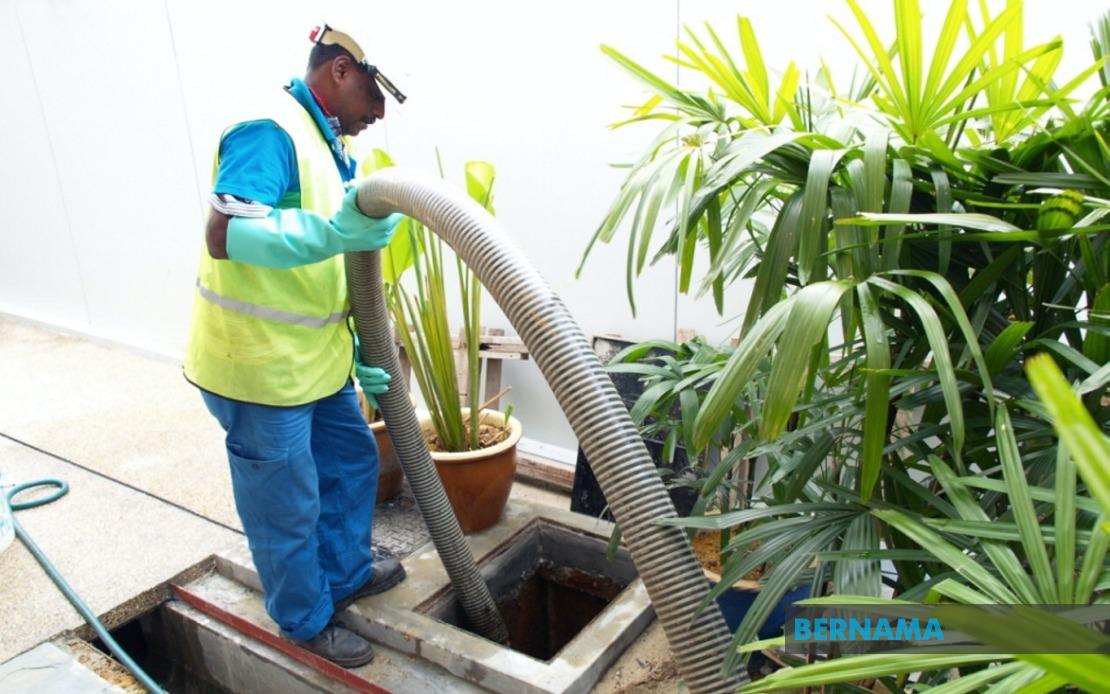
The National Water Services Commission (SPAN) has intensified its enforcement campaign against deteriorating sanitation infrastructure in Sungai Petani, issuing 270 compliance notices to premises owners who have neglected their septic tank maintenance obligations. The sweeping action, conducted as part of Operation Padi 2 between August 4 and 6, revealed widespread non-compliance with wastewater disposal regulations across the commercial and residential zones in this Kedah town.
The enforcement operation inspected 341 properties in the business area, comprising 242 commercial establishments and 99 domestic residences. All of these properties were found to be in violation of earlier notices issued by Indah Water Konsortium Sdn Bhd (IWK), the designated sewerage operator responsible for managing wastewater systems in the region. According to Ainal Yusman Mohamad Yusop, director of SPAN's Operations Division Enforcement Section, the compliance notices represent a formal step in a graduated enforcement response against property owners who have failed to fulfil their statutory obligations.
The scale of the problem extends well beyond simple administrative lapses. SPAN's investigation uncovered that a substantial proportion of the inspected premises date from the 1970s and 1980s, and crucially, many of their septic tank systems have received virtually no professional maintenance for extended periods. In some cases, records indicate that septic tanks have not been desludged or serviced for more than 15 years, with documentation showing that certain installations last received maintenance in 1997 or 1999—gaps spanning more than two decades. This prolonged neglect poses significant public health and environmental risks, as improperly maintained systems can lead to groundwater contamination, sewage overflow into surrounding areas, and the proliferation of disease vectors.
The regulatory framework governing these obligations is unambiguous. Under Section 65(1)(c) of the Water Services Industry Act 2006 (Act 655), property owners are statutorily required to maintain their septic tank systems by engaging licensed service providers or permit holders to conduct regular desludging operations. This legislative mandate reflects Malaysia's commitment to ensuring that privately-maintained wastewater treatment systems meet minimum standards of operation and public health protection. The law recognises that while centralised sewerage networks serve urban cores efficiently, many commercial and residential premises in developing suburban and semi-rural areas remain reliant on individual septic systems that require ongoing professional management.
Property owners who receive the compliance notice have been given a 14-day response window to take corrective action. This grace period allows premises operators to contact licensed service providers, arrange inspections, and schedule the necessary maintenance work. However, this deadline carries real consequences. Those who fail to act within the stipulated timeframe face escalation of enforcement measures, which may include the issuance of formal notices of offence or the initiation of investigation proceedings by SPAN's regulatory officers.
The penalties for persistent non-compliance are substantial and designed to create sufficient financial incentive for immediate remedial action. Any person found guilty of violating the maintenance requirements under Section 65(1)(c) of Act 655 can face a fine not exceeding RM50,000 upon conviction. For small business operators and individual property owners, such a penalty represents a considerable financial burden and serves as a powerful deterrent against continued non-compliance. The enforcement approach thus combines proportionate warnings with meaningful teeth, reflecting SPAN's intention to move beyond passive regulation toward active compliance management.
The Sungai Petani operation signals a broader shift in how Malaysian water authorities are tackling ageing infrastructure and deferred maintenance across the country. Many commercial properties constructed during the rapid development phases of the 1970s and 1980s were equipped with septic systems designed as temporary solutions pending the eventual extension of centralised sewerage networks. However, that expansion did not always materialise as anticipated, leaving businesses saddled with aging on-site treatment systems that now require increased vigilance and investment to maintain. The failure to keep pace with maintenance schedules reflects both a knowledge gap among property owners regarding their obligations and sometimes deliberate cost-cutting driven by tight business margins.
From a broader public health and environmental management perspective, the Sungai Petani enforcement action underscores challenges facing Malaysian urban and semi-urban development. The country's infrastructure development has historically prioritised headline projects and rapid expansion over the unglamorous but essential work of maintaining existing systems. Septic tank desludging and maintenance lack public visibility compared to new highway construction or shopping mall openings, yet their failure can trigger waterborne disease outbreaks, contaminate drinking water sources, and damage aquatic ecosystems. The financial and reputational costs of such failures eventually exceed the relatively modest investments required for preventive maintenance.
For businesses operating in Sungai Petani and similar areas across Malaysia, the compliance notices represent a critical juncture. Property managers and business owners must now mobilise to engage licensed service providers, often requiring budgetary allocation and operational disruption as tanks are pumped and inspected. Some establishments may discover that their systems require more extensive rehabilitation than simple desludging, potentially triggering capital expenditures that were not anticipated. Nonetheless, compliance is mandatory, and the penalties for continued violation far exceed the cost of professional maintenance services.
The operation also reflects SPAN's resource allocation decisions and enforcement priorities. Water regulators across Southeast Asia typically operate with constrained budgets and must choose where to concentrate their enforcement efforts. The decision to mount a focused, multi-day operation targeting a specific geographic area and sector suggests that SPAN has identified Sungai Petani as a compliance risk zone meriting intensive intervention. This approach, if sustained and replicated in other high-risk areas, could gradually shift the cultural and commercial norms around infrastructure maintenance.
Looking ahead, the success of this enforcement initiative will depend significantly on follow-through and compliance monitoring. If SPAN diligently tracks the 270 notices issued during Operation Padi 2 and swiftly escalates enforcement against non-responsive property owners after the 14-day period expires, the operation will establish credible deterrent effect. Conversely, if notices are issued but enforcement lapses, property owners will rationally discount the regulatory threat and the operation will yield minimal lasting change. Building sustainable compliance requires consistent, visible enforcement over time.
The broader implications extend to discussions about cost-sharing and responsibility for ageing water and sanitation infrastructure in Malaysia. Currently, property owners bear the full cost of maintaining private septic systems, even in areas where centralised sewerage networks remain technically or economically infeasible. As infrastructure ages and maintenance backlogs accumulate, policymakers may need to revisit questions about who should bear these costs and whether targeted subsidies or technical assistance programmes might prove more cost-effective than escalating penalty-driven enforcement. The Sungai Petani operation highlights the practical consequences of leaving such policy questions unresolved.

