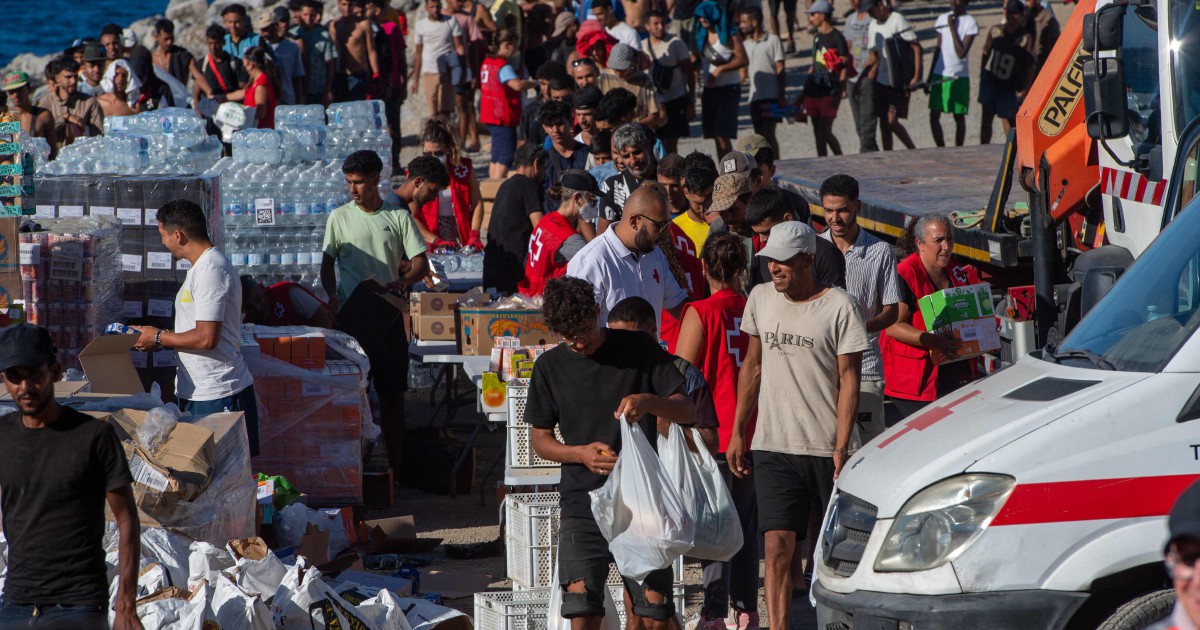
Spain's Prime Minister Pedro Sanchez has cast blame on Russia and Israel for orchestrating a disinformation campaign centred on the country's migration policies, suggesting their efforts played a role in triggering the sudden surge of migrants into the Spanish enclave of Ceuta last month. Speaking on Monday, Sanchez distinguished between the two nations he claimed were responsible for spreading false narratives and Morocco, which he indicated had no apparent involvement in the episode despite historical tensions over cross-border migration flows.
The Ceuta crisis, which saw thousands of migrants attempting to cross into Spanish territory within a compressed timeframe, has become a significant flashpoint in European debates over border security and migration management. The situation prompted immediate diplomatic responses and sparked broader conversations about vulnerability to external manipulation of public opinion surrounding sensitive policy matters. Sanchez's assertion that foreign actors deliberately weaponised false claims about Spain's stance on migration reflects growing international concern about the use of coordinated disinformation campaigns as tools of geopolitical influence.
Russia has been repeatedly implicated in various disinformation efforts across Europe over recent years, particularly regarding divisive social issues that can amplify existing tensions within societies. The Kremlin has demonstrated interest in exploiting migration-related anxieties, which resonate strongly with European electorates and can undermine public confidence in government institutions. By targeting Spain's migration narrative, alleged Russian actors could exploit a policy domain where public sentiment is already fragmented, maximising the potential for domestic discord and questioning of governmental credibility.
The inclusion of Israel in Sanchez's assessment adds complexity to the narrative. Historically, Israel's alleged disinformation activities have been less extensively documented than Russia's, though concerns about Israeli influence operations have emerged in various international contexts. The juxtaposition of Russia and Israel in Sanchez's statement suggests multiple actors with potentially distinct motivations were involved in amplifying or crafting misleading narratives about Spanish migration policy during the critical period preceding the Ceuta incident.
Meanwhile, Sanchez's explicit statement that Morocco bore no responsibility for the disinformation carries diplomatic significance. Spain and Morocco have experienced recurring tensions over migration, with the North African nation sometimes accused of permitting or facilitating migrant movement as a pressure tactic. By formally exonerating Morocco from the disinformation allegations while implicating distant powers, Sanchez may be attempting to isolate the misinformation narrative from bilateral relationships that require careful management for regional stability and cross-border cooperation on security matters.
The distinction drawn by the Spanish government underscores how disinformation operates as a distinct phenomenon from the underlying policy issues themselves. Even if Morocco's role in actual migrant movements might be contested, Sanchez appears to be separating the question of who actually facilitated crossing from the separate matter of who deliberately spread false claims designed to inflame public perception. This nuance is important for understanding how external powers can magnify crises without necessarily creating them from scratch.
For Southeast Asian observers, the Spanish experience illustrates how migration—a regional reality across the broader Asia-Pacific landscape—can become entangled with disinformation campaigns orchestrated by distant geopolitical competitors. Southeast Asian nations regularly grapple with irregular migration flows, maritime incursions, and border management challenges, making them potentially vulnerable to similar manipulation of narratives designed to undermine public trust in government handling of security matters. The Spanish precedent suggests that authorities should remain vigilant about distinguishing between genuine policy challenges and externally amplified distortions thereof.
The technical infrastructure supporting such disinformation campaigns typically involves networks of social media accounts, fabricated news websites, and coordinated messaging designed to appear organic while serving centralised objectives. Tracing the origin and reach of such campaigns requires sophisticated intelligence capabilities, which explains why Sanchez's government would need time to develop credible assessments. The allegations represent conclusions drawn after investigation rather than immediate reactions, lending them some weight despite the absence of comprehensive public documentation at the time of his statement.
Integration of these findings into broader security frameworks remains pending. European Union institutions may incorporate Sanchez's allegations into wider assessments of foreign interference threats, potentially triggering coordinated responses across member states. For countries dependent on intra-European security coordination and information sharing, the implications extend beyond Spain itself, as disinformation networks rarely limit themselves to single targets or discrete regions.
The Ceuta episode ultimately demonstrates how modern migration challenges intersect with information warfare, creating layered crises that demand simultaneous responses addressing both the physical migration phenomenon and the narratives surrounding it. Governments must now operate within an environment where policy decisions on inherently contentious matters like migration occur under constant bombardment from competing narratives, some originating from hostile foreign powers invested in maximising domestic disruption.
For Malaysia and other Southeast Asian states with complex migration dynamics, the Spanish case study reinforces the necessity of investing in domestic media literacy, fact-checking capacity, and intelligence capabilities focused on identifying coordinated disinformation. The recognition that Russia and Israel—geopolitically distant from Spain—wielded influence over narratives about Spanish migration policy suggests that Malaysian authorities similarly cannot assume geographical distance provides automatic protection against foreign manipulation of public discourse surrounding border security, refugee policy, and irregular migration flows.

