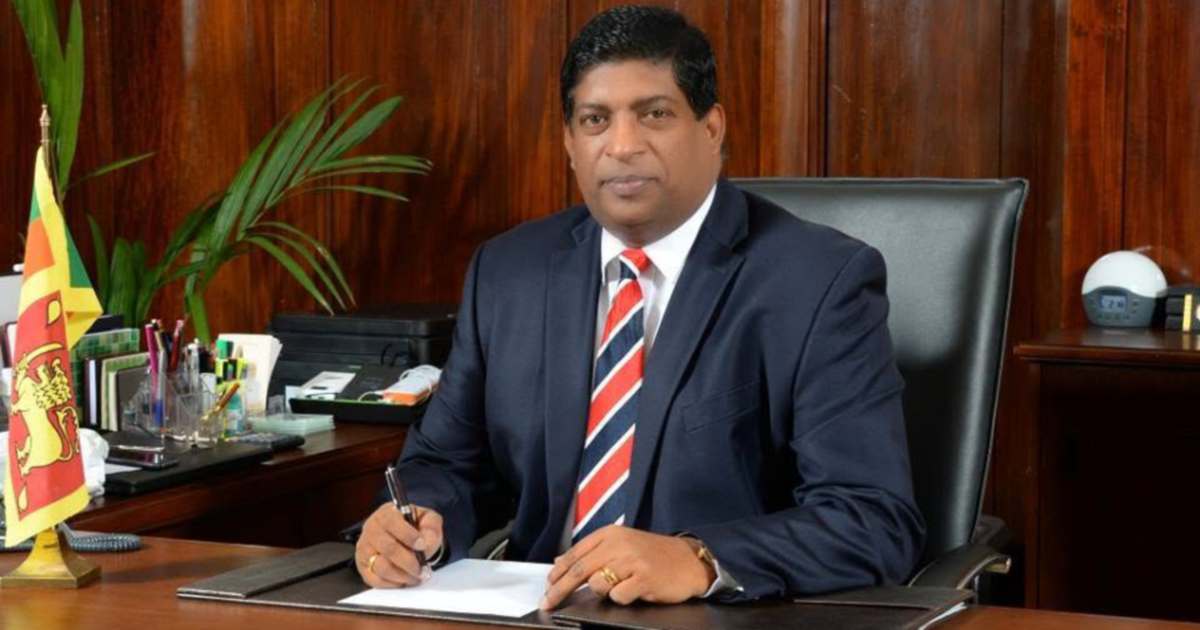
Sri Lanka's former finance minister Ravi Karunanayake was taken into custody on Monday following allegations that he inappropriately diverted state resources to remunerate employees working at his private enterprises, according to the nation's principal anti-corruption body. The arrest marks a significant escalation in prosecutorial efforts targeting alleged financial malfeasance within the country's upper echelons of government.
The allegations centre on Karunanayake's alleged practice of channelling public money through official channels to cover salaries and operational costs associated with his private business interests. Such actions, if substantiated, would constitute a serious breach of fiduciary duty and statutory obligations governing the handling of government finances. The charges underscore persistent concerns about the blurred boundaries between personal and state assets within Sri Lanka's administrative apparatus.
Karunanayake, who previously held the influential finance portfolio, occupies a prominent position within the country's political establishment. His detention represents a notable moment in Sri Lanka's ongoing efforts to demonstrate commitment to anti-corruption governance, particularly following sustained international scrutiny of fiscal management practices and transparency standards. The timing carries political significance as the nation navigates complex economic challenges and seeks to rebuild institutional credibility.
The anti-corruption agency's decision to pursue charges against a former cabinet-level official indicates a willingness to apply investigative pressure regardless of political rank or historical influence. This represents a departure from historical patterns where high-ranking officials frequently escaped formal accountability despite allegations of impropriety. The move may signal shifting political dynamics and institutional independence within Sri Lanka's oversight mechanisms.
Critical questions emerge regarding the scope and scale of alleged irregularities. Investigations typically reveal whether misconduct was isolated or systematic, and whether other officials participated in similar practices. The investigation's breadth will prove crucial in determining whether reforms address endemic structural problems or merely address individual instances of wrongdoing within the system.
For regional observers, particularly in Southeast Asia, the Karunanayake case exemplifies the broader challenge confronting post-conflict and economically vulnerable states attempting to strengthen governance standards. Many nations in the region struggle with similar concerns regarding the compartmentalisation of public and private financial interests among senior political figures. Sri Lanka's enforcement approach may provide either an encouraging precedent or a cautionary lesson depending on the investigation's ultimate direction and political pressures that emerge.
The arrest occurs amid Sri Lanka's broader endeavour to rehabilitate its international reputation following economic crisis and civil conflict. Enhanced anti-corruption enforcement serves dual purposes: genuinely constraining improper conduct whilst simultaneously projecting commitment to institutional reform to foreign investors and multilateral lenders. This dual imperative creates complex incentives that shape how enforcement decisions are publicised and pursued.
Financial accountability mechanisms represent critical infrastructure for any nation seeking sustained economic recovery. Investor confidence depends partly on demonstrated capacity to prevent elite capture of public resources. Sri Lanka's willingness to arrest a prominent former finance minister may provide marginal reassurance to international stakeholders, though sustained enforcement momentum and conviction rates ultimately determine whether such actions constitute genuine systemic reform or performative gestures.
The broader implications extend beyond individual accountability to questions about institutional capacity. Effective anti-corruption prosecution requires sophisticated investigative resources, forensic accounting capabilities, and judicial independence insulated from political pressure. Whether Sri Lanka possesses adequate institutional architecture to sustain complex financial crime investigations through to successful convictions remains an open question that observers should monitor carefully.
Casework of this complexity typically requires extensive documentary evidence, witness testimony, and technical analysis to establish clear nexus between alleged misconduct and specific individuals. The investigation's progression will reveal whether authorities possess sufficient evidentiary materials to build compelling prosecutorial cases or whether obstacles emerge that compromise investigative momentum, a common pattern in developing economies' anti-corruption efforts.
Regional economic observers note that Southeast Asia's development trajectory increasingly depends on transparent institutional governance and effective rule of law mechanisms. Sri Lanka's anti-corruption enforcement signals either institutional maturation or tactical repositioning depending on subsequent developments. Sustained pressure against corruption regardless of political consequences would represent meaningful progress; selective enforcement targeting political opponents would merely perpetuate cycles of cynicism regarding official accountability.
The international community's response to Karunanayake's arrest and the investigation's subsequent trajectory will substantially influence perceptions of Sri Lanka's governance trajectory. Transparent procedures, credible evidence presentation, and consistent enforcement regardless of political status constitute essential components of demonstrable institutional reform. Whether Sri Lanka's anti-corruption mechanisms meet these standards will carry implications extending far beyond this individual case.

