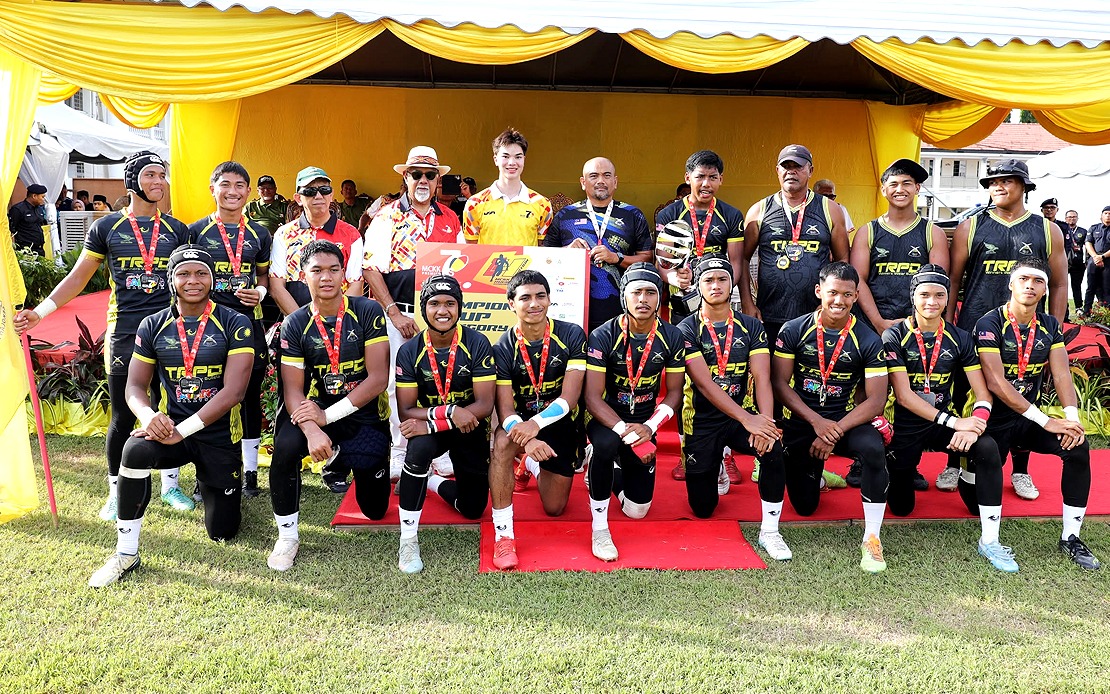
Sekolah Sukan Malaysia Pahang (SSMP) has secured the MCKK Premier 7s rugby championship for the second consecutive year, maintaining their dominance in Malaysian school rugby after a tightly fought 19-14 victory over Sekolah Sukan Tunku Mahkota Ismail (SSTMI) in the Cup final. The match, contested on the Malay College Kuala Kangsar (MCKK) field in Perak, showcased the calibre of rugby talent emerging from Malaysia's premier sports schools, with both teams demonstrating the technical proficiency and tactical awareness expected of the nation's elite youth players.
The triumph represents SSMP's second consecutive hold on the NJ Ryan Trophy, a distinction that underscores the consistency and competitive strength the Pahang institution has cultivated in recent seasons. The fact that the defending champions faced SSTMI once again in the final speaks to a deeper pattern in Malaysian school rugby, where success tends to concentrate among institutions with dedicated sports development frameworks and robust coaching structures. SSMP's repeat victory signals that the school has successfully maintained squad depth and playing standards despite the natural turnover that occurs annually in secondary education.
What made this year's encounter particularly significant was the quality of play on display. Rather than a one-sided affair, the match evolved into a compelling test of nerve and execution, with both teams generating attacking opportunities and neither side able to establish commanding dominance. SSMP's ability to manage the pressure while protecting their advantage through to the final whistle demonstrated not merely technical skill but also the mental resilience required at the highest levels of school sport. This dimension—the psychological edge—often separates champions from strong contenders in closely matched competitions.
The broader MCKK Premier 7s tournament, now in its 14th edition, functions as a barometer for school rugby development across Malaysia. The multiple competition tiers—Cup, Plate, Bowl, and Shield divisions—allow schools of varying experience levels to participate meaningfully, creating a comprehensive ecosystem rather than a tournament restricted to the established elite. This structural approach has strengthened the overall standard of rugby in Malaysian schools by providing pathways for developing institutions to test themselves against more established programs.
In the Plate competition, SMK Tun Hussein Onn (THOR) captured the title through a 24-19 victory over Sekolah Sultan Alam Shah (SAS), suggesting that competitive depth extends beyond the traditional powerhouses. The match score indicates a tournament where scorelines remain tight across categories, reflecting improved coaching and player development at secondary school level nationwide. THOR's triumph provides encouragement to schools seeking to graduate from developing status toward championship contention.
The Bowl division saw SMK Hosba (HOSBA) emerge victorious with a 17-12 win against SMK Syed Sirajuddin (SEMSIRA), further demonstrating the spread of competitive capability. These middle-tier competitions serve an educational purpose beyond mere trophy acquisition, allowing younger or less-established programs to build confidence and experience on a platform where success remains achievable without the overwhelming resources required to compete for Cup honours. The progression from Bowl to Plate to Cup represents a realistic developmental trajectory for ambitious schools.
MRSM Balik Pulau (MRSMBP) asserted dominance at the Shield level with a commanding 22-0 shutout victory over Royal Military College (RMC), highlighting the variance in playing standards across competition categories. While this scoreline might suggest a mismatch, Shield-level rugby serves to integrate newer or less-developed programs into the tournament structure, fostering long-term growth within the sport. The military college's participation, despite the heavy defeat, reflects a commitment to school rugby across Malaysia's diverse institutional landscape.
The ceremony concluding the tournament carried symbolic significance beyond the distribution of trophies. Raja Datuk Seri Azlan Muzaffar Shah, representing the Sultan of Perak, presided over the closing proceedings and prize presentations. Royal patronage of school sports events reinforces their importance within Malaysia's educational and cultural framework, signalling that athletic excellence among young people receives institutional recognition at the highest levels. Such official engagement helps legitimise school rugby within a national context where certain sports command more established followings.
For Malaysian school rugby, the implications extend beyond Perak. The tournament's consistently high standards and broad participation reflect the sport's growing infrastructure in secondary education. Regional variations in rugby development are gradually narrowing as more schools invest in coaching, training facilities, and player pathways. The diversity of participating schools—from specialized sports institutions like SSMP to traditional academic establishments—demonstrates rugby's expanding appeal across different educational contexts. This broadening base strengthens the talent pipeline feeding into universities and club rugby, ultimately benefiting Malaysia's national team development.
SSMP's back-to-back championships carry particular weight as evidence that sustained success in school rugby requires institutional commitment beyond single seasons. Maintaining competitive standards while managing player transitions annually remains challenging, suggesting that SSMP's sporting administration deserves recognition alongside its playing personnel. The school's success provides a model that other institutions seeking to build rugby programs can study, potentially accelerating the development of additional powerhouses across different regions. Malaysia's rugby aspirations at senior levels depend fundamentally upon the quality of youth development demonstrated by schools competing in tournaments such as the MCKK Premier 7s.

