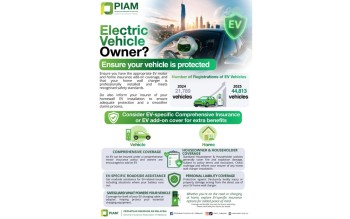
Following a recent residential fire in Cheras caused by an electric vehicle home charger, Malaysia's insurance industry has moved to clarify consumer protections and coverage gaps in the current policy landscape. The General Insurance Association of Malaysia (PIAM) issued guidance through its chief executive Chua Kim Soon, addressing widespread uncertainty about whether traditional home and fire policies extend to losses arising from EV charging infrastructure on residential premises.
The insurance industry's position is clear: standard household fire and property policies do provide protection against fire damage regardless of what triggers the blaze, provided the loss falls within the policy's specified perils. This represents an important reassurance for homeowners who have installed or are considering installing charging equipment. However, this blanket coverage comes with critical caveats centred on policy conditions, exclusions, fraud prevention, and deliberate acts. For claims to be honoured, there must be no evidence of fraud, intentional wrongdoing, or breach of the policyholder's contractual obligations to the insurer.
The classification of EV charging infrastructure matters significantly when determining which section of a residential policy applies. Permanently installed, hardwired chargers that have been integrated into a property's electrical system typically fall under the fixtures and fittings category within the buildings section of a home insurance policy. This distinction is important because it affects both the sum insured and the claims assessment process. Conversely, portable or detachable charging cables operate differently; these are generally not covered under standard home policies and instead require dedicated protection through specialised EV motor insurance add-on packages that some Malaysian insurers now offer.
Insurers across the region maintain rigorous expectations regarding homeowner responsibility and electrical safety. Before approving claims, insurers conduct detailed investigations to verify that reasonable precautions were taken and that electrical installations meet statutory standards. Official reports from fire departments and electrical safety authorities become crucial evidence during this process. The insurer's investigation will specifically seek to exclude scenarios involving deliberate arson, fraudulent claims, or non-compliance with Malaysian electrical regulations, such as unlicensed modifications or use of uncertified equipment.
Chua emphasised that homeowners face a clear obligation to inform their insurers whenever permanent EV charging infrastructure is installed. This notification requirement serves multiple purposes: it allows the insurer to adjust the property's sum insured to reflect current rebuilding costs and material prices, ensures transparency that may prevent future disputes over coverage, and creates a clear record of the installation for claims purposes. Many homeowners remain unaware that failing to declare such modifications could jeopardise their entire claim, as non-disclosure may be treated as a material breach of policy conditions.
The sum insured figure itself requires careful attention from property owners in the current environment of rising construction and installation costs. Homeowners should periodically review whether their declared sum insured still accurately reflects the true replacement value of their property, taking into account recent renovations, new fixtures including EV chargers, and inflation in building materials and labour. An undersinsured property exposes the owner to significant uncompensated losses in the event of a claim, particularly when modern upgrades like electrical infrastructure have been added.
Public liability exposure represents an underappreciated risk in densely populated residential settings. In terrace house configurations and high-rise apartment blocks, an electrical fire originating from a single unit's EV charger can spread rapidly to adjacent properties, creating liability for the property owner where the fire originated. Standard household policies typically include a base public liability limit of RM50,000, but Chua warned that this may prove insufficient in scenarios where damage extends to neighbouring units. Homeowners concerned about this exposure can negotiate optional extensions to increase their public liability coverage to higher thresholds, though this comes at additional premium cost.
The gap between motor insurance and home insurance protection for EV owners remains a critical vulnerability in Malaysia's current insurance framework. While comprehensive motor policies cover the vehicle itself and may include coverage for charging equipment damage to the car, home policies focus on the residential structure and its fixtures. An owner whose EV charger malfunctions and damages both the home's electrical system and the vehicle itself could face the awkward reality of making claims to two separate insurers under different policy terms. Holistic protection requires careful review of both policies to identify overlaps, exclusions, and gaps that leave aspects of the charging installation or its consequences uncovered.
The broader implication of this clarification extends beyond individual homeowners to the entire Malaysian EV adoption ecosystem. As electric vehicle ownership accelerates, the insurance industry must evolve to provide transparent, comprehensive products that match the scale of risk. The current situation, where coverage depends heavily on installation type and requires manual declaration, suggests that Malaysia's insurance products have not fully adapted to widespread EV ownership. Insurers, regulators, and consumer advocates would benefit from developing standardised policy language and clearer product offerings specifically designed for EV owners, reducing confusion and ensuring that safety incidents do not leave homeowners facing unexpected financial exposure.

