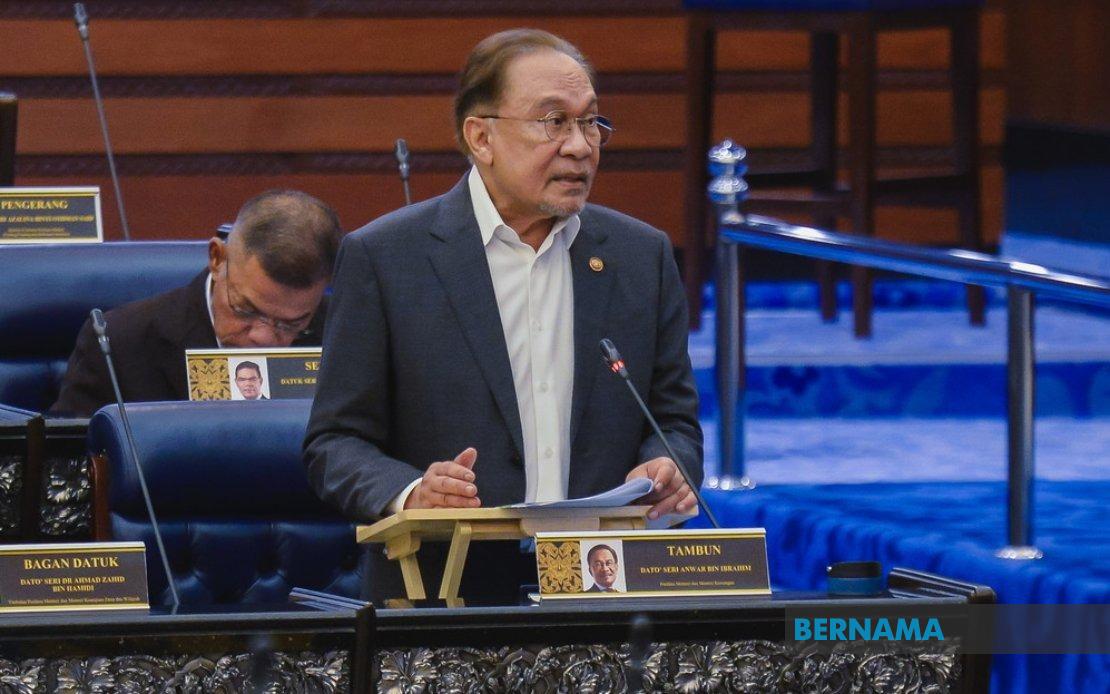
Prime Minister Datuk Seri Anwar Ibrahim has established a firm boundary on federal financial commitments to state-level infrastructure projects, declaring that any request for supplementary funding tied to a Notice of Change must undergo fresh negotiation before the Federal Government considers approving additional allocations or loans. The clarification came during parliamentary proceedings at the Dewan Rakyat, addressing concerns raised about Kedah's pursuit of extra resources for its Pulau Bunting Water Treatment Plant initiative.
The NOC mechanism, commonly invoked in construction and infrastructure development when project parameters shift, carries substantial fiscal ramifications that extend beyond initial contracts. Anwar underscored that when a Notice of Change materialises, it inherently demands financial top-ups and consequently mandates comprehensive reassessment. This process must rigorously examine multiple dimensions before additional federal resources flow to any state, a position that reflects concerns about cost management and accountability across Malaysia's development landscape.
A critical element in the Prime Minister's framework involves establishing accountability within the contractor-client relationship. The federal administration must first determine whether the cost escalation stems from contractor performance deficiencies, design modifications, or external market pressures. This investigatory phase prevents situations where poor project management or contract execution could inadvertently trigger automatic federal bailouts. By insisting on this analysis, Anwar is essentially placing responsibility firmly on state governments and their contracted parties to demonstrate legitimate justification for any funding increases.
The constitutional and administrative boundary Anwar articulated reflects a fundamental principle of federalism and fiscal governance. State administrations cannot unilaterally bind the federal treasury through their decisions, nor can cost overruns automatically cascade into federal liability. This distinction matters significantly in Malaysia's context, where the relationship between state and federal authorities continues to evolve, particularly regarding infrastructure financing and development project ownership.
Kedah's water treatment facility represents a broader pattern across Malaysian states, where infrastructure modernisation and expansion frequently encounter cost pressures. The Pulau Bunting project exemplifies how utilities critical to public welfare can become entangled in financial complications that demand arbitration between different government tiers. By establishing protocol around NOC-related requests, the Prime Minister is essentially creating institutional guardrails against unchecked expenditure.
The renegotiation requirement introduces procedural discipline into the funding ecosystem. Rather than treating additional allocations as bureaucratic formalities, each request now faces substantive examination. This approach potentially slows project advancement but enhances transparency and reduces the risk of financially unviable undertakings proceeding simply because initial approval was granted. For Malaysian development sectors, this represents a shift toward outcomes-based rather than procedurally-driven decision-making.
Energy Transition and Water Transformation Minister Datuk Seri Fadillah Yusof was designated to elaborate further on the matter, suggesting the federal government has already developed detailed protocols around such scenarios. The involvement of a specific ministry portfolio indicates that water infrastructure challenges are recognised as systemic issues requiring coordinated policy responses rather than ad-hoc case-by-case adjudication.
For state governments across Malaysia, Anwar's pronouncement carries immediate operational implications. Kedah and other states pursuing similar projects must now prepare comprehensive documentation demonstrating cost justification. This includes contractor performance records, detailed cost-benefit analyses, and evidence of market-driven or legitimately unavoidable expenses. The burden of proof has shifted decisively toward those seeking federal support.
The policy also addresses a perennial tension within Malaysia's federal structure: whether states should bear full responsibility for project management consequences or whether the federal government retains obligations to support state-level public infrastructure. Anwar's position suggests a middle ground—federal support exists but requires rigorous justification rather than automatic provision. This reflects fiscally conservative governance principles increasingly prevalent among Southeast Asian administrations.
Regional observers may view this approach as part of broader emerging patterns in Malaysian governance, where federal authorities assert stronger oversight of state expenditures. The requirement for renegotiation effectively gives federal administrators veto power over cost escalations, strengthening the centre's leverage within the federation. This recentralisation of financial decision-making could influence how states approach project planning and contractor selection in future.
For water security and utility sectors specifically, the implications deserve close attention. Water infrastructure development remains critical across Southeast Asia, yet financing challenges plague the region. Malaysia's experience establishing clearer protocols around cost escalation may offer instructive lessons for neighboring countries navigating similar tensions between state and national interests in infrastructure development.
The Dewan Rakyat exchange demonstrates how parliamentary processes can clarify ambiguous government policies. What may have been previously uncertain practice regarding NOC funding is now explicitly codified as requiring federal negotiation. This clarity, while potentially complicating immediate state requests, reduces long-term uncertainty and protects federal finances from open-ended liabilities attached to state-initiated projects.

