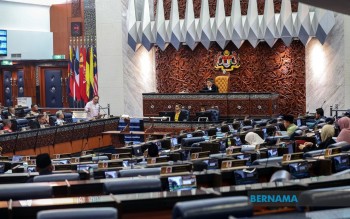
Parliament has endorsed the Statistics Bill 2026, marking a watershed moment for Malaysia's approach to official data collection and management. Passed by majority voice vote after debate involving 21 lawmakers, the legislation represents the most substantial overhaul of the country's statistical infrastructure in over six decades, replacing the Statistics Act 1965 that has anchored the system since independence. The Ministry of Economy characterises the reform as essential to building a more coordinated, credible, and responsive framework capable of supporting better-informed governance and public service delivery across all levels.
Economy Minister Akmal Nasrullah Mohd Nasir emphasised that the new bill transcends a mere technical update to outdated rules. Instead, he framed it as a strategic investment in Malaysia's capacity to generate the high-quality, trustworthy data required for modern policymaking. His statement underscores a recognition within government that the previous 1965 legislation, while serviceable for its era, has become inadequate for the complexity and speed of contemporary policy challenges. The minister stressed that superior data underpins superior governance, directly linking statistical rigour to tangible improvements in public administration and citizen welfare.
The legislative journey reflects substantial groundwork undertaken since 2016, when the Ministry of Economy initiated a comprehensive policy review to assess whether existing arrangements remained fit for purpose. Rather than proceeding unilaterally, officials conducted seven rounds of structured engagement with a broad coalition of stakeholders spanning federal and state governments, local authorities, universities, industry associations, and commercial enterprises. This inclusive approach ensured the final text incorporated perspectives from data producers, users, and regulators across the public and private sectors, enhancing legitimacy and practical utility.
International considerations shaped the bill's architecture as well. Drafters incorporated international statistical standards and global best practices, positioning Malaysia within recognised international frameworks for data governance. This alignment matters considerably for cross-border comparisons, regional cooperation, and the country's standing within international development and economic forums where standardised metrics increasingly determine competitiveness and policy credibility. The bill's recognition of recent developments in the data ecosystem signals responsiveness to technological change and emerging challenges around data privacy, cybersecurity, and the integration of administrative, survey, and alternative data sources.
The 22-clause structure defines the Department of Statistics Malaysia's functions whilst establishing a new National Statistics Council to coordinate efforts across institutions. Significantly, the legislation preserves the autonomy of individual ministries and agencies over their administrative data, designating each as the rightful owner of information within their purview and the lead agency for sector-specific statistics. This federated model balances centralised coordination with distributed authority, avoiding the pitfall of creating an overly centralised bureaucracy whilst ensuring coherence and consistency in methodology and definitions. Such architectural choices reflect lessons from other countries that have attempted comprehensive statistical reform.
Data protection and confidentiality provisions feature prominently within the bill's framework, a necessity given heightened global concern about privacy violations and misuse of personal information. The legislation establishes clear protocols governing data requests, ensuring that statistical collection serves public purposes whilst shielding individuals and organisations from unauthorised access or disclosure. This balance becomes increasingly delicate as statistical agencies adopt advanced analytics and artificial intelligence, technologies that can reveal sensitive patterns even within aggregated datasets. Malaysian policymakers have evidently grappled with these tensions and embedded safeguards accordingly.
The implications extend significantly beyond administrative mechanics. Evidence-based policymaking represents a cornerstone of contemporary governance rhetoric globally, yet it remains poorly realised in practice across much of Southeast Asia where institutional capacity, data quality, and political will remain inconsistent. Malaysia's legislative commitment to statistical infrastructure suggests intent to move beyond rhetoric toward genuine embedding of data-driven analysis within policy cycles. This matters for everything from health and education planning to infrastructure development and economic diversification, domains where poor decisions compound across years and affect millions.
For Malaysian businesses and civil society organisations, improved statistical systems offer tangible benefits. Reliable, transparent data on economic performance, workforce trends, consumer behaviour, and social indicators reduces uncertainty and supports better private sector decision-making. Academics and researchers gain access to higher-quality datasets for rigorous analysis. The general public benefits indirectly through more effective public service delivery grounded in accurate understanding of need and performance.
Regionally, Malaysia's modernisation of statistical governance carries significance as a model for peers similarly grappling with outdated frameworks. Countries across Southeast Asia face comparable challenges: colonial-era legislation, fragmented institutional arrangements, limited capacity, and technological disruption. Malaysia's experience with stakeholder engagement and international standard-adoption may offer useful precedents as Thailand, Indonesia, the Philippines, and others contemplate their own reforms. ASEAN-level statistical cooperation also stands to improve if member states align foundational governance frameworks.
The pathway forward involves operationalising these legislative provisions effectively. Drafting regulations, training personnel, establishing protocols, and building stakeholder confidence in new arrangements will require sustained institutional attention and resources. Past statistical reform efforts globally have foundered when legislative change outpaced implementation capacity or when resistance from existing power structures undermined intended improvements. Success depends on sustained ministerial commitment beyond the immediate post-passage phase.
The Statistics Bill 2026 ultimately represents Malaysia's deliberate choice to modernise a critical national institution. In an era of digital transformation, policy complexity, and evidence-driven governance expectations, maintaining a statistical system grounded in 1965 legislation had become untenable. Parliament's passage signals that policymakers recognise superior data as foundational to superior outcomes, a principle with implications extending well beyond statistics into the broader architecture of effective governance and national competitiveness.

