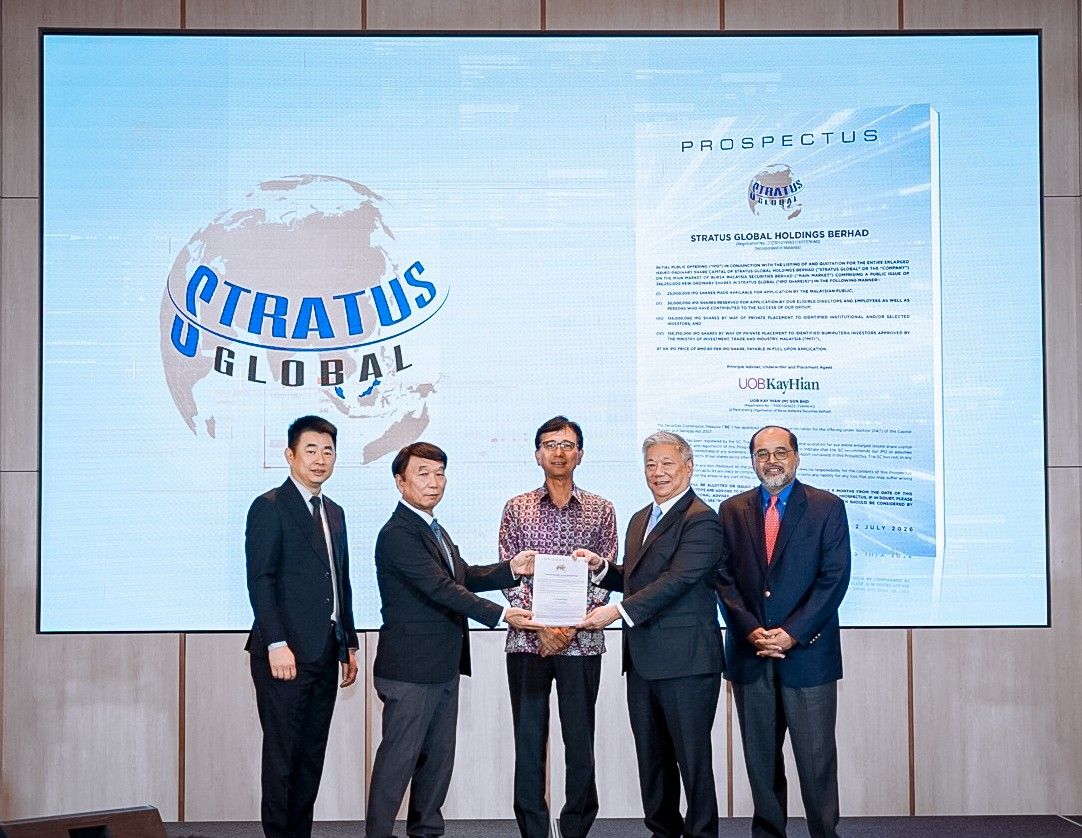
Stratus Global Holdings Bhd, a specialist in automated material handling systems for semiconductor manufacturers, has entered the Malaysian capital markets with an ambitious RM285mil initial public offering targeting a Main Market listing on July 21. The move marks a significant step for the Kuala Lumpur-based company as it seeks to capitalise on growing demand for semiconductor manufacturing solutions across Asia and beyond.
The IPO involves the creation of 356.25 million new shares priced at 80 sen per share, establishing an implied market capitalisation of RM1 billion once the offering completes. The fundraising comprises only newly issued shares, meaning existing shareholders are not simultaneously offloading holdings—a structure that underscores management's confidence in the company's growth trajectory. The enlarged capital base of 1.25 billion shares positions Stratus Global to pursue the expansion ambitions laid out in its prospectus.
Capital deployment reflects clear strategic priorities. The largest single allocation, RM122.6 million, will fund construction of a new manufacturing plant in Penang, a choice aligned with Malaysia's established position as a semiconductor fabrication hub. Research and development receives RM45 million, essential for maintaining competitive advantages in AMHS technology. Working capital provision of RM82.4 million addresses operational needs during expansion phases, while RM20 million targets overseas market penetration in Asia, Europe and North America. Listing expenses account for RM15 million of the total.
Established in 1998, Stratus Global has built operations serving multinational semiconductor manufacturers across multiple continents. The company provides end-to-end solutions encompassing design, fabrication, installation and commissioning of handling systems—the complex logistical infrastructure that modern semiconductor fabs require. Its clientele spans Malaysia and established semiconductor regions globally, positioning it within a supply chain increasingly critical to technology firms worldwide.
The Penang expansion warrants particular attention for Malaysian investors. The state has emerged as a concentrated hub for semiconductor and advanced electronics manufacturing, hosting multiple major international players and supporting supply chain clusters. A new facility there signals Stratus Global's intent to deepen roots in Malaysia's most developed semiconductor ecosystem while maintaining proximity to regional production networks. This contrasts with many Malaysian tech companies that have outsourced manufacturing; Stratus Global's capital investment suggests confidence in domestic operations.
The international expansion budget of RM20 million, though modest relative to overall proceeds, indicates management recognises that semiconductor manufacturing is geographically dispersed. While Asia dominates current production, presence in European and North American markets—where advanced chip design and specialty fabs concentrate—offers access to high-value customers and exposure to diverse revenue streams. For Malaysian investors, this geographic diversification reduces reliance on any single regional market.
Research and development receives meaningful emphasis through the RM45 million allocation. Semiconductor manufacturing equipment and systems operate at technological frontiers where product cycles are rapid and differentiation demands constant innovation. The investment suggests Stratus Global aims to advance beyond providing commodity solutions toward developing proprietary technologies that command premium pricing and customer lock-in. This trajectory, if executed successfully, enhances long-term profitability and shareholder returns.
Executive director and CEO Ryo Narisawa framed the listing as enabling the company's next growth phase, emphasising expansion of manufacturing capacity, advancement of innovation capabilities, and strengthening international presence. The language reflects mature management thinking—focusing on enabling infrastructure and R&D rather than pursuing aggressive acquisitions or speculative diversification. For an IPO, this measured approach may attract investors seeking sustainable growth over high-risk ventures.
Subscription activities opened immediately following prospectus launch, with the application window closing July 10. The compressed timeline between close and listing—just eleven days—suggests confident underwriter backing and likely strong institutional investor appetite. UOB Kay Hian (M) serves as principal adviser, underwriter and placement agent, a role indicating the investment bank's confidence in successfully executing the transaction.
The IPO's significance extends beyond Stratus Global itself. Malaysia's semiconductor ecosystem has historically focused on assembly, testing and back-end manufacturing. Equipment and systems providers capable of serving this sector represent higher-value-add segments where Malaysian firms can compete globally. Stratus Global's emergence as a public company with capital to invest in R&D and manufacturing infrastructure potentially establishes a template for similar Malaysian tech companies considering equity markets.
Timing of the listing reflects broader market dynamics. Semiconductor supply chains have been subject to considerable geopolitical attention and reshoring initiatives, particularly from developed economies concerned about concentration of advanced manufacturing in Asia. This environment simultaneously creates opportunities for capable suppliers of manufacturing systems and justifies capital investments in production infrastructure. Stratus Global's Penang facility investment positions the company to capture demand arising from these structural shifts.
For Malaysian investors, the IPO presents exposure to a domestically-rooted company operating in a strategically important global industry. The company's 27-year track record demonstrates sustainability beyond typical startup timescales. However, semiconductor industry volatility remains a material consideration; cyclical downturns in chip manufacturing directly impact demand for new handling systems. The RM285 million raise provides substantial cushion, but investors should monitor industry conditions and competitive positioning carefully post-listing.

