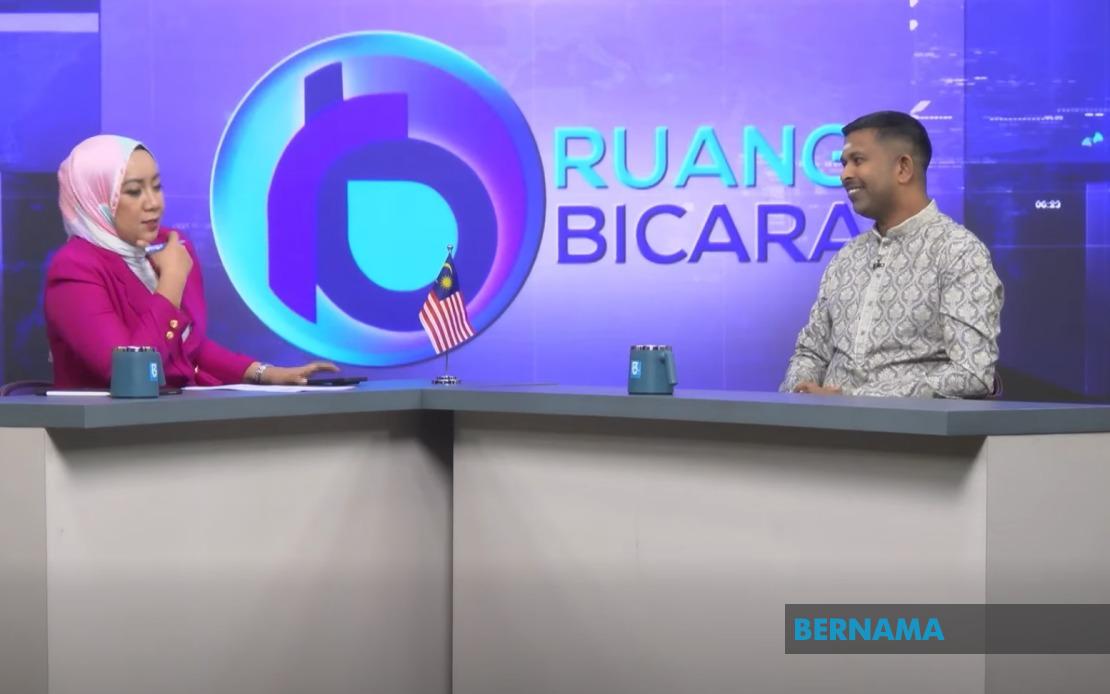
Advancing the standing of Malay as Malaysia's national language cannot rest solely on governmental decree but demands coordinated commitment from multiple sectors of society, according to a prominent language and law expert. Prof Dr Ramalinggam Rajamanickam, who serves as both a professor at Multimedia University's Faculty of Law and a member of the Dewan Bahasa dan Pustaka Board of Governors, articulated this multifaceted approach during a recent television discussion on the language's role as the soul of the nation and symbol of state identity.
The constitutional foundations for Malay's position are already established, with the language explicitly recognised under Article 152 of the Federal Constitution as the official national language of Malaysia. This constitutional recognition is reinforced by the National Language Act 1963/67, which mandates the use of the national language in all official governmental and administrative matters. Despite these legal safeguards, Ramalinggam argued that constitutional entrenchment alone is insufficient; rather, active participation from citizens, private enterprises, educational institutions and researchers is essential to ensure the language flourishes across all domains of national life.
The contemporary challenge facing Malay extends beyond quantitative measures of usage, which Ramalinggam characterised as generally adequate. Instead, the critical concern involves preserving linguistic quality and coherence in an era marked by accelerating linguistic contamination and deteriorating standards. The phenomenon of "bahasa rojak"—the colloquial mixing and blending of Malay with English and other languages—represents a particularly acute problem, alongside the broader issue of linguistic confusion that emerges from inadequate standardisation and inconsistent application of grammatical rules.
While informal environments such as social media and casual conversation tolerate linguistic flexibility and creative abbreviations, the maintenance of proper Malay usage becomes non-negotiable in formal contexts. Official government communications, legal documents, educational curricula and corporate correspondence must adhere to rigorous grammatical standards and coherent sentence construction. Ramalinggam emphasised that allowing linguistic standards to erode in formal settings undermines the language's function as an instrument of clarity, authority and national identity. The distinction between informal and formal registers must remain sharp; permitting degraded language standards in official matters would fundamentally compromise Malay's constitutional role.
Implementation of existing linguistic standards requires sustained governmental oversight and institutional accountability. Ramalinggam called on the relevant ministry to actively monitor adherence to the National Language Act and ensure that public institutions comply with requirements for official language use. Universities occupy a particularly critical position in this ecosystem, bearing responsibility for establishing Malay as a genuine language of scholarly knowledge, research and intellectual discourse. Yet this elevation cannot occur at the expense of English proficiency; universities must cultivate bilingual competence among students and researchers, recognising that international scientific communication and technological development increasingly operate through English mediums.
The emergence of artificial intelligence and advanced digital technologies presents both a challenge and an opportunity for the national language. Rather than passively awaiting technological systems to accommodate Malay, Malaysia must proactively invest in empowering the language to shape, utilise and master technological development. This requires comprehensive mobilisation of government resources, university research capabilities, computational linguists and language specialists who can develop Malay-language artificial intelligence systems, digital platforms and technological infrastructure. The objective extends beyond mere translation functionality to establishing Malay as a genuine language of technological innovation and digital knowledge.
Historically, Malay possessed considerable prestige as a regional lingua franca facilitating commerce, cultural exchange and diplomatic communication across Southeast and South Asia. This heritage demonstrates the language's latent capacity to serve as a vehicle for knowledge transmission and intellectual discourse at the highest levels. Contemporary academic interest from major powers including China, Japan and India in learning Malay suggests that international recognition of the language's significance persists. By investing systematically in developing Malay as a language of science, mathematics, economics and artificial intelligence, Malaysia can revitalise this historical role while establishing the language as essential for international engagement in the twenty-first century.
Ramalinggam's vision deliberately rejects any zero-sum framing wherein elevation of the national language necessarily diminishes other linguistic traditions. Malaysia's multilingual heritage—encompassing English, Chinese, Tamil and numerous other languages—constitutes a genuine national asset rather than a liability. Citizens capable of fluency across multiple languages occupy advantageous positions in globalised economies and intercultural contexts. The strategic objective involves establishing Malay as the uncontested primary symbol of national cohesion and political identity whilst simultaneously maintaining multilingual capability among the population. This dual emphasis reflects recognition that contemporary Malaysia requires both strong national identity anchors and pragmatic engagement with global linguistic realities.
The implications for Malaysian policymaking are substantial. Current initiatives in language education, technology development and institutional standardisation require evaluation against the integrated framework Ramalinggam articulates. Universities may require additional resources and autonomy to develop Malay-language research programmes and technological applications. The private sector's engagement becomes critical, particularly technology companies that can invest in Malay-language artificial intelligence and digital products. Government coordination mechanisms must extend beyond the education ministry to encompass technology agencies, research councils and cultural institutions. This systemic approach recognises that language vitality emerges not from top-down mandates but from creating ecosystems wherein linguistic excellence is rewarded, technological advancement operates through the national language, and educational institutions model the highest standards of linguistic achievement.
The question of linguistic status ultimately reflects fundamental questions about Malaysia's national identity and future orientation. Malay language advancement serves not narrow cultural nationalism but rather the practical objective of ensuring that Malaysian citizens possess a shared linguistic medium for scientific collaboration, civic engagement and intellectual work. International experience demonstrates that technologically advanced nations maintain robust national languages whilst simultaneously engaging globally. Malaysia's challenge involves replicating this model—developing Malay as a sophisticated instrument for knowledge creation and technological mastery whilst avoiding linguistic isolationism that would diminish international engagement.

