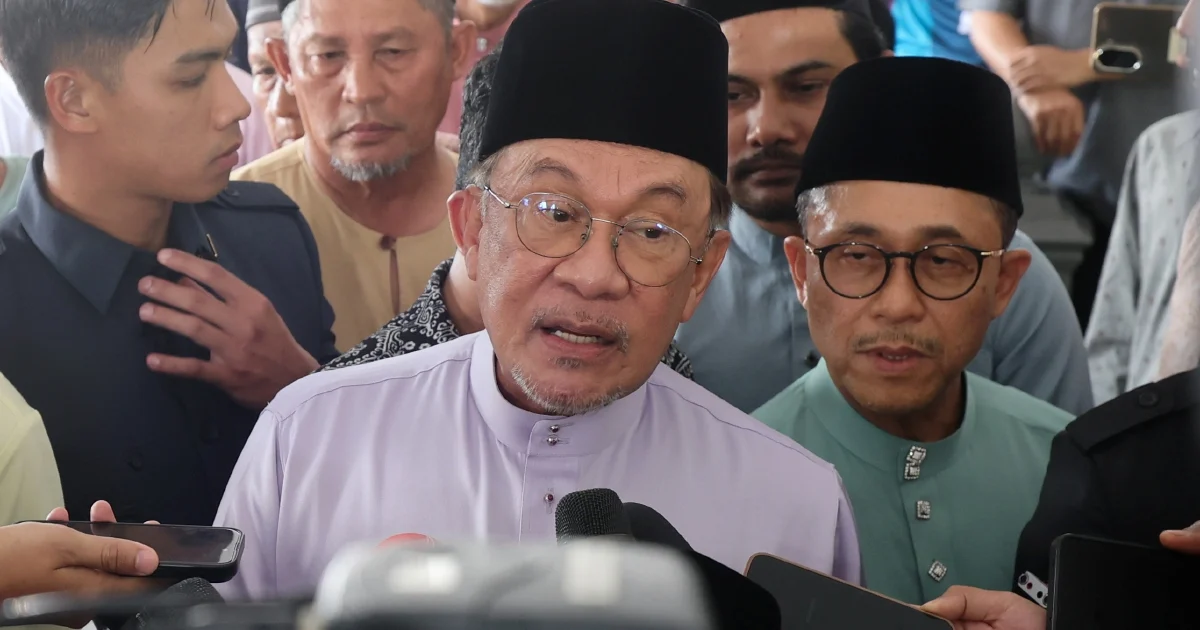
Prime Minister Datuk Seri Anwar Ibrahim has sought to allay concerns about Malaysia's constitutional balance by declaring that moves to strengthen the Islamic judicial system will pose no threat to non-Muslim communities' freedom of worship. Speaking in Putrajaya, the premier emphasised that enhancing the Syariah court infrastructure remains compatible with the nation's foundational commitment to protecting religious plurality.
The reassurance comes as the government pursues administrative reforms within the Syariah judiciary, a process that has drawn scrutiny from civil society observers concerned about the institutional boundaries between Islamic and secular legal frameworks. Anwar's intervention signals recognition that any recalibration of judicial authority requires transparent communication and clarity regarding safeguards for Malaysia's non-Muslim citizens, who constitute a substantial portion of the country's multiethnic population.
Malaysia's dual legal system—wherein Syariah courts hold jurisdiction over Islamic family law and certain religious matters affecting Muslims, while civil courts oversee criminal and commercial law for all citizens—has been a defining feature of the constitutional architecture since Independence. The proposed elevation of Syariah court status within this structure raises fundamental questions about institutional hierarchy and the preservation of concurrent jurisdictional boundaries that have historically protected non-Muslim legal interests.
For Malaysia's Indian, Chinese, Christian, Hindu, and Buddhist communities, religious freedom extends beyond personal devotion to encompass legal protections for faith-based institutions, dietary practices, marriage customs, and cultural expression. These communities have long relied upon civil courts for matrimonial disputes, inheritance matters, and other legal proceedings that fall outside Syariah jurisdiction. Any expansion of Islamic judicial authority theoretically carries implications for how disputes are mediated and which legal principles take precedence in areas of potential overlap.
Anwar's statement appears designed to deflect criticisms that institutional changes might gradually encroach upon established spheres of civil authority or create practical impediments to non-Muslims' access to impartial judicial recourse. The prime minister's framing emphasises that constitutional Article 3—which recognises Islam as the federation's religion—and Articles 10 and 11, guaranteeing religious freedom and the right to propagate one's faith, remain inviolable regardless of structural adjustments within Syariah courts.
The government's commitment to Syariah court modernisation reflects broader movements across Muslim-majority democracies to enhance Islamic legal systems' efficiency, transparency, and alignment with contemporary jurisprudential standards. In Malaysia's context, such reforms could encompass improved case management, strengthened judicial training, clearer interpretation of religious law, and better documentation of proceedings. These operational improvements need not necessarily expand substantive Syariah jurisdiction into domains traditionally reserved for civil courts.
Nonetheless, the government's messaging strategy reveals awareness that Malaysia's plural society remains attentive to institutional developments potentially affecting the delicate equilibrium established at independence. Religious minorities, particularly those who have engaged with multi-communal governance structures, possess institutional memory of constitutional understandings that have underpinned peaceful coexistence across denominational lines for decades. Anwar's reassurance attempts to preserve this implicit social contract while pursuing internal judicial strengthening.
Regional observers noting Malaysia's trajectory must consider that Southeast Asia's constitutional frameworks generally reflect explicit protections for religious plurality, yet implementation varies considerably. Singapore, for instance, maintains distinct Syariah and civil jurisdictions with minimal overlap; Indonesia navigates ongoing debates about Syariah court authority expansion; and Thailand's recent constitutional drafts continue grappling with Buddhist institutional privilege. Malaysia's dual system, though occasionally contentious, has functioned without major constitutional crises regarding judicial encroachment.
The practical implications of Syariah court elevation depend substantially upon definitional precision. If reforms concern administrative capacity, professional development, and case-processing efficiency, non-Muslim communities' legal positions face minimal disruption. Conversely, if elevation encompasses expanded subject-matter jurisdiction into criminal law or commercial matters affecting non-Muslims, substantive concerns regarding equal legal protection would merit serious consideration. Anwar's statement does not clarify which reforms are actually contemplated.
Malaysia's path forward requires continued dialogue between government entities, religious communities, civil society organisations, and legal professionals to ensure that institutional innovation proceeds transparently and consensually. The prime minister's public assurance represents an important first step toward building confidence that constitutional commitments to plural governance remain operative despite judicial system modifications. Detailed, forthcoming communication regarding specific proposed changes would further strengthen community confidence and demonstrate genuine commitment to preserving the constitutional settlements that have enabled Malaysia's multiethnic, multireligious society to function cohesively across seven decades of independence.

