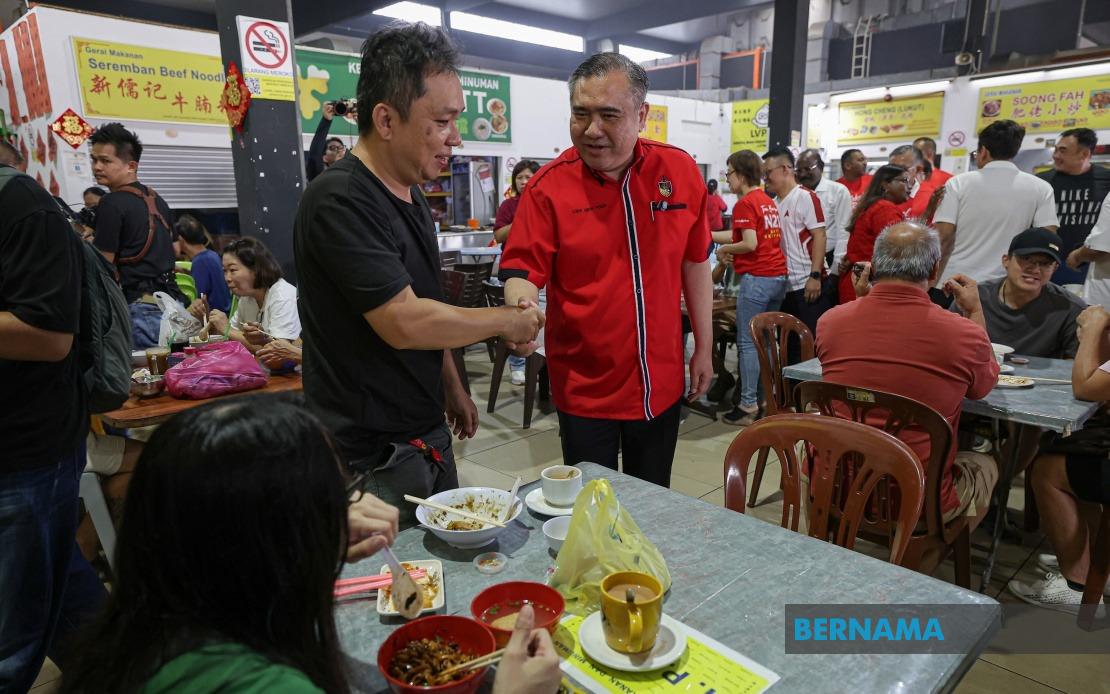
Transport Minister Anthony Loke has declared that strict adherence to traffic laws and road safety measures will be non-negotiable throughout the ongoing 16th Negeri Sembilan state election campaign. Speaking in Seremban after conducting a walkabout with Pakatan Harapan candidates, Loke underscored that while all parties naturally seek victory, this ambition cannot justify flouting fundamental safety regulations. His directive reflects growing concern about campaign-related traffic violations during electoral periods, when heightened political activity often correlates with increased accident risks and unsafe road behaviour.
The DAP secretary-general personally instructed his party's campaign teams to maintain strict helmet compliance when using motorcycles throughout the election period. Loke illustrated his commitment by citing his own recent actions during nomination day, when he led a convoy from Pekan Titi to Kuala Klawang. He established an unambiguous requirement at the outset: participants lacking helmets would not be permitted to join the convoy. This hands-on approach demonstrates his intention to embed safety culture within campaign operations rather than issuing empty warnings.
Beyond helmet use, Loke specifically warned against a particularly hazardous practice gaining prevalence during campaigns: supporters riding on the tailgates of moving four-wheel-drive vehicles. He characterised this behaviour as recklessly endangering lives, appealing to all political parties and campaign leaders to set examples by respecting traffic regulations. The minister's emphasis on exemplary leadership reflects an understanding that enforcement alone proves insufficient; cultural change requires visible commitment from those directing campaign activities.
The Negeri Sembilan state assembly was dissolved on June 5, with election authorities designating August 1 as polling day and July 28 for early voting. The electoral exercise will determine representation across a constituency comprising nearly 890,000 registered voters. Among these, 867,151 are ordinary voters, while 16,884 military personnel and their spouses plus 5,455 police officers have been designated as early voters, a category traditionally granted advance voting privileges. This substantial electorate necessitates coordinated campaign efforts across multiple constituencies, inherently multiplying opportunities for traffic-related incidents if safety protocols remain unenforceable.
Loke's intervention carries particular significance within Malaysia's electoral context, where campaign season frequently witnesses congestion, impromptu roadside gatherings, and vehicle convoys that strain existing traffic management capacity. The transport minister's position grants him institutional authority to reinforce safety messaging while simultaneously reflecting his department's broader mandate to reduce road fatalities. By framing traffic compliance as an election-integrity issue rather than merely a public health concern, Loke attempts to elevate its priority among political actors focused primarily on winning votes.
The walkabout with Pakatan Harapan candidates across six constituencies—Temiang, Mambau, Rahang, Bukit Kepayang, Seremban Jaya, and Lobak—provided Loke a platform to reinforce these messages directly to campaign teams. Such face-to-face engagement serves dual purposes: it communicates expectations clearly to participants while generating visibility for the safety initiative itself. This approach recognises that guidelines issued through media statements alone often fail to penetrate campaign operations, where local organisers may prioritise electoral momentum over compliance requirements.
The helmet mandate specifically addresses motorcycle usage, a particularly vulnerable transportation mode during campaign activities. Campaigns frequently involve rapid movement between multiple venues, sometimes across challenging terrain or during poor visibility conditions. Campaigners on motorcycles often travel at speeds and under conditions where helmet protection becomes genuinely life-saving rather than merely regulatory compliance. By establishing helmets as a minimum standard, Loke sets a baseline below which no acceptable campaign behaviour can fall.
The tailgate warning extends road safety thinking beyond individual protective equipment to broader conduct patterns. Vehicles moving with unsecured passengers create hazards not merely for those precariously positioned but for other road users who may react suddenly to unexpected sights or movements. The practice carries particular danger during campaign convoys, which frequently navigate through populated areas where traffic density and pedestrian presence heighten collision risks. Loke's specific attention to this hazard suggests it represents a recognised problem during previous campaigns warranting explicit intervention.
For Malaysian and regional observers, this episode illustrates how electoral processes intersect with public safety governance. Campaign seasons create temporary but significant changes to traffic patterns and driver behaviour across affected states. When political considerations override safety protocols, the consequences manifest as accident statistics that extend beyond campaign participants to encompass innocent motorists and pedestrians. Loke's directive attempts to prevent this outcome by establishing safety as a non-negotiable electoral value rather than an optional consideration.
The emphasis on leadership by example proves particularly important in Malaysian political culture, where hierarchical structures and respect for authority figures significantly influence follower behaviour. By personally enforcing helmet requirements during his own convoy and publicly articulating zero-tolerance approaches, Loke signals that safety compliance requires no sacrifice of campaign effectiveness. This messaging counters any perception that safety measures represent obstacles to electioneering, instead framing them as compatible with and supportive of legitimate campaign activities.
The scale of the Negeri Sembilan electorate and the multiple constituencies involved create complex logistical challenges for campaign organisers. Managing nearly 890,000 voters across geographically dispersed areas necessitates extensive vehicle usage and frequent movement of campaign personnel. Within this context, establishing clear traffic safety standards becomes administratively important, preventing confusion about acceptable practices while protecting campaign organisations from liability should accidents occur. Candidates and party officials appreciate explicit guidelines that clarify expectations and limit litigation risks.
As the campaign progresses toward August 1, enforcement of these traffic safety standards will determine whether Loke's directive produces meaningful behavioural change or remains aspirational messaging. The coming weeks will test whether political parties internalise safety protocols as core campaign values or treat them as inconvenient impositions from the transport ministry. The results will signal important lessons for subsequent electoral campaigns across Malaysia, establishing precedents for how electoral politics and public safety can coexist rather than conflict.

