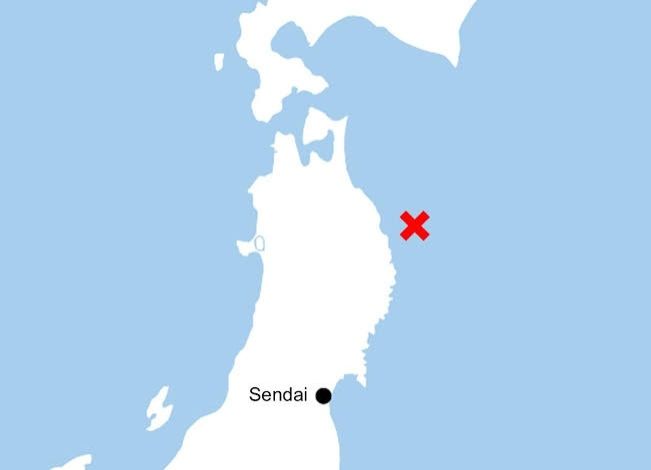
A powerful 7.2-magnitude earthquake jolted northern Japan on Thursday morning, sending tremors across a wide area but causing only scattered minor disruptions and no reported casualties. The seismic event, which struck in waters off Iwate prefecture on Honshu's main island at 7:30 am local time, was initially measured at 6.9 magnitude by the Japan Meteorological Agency before being revised upward. With its epicentre located 44 kilometres beneath the ocean surface, the quake was felt distinctly in Tokyo and other regions several hundred kilometres away, though authorities determined the event posed no tsunami risk to coastal communities.
Witnesses across the affected regions described typical earthquake experiences rather than scenes of widespread destruction. In Hashikami, located in Aomori prefecture to the north, residents reported household items tumbling from shelves and minor household damage. One 61-year-old food processing company employee, Mutsumi Shimohata, recounted how a picture frame in her home fell during the shaking, which she characterised as prolonged. Television footage captured the familiar aftermath of moderate seismic activity: kitchen cupboards disgorged their contents onto floors, retail shop merchandise scattered, and shelves partially emptied. Such scenes, while visually striking, reflect the reality of living in one of Earth's most tectonically restless nations.
Infrastructure disruptions remained limited in scope and duration. Several shinkansen bullet train services were suspended as a precautionary measure, reflecting Japan's cautious approach to rail operations during seismic events. In Hashikami, local educational authorities temporarily closed a primary school as a safety precaution while structural assessments were conducted. The town's fire department fielded at least four emergency calls, responding to reports of people trapped in a lift and stuck doors in various buildings. A tanker truck overturned on local roads, though details about its contents or any spillage were not reported. These incidents, while requiring emergency response, represented the typical range of complications accompanying significant seismic activity rather than catastrophic failures.
Japan's seven-level Shindo intensity scale registered the tremors at the upper six level across Aomori prefecture, indicating substantial but not extreme shaking. At this intensity classification, unsecured furniture typically topples and window breakage becomes likely, while some individuals may be unable to stand without support. However, critical infrastructure such as traffic light systems in Hachinohe city continued functioning normally, and the extensive CCTV footage captured by NHK showed regular traffic flow and normal urban activity resuming quickly. Government spokesman Minoru Kihara stated that no human casualties had been confirmed, with authorities maintaining ongoing monitoring for potential delayed damage reports.
The nuclear sector's swift response underscored Japan's heightened vigilance in this sector following historical trauma. The Nuclear Regulation Authority reported no abnormalities at regional power stations, providing immediate reassurance to residents who remain acutely sensitive to nuclear safety concerns. This swift confirmation reflected institutional protocols established after the catastrophic 2011 Fukushima incident, when a magnitude 9.0 undersea earthquake and subsequent tsunami killed or left missing approximately 18,500 people and fundamentally damaged public confidence in nuclear safety management.
Prime Minister Sanae Takaichi swiftly mobilised the government response apparatus, instructing all relevant ministries and agencies to coordinate closely with local authorities in affected prefectures. In a statement posted to social media platform X, Takaichi warned residents in areas experiencing significant shaking to remain vigilant for potential aftershocks of similar magnitude, a standard precautionary message reflecting Japan's earthquake experience. This rapid governmental communication reflected both institutional preparedness and the recognition that large initial earthquakes frequently generate substantial secondary seismic activity.
Japan's exceptional seismic exposure places this event within a broader context of chronic earthquake risk. The archipelago sits atop four major tectonic plate boundaries along the Pacific Ring of Fire's western edge, making it one of the world's most seismically active regions. The nation experiences hundreds of detectable earthquakes annually and accounts for approximately 18 per cent of all global seismic activity. For a population of around 125 million people distributed across densely populated urban centres, this geological reality has shaped building codes, urban planning, and institutional responses across all sectors of society.
The psychological and institutional memory of the 2011 Tohoku earthquake remains vivid in Japanese consciousness, serving as the benchmark against which contemporary seismic events are measured. That catastrophe, combining a magnitude 9.0 undersea rupture with a tsunami that overwhelmed coastal defences, demonstrated how tectonic activity can cascade into civilisational-scale disaster. The subsequent meltdown at the Fukushima Daiichi nuclear complex created compounding crises that exposed vulnerabilities in emergency preparedness and revealed the interconnected nature of modern infrastructure systems.
Recent seismic activity has kept the nation on heightened alert. In April this year, a 7.7-magnitude earthquake struck northern Japan, injuring at least ten people and causing perceptible shaking in Tokyo's high-rise towers. That event prompted authorities to issue an unusual special advisory warning residents of elevated risks for earthquakes magnitude 8.0 or stronger, reflecting genuine concern about potential future major seismic events. The advisory remained in effect for one week before being lifted, a cautious approach that balanced public awareness against avoiding unnecessary panic or economic disruption.
Thursday's earthquake, while significant in magnitude and widely felt, ultimately demonstrated the effectiveness of Japan's earthquake preparedness infrastructure and institutional responses. Building codes, early warning systems, and well-rehearsed emergency protocols functioned as designed, limiting human casualties and infrastructure damage despite the substantial ground motion. For Malaysia and other Southeast Asian nations in the Pacific Ring of Fire's broader region, Japan's experience underscores both the omnipresent geological risks of the region and the capacity of sophisticated preparedness systems to mitigate disasters.

