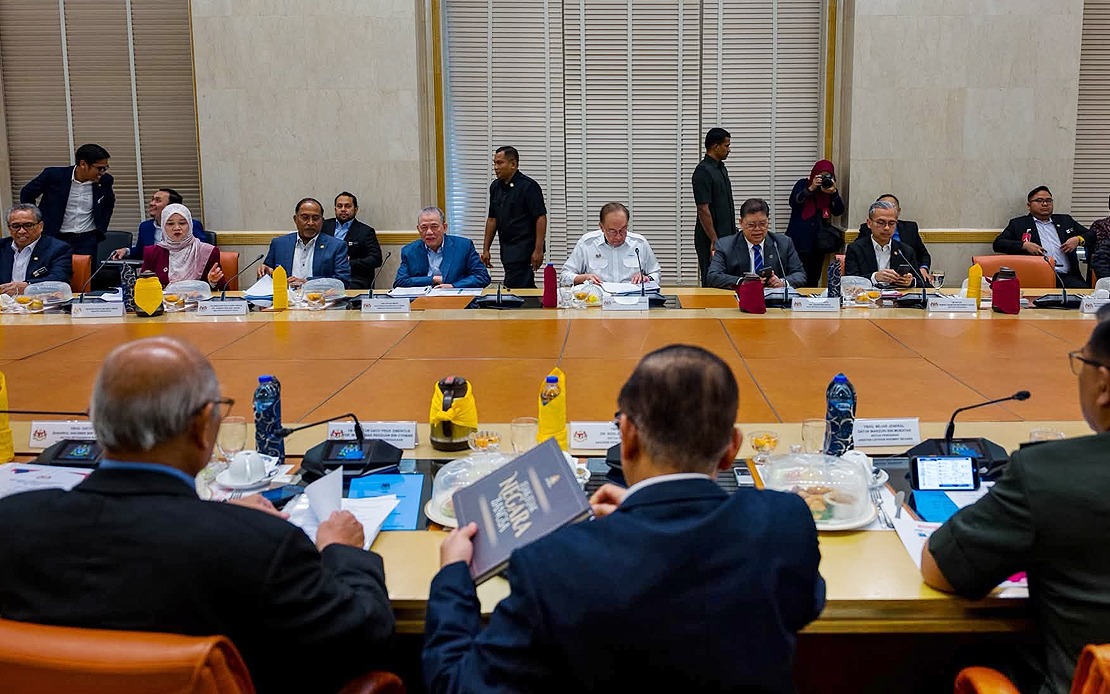
Prime Minister Datuk Seri Anwar Ibrahim has highlighted the critical role that nationhood values play in Malaysia's long-term development, arguing that their continuous reinforcement is essential to nurturing citizens with robust personal identity, moral integrity and patriotic commitment. Speaking during the Dewan Kenegaraan Board of Governance Meeting that he chaired, Anwar stressed that building a cohesive society rooted in shared nationhood values remains fundamental to generating genuine love for the country across all segments of the population.
Anwar's emphasis on this dimension of national governance reflects a broader strategic focus within the current administration on using cultural and civic frameworks to address social cohesion challenges. The cultivation of nationhood values, in his view, transcends ceremonial patriotism to encompass substantive personal development that shapes how individuals conduct themselves within their communities and contribute to collective progress. This approach acknowledges that sustainable nation-building cannot rely solely on institutional reforms or economic measures but must engage the deeper question of shared identity and collective purpose that binds citizens together.
The Prime Minister also provided an update on the progress of the National Service Training Programme (PLKN), noting that early outcomes have been encouraging and that feedback from both participating citizens and their families has been predominantly positive. The PLKN, which represents a structured intervention designed to build social cohesion and character development among young Malaysians, is being positioned as a crucial mechanism through which nationhood values can be transmitted to younger generations. Anwar's characterisation of these developments suggests the government views the programme not merely as a training initiative but as a foundational platform for embedding discipline, collective identity and national consciousness among participants.
Expanding on the strategic architecture supporting this agenda, Anwar drew attention to the role of the Nationhood Fellows initiative, which brings together distinguished public figures, experienced statesmen and influential personalities from diverse ethnic, religious and professional backgrounds. By convening this cross-sectional group, the government aims to generate ideas and frameworks that can reinforce the nation-building project while ensuring that various perspectives within Malaysian society are meaningfully represented in the deliberative process. This inclusive model reflects a recognition that effective nation-building requires legitimacy across different communities and demographic groups, and cannot be pursued through top-down mandates alone.
For Malaysian readers, Anwar's articulation of these priorities signals a governance emphasis that prioritises social and cultural dimensions of development alongside economic and institutional agendas. In the context of Malaysia's ongoing political and social evolution, this represents a deliberate choice to invest in the softer infrastructure of national cohesion at a moment when tensions around identity, religious representation and inter-ethnic relations continue to generate periodic friction. By framing nationhood values as central to governance strategy, the administration is suggesting that divisive tendencies within society can be substantially mitigated through systematic cultivation of shared civic identity and patriotic commitment.
The timing of these remarks also carries significance in the broader Southeast Asian context. Malaysia has long positioned itself as a nation that successfully manages religious and ethnic diversity, and maintaining that stability requires ongoing reinforcement of the institutional and cultural mechanisms that sustain it. In an era when several neighbouring countries have experienced intensified identity-based polarisation, Malaysia's deliberate focus on inculcating nationhood values through structured programmes and elite engagement represents a preventative approach to social fragmentation. The international standing that Anwar referenced in his comments reflects an understanding that global perceptions of Malaysia are substantially shaped by perceptions of its internal stability and social cohesion.
The invocation of discipline and resilience as outcomes from initiatives like the PLKN demonstrates that current policy thinking links individual character development with national capacity. Rather than treating these as separate domains, the government's framework suggests that cultivating disciplined, resilient citizens directly contributes to a more functional and prosperous society at the macro level. This logic has particular resonance in Malaysia's developmental context, where the quality of human capital remains a critical factor in sustaining competitive advantage and enabling transition towards higher-value economic activities.
The institutional mechanism through which these values are being promoted—the Dewan Kenegaraan governance structure—also merits attention. By placing discussion of nationhood values within high-level institutional forums rather than relegating them to cultural or youth affairs portfolios, the government signals their centrality to overall state strategy. This elevation in institutional status suggests recognition that nation-building is not a peripheral activity but a core function of governance that demands engagement at the most senior levels of political and administrative leadership.
Moving forward, the success of initiatives like the PLKN and the Nationhood Fellows programme will likely become an important barometer of whether Malaysia's social cohesion can be sustained and strengthened during periods of rapid change and external pressure. The positive early feedback that Anwar highlighted suggests these efforts are resonating with participants and families, though scaling such programmes while maintaining their effectiveness presents significant logistical and pedagogical challenges. For policymakers across Southeast Asia observing Malaysia's approach, the emphasis on deliberate cultivation of nationhood values offers an alternative framework to more reactive or security-focused responses to social fragmentation.

