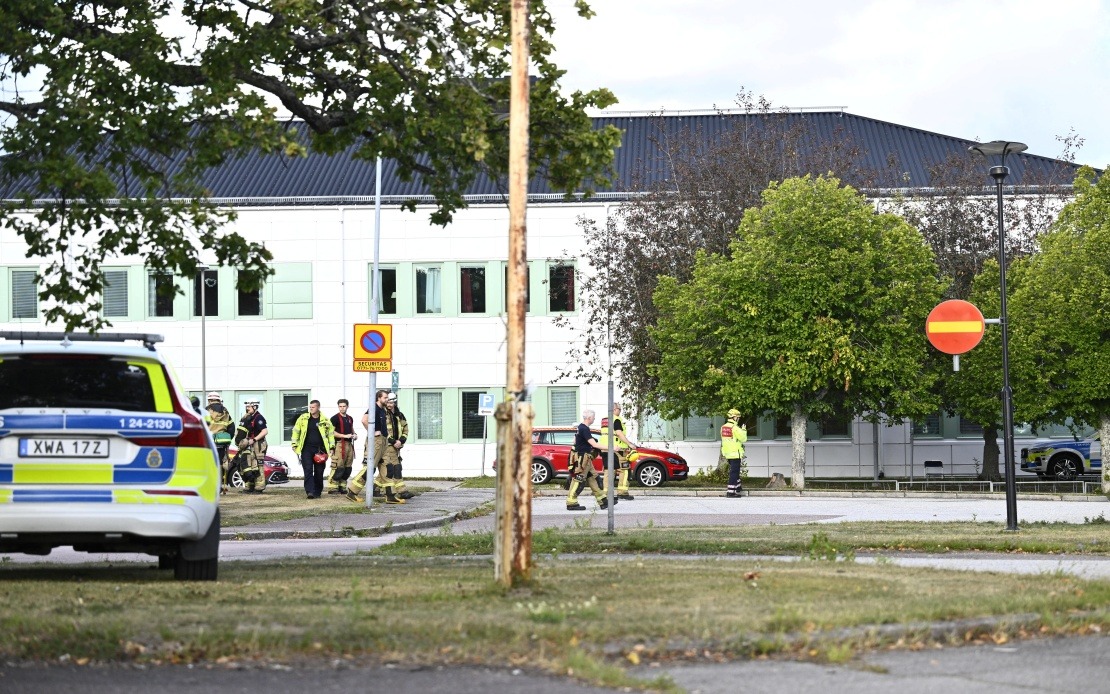
A sword-wielding assailant infiltrated a school in central Sweden on Wednesday afternoon, resulting in one fatality and multiple injuries in what authorities are treating as a serious criminal incident. The attack occurred at Brinell School in Fagersta at approximately 2:06 pm local time, prompting an immediate response from police and emergency services who arrived within minutes of receiving the alarm.
The violent incident left two teenage victims in critical but stable condition. Both boys, each under 18 years of age, sustained serious wounds requiring intensive medical intervention. In addition to these two gravely injured young people, another individual suffered minor injuries during the chaotic scene at the school. The casualties have been treated at local medical facilities, though Swedish authorities have not released detailed information regarding their prognoses or the specific nature of their injuries.
Swedish police moved swiftly to apprehend the suspect, who has been identified as an 18-year-old male with prior connections to the school as a former student. Investigative authorities have linked the suspect to two separate addresses within Fagersta, providing initial leads into potential motives and circumstances surrounding the attack. The fact that the perpetrator had previously attended the institution suggests possible grievances or personal issues that may have triggered the violent outburst, though formal investigations are ongoing.
In the immediate aftermath of the assault, authorities imposed comprehensive security lockdowns across Fagersta's educational and recreational infrastructure. Seven separate facilities were placed under protective lockdown protocols, including Olympen, Fagerstahallen, Risbroskolan, Skogsglantan, Bjorksta, Prastkragen, and Norrbybacken. These precautions reflected heightened concern that additional threats might emerge or that the suspect might attempt to reach other locations within the municipality.
The response from Sweden's political leadership underscored the gravity with which national officials regard such incidents. Justice Minister Gunnar Strommer released an immediate statement confirming that government authorities had received comprehensive briefings on the unfolding situation. His comments emphasized coordinated action between the Swedish police force and national government, signalling that this matter had escalated to the highest levels of Sweden's justice and security apparatus.
For Malaysian observers and Southeast Asian security specialists, this incident serves as a stark reminder that school violence transcends geographical and cultural boundaries. While Sweden maintains one of the world's lowest violent crime rates, the penetration of weapons into educational settings remains a persistent global challenge. The attack demonstrates that even heavily developed Nordic nations with strong social safety nets and comprehensive mental health services are not immune to sudden, unprovoked violence within their schools.
The Swedish education system, long regarded as a model of progressive pedagogy and student welfare, now confronts uncomfortable questions about security protocols and early warning systems for identifying at-risk former students. The fact that the attacker was a former rather than current student suggests that institutional oversight mechanisms may struggle to monitor individuals with prior connections to school communities after they have departed.
This incident intersects with broader European concerns about youth violence and social integration. Fagersta, a municipality of approximately 11,000 residents, has historically grappled with economic challenges stemming from the decline of its industrial base. Such demographic pressures can correlate with elevated risks of social disruption and interpersonal violence, particularly among younger demographics struggling to find purpose and community belonging.
For Malaysian policymakers focused on school safety, the Swedish case offers instructive lessons despite substantial contextual differences. The rapid police response and systematic lockdown protocols prevented what could have developed into a far more catastrophic scenario. Effective coordination between law enforcement, school administrators, and emergency medical services proved critical in containing the incident and stabilizing injured victims.
The investigation into motivations and planning will likely reveal whether the attack reflected impulsive violence or premeditated action. Swedish authorities will examine the suspect's background, social connections, recent behaviour patterns, and any communications that might illuminate his psychological state or grievances. Such forensic analysis frequently identifies warning signs that, in retrospect, appear significant to family members, acquaintances, or institutional officials.
As news of the Fagersta attack ripples through global media networks, it reinforces uncomfortable truths about contemporary security challenges facing educational institutions. Schools across Europe, North America, and increasingly throughout Asia and the Pacific are strengthening entrance protocols, installing security systems, and training staff to respond to active threats. Swedish authorities will likely initiate comprehensive reviews of their own school safety frameworks.
The incident also raises complex questions about youth mental health, social alienation, and the psychological trajectory leading individuals toward explosive violence. Fagersta's municipal government and Swedish national health authorities will probably commission studies examining whether the suspect exhibited warning signs of psychological distress or ideological radicalization that might have been identified and addressed through intervention programs.
As emergency responders conclude their immediate operations and investigators deepen their examination of evidence and circumstances, Fagersta faces the longer process of collective trauma and recovery. The school community will require sustained psychological support, and the municipality will confront difficult conversations about vulnerability, security, and how to prevent future tragedies.

