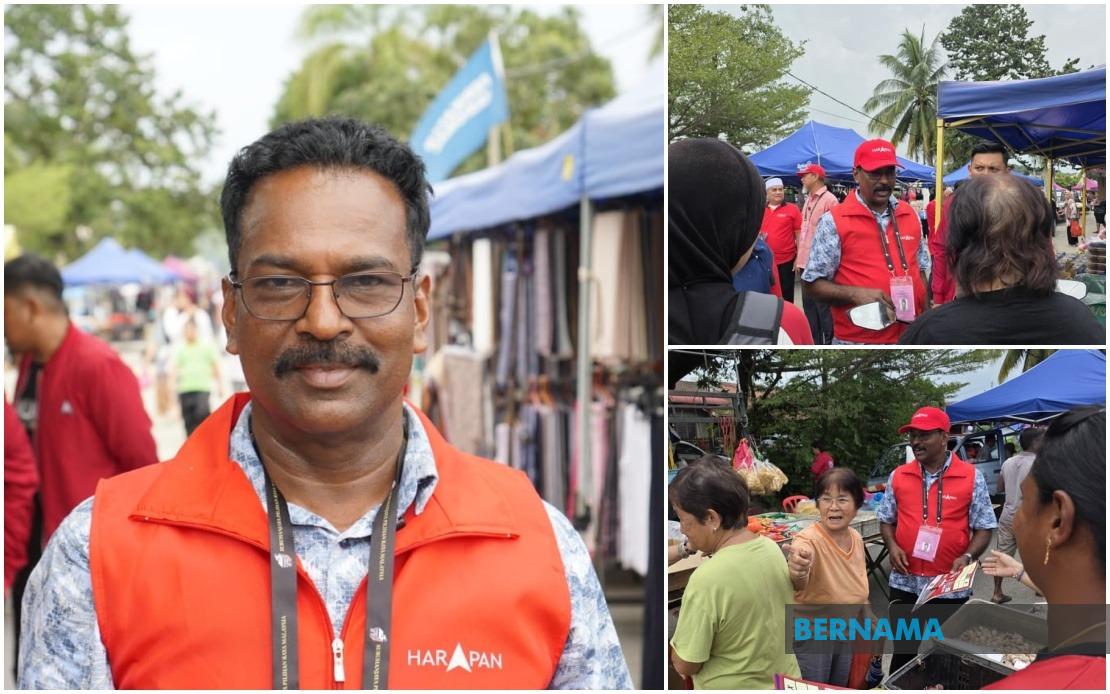
C. Subramani, the Pakatan Harapan standard-bearer for Bukit Kepong in the 16th Johor state election, believes he can pull off a surprise victory by channelling grassroots momentum into electoral gains. The Pagoh-based politician has centred his campaign on a mandate for change, drawing confidence from extensive ground engagement and what he characterises as positive reception among constituents hungry for new direction in the constituency.
Subramani's optimism stems partly from his intensive doorstep work across Bukit Kepong, where he has visited Orang Asli settlements to map out infrastructure shortfalls and socioeconomic pressures affecting residents. These visits have surfaced concrete grievances—poor street lighting, inadequate bridge infrastructure, and housing affordability for the B40 income bracket—that form the backbone of his development pitch. By positioning himself as a listening candidate attuned to ground realities, he is attempting to capitalise on disenchantment with incumbent governance.
The pathway to victory in Bukit Kepong requires Subramani to navigate a three-way contest involving Barisan Nasional and Perikatan Nasional challengers. Notably, the seat was held by PN-Bersatu's Datuk Dr Sahruddin Jamal in 2022 with a slim 710-vote majority, suggesting the seat remains highly competitive. This narrow margin indicates that even incremental swings in voter preference could prove decisive, and Subramani appears intent on consolidating support among those seeking change while appealing to swing voters frustrated by the previous government's record.
Central to Subramani's platform is improved coordination between state and federal administrations. He argues that aligned governance between Putrajaya and Kota Iskandar would unlock faster resolution of issues requiring inter-agency cooperation, particularly those touching education, irrigation, and drainage. This technocratic angle reflects broader PH messaging about efficient governance and appeals to voters weary of bureaucratic siloes. Should alignment occur, Subramani suggests he could escalate local concerns directly to ministers or the Prime Minister's office, theoretically expediting solutions.
Beyond administrative efficiency, Subramani is promoting targeted economic initiatives designed to breathe life into the Bukit Kepong Gallery by transforming it into a historical tourism destination. This proposal reflects an attempt to pivot the constituency toward light tourism development, potentially generating employment and foot traffic while preserving local heritage. Such initiatives resonate with communities seeking sustainable income sources beyond traditional agriculture or manufacturing.
Subramani's prior electoral experience—he contested Buloh Kasap in the 2022 Johor state election—provides him with institutional knowledge of campaigning dynamics and voter temperament in the region. He presents his continuous residency in Pagoh and extended engagement with constituents as credentials that distinguish him from parachute candidates, though his previous unsuccessful bid also suggests he faces scepticism about whether second attempts yield better results.
The broader electoral context shapes the difficulty of his task. The Johor state election sees 172 candidates competing across 56 assembly seats, with approximately 2.7 million voters preparing to cast ballots. This dispersed competition means that local constituency factors—personality, service record, and development promises—often outweigh state or national narratives. Subramani's concentration on hyperlocal issues reflects this reality, though it also means he must overcome incumbency advantages if his opposition holds existing ground organisation.
For Malaysian observers, Subramani's campaign illustrates recurring patterns in state elections: the tension between incumbent performance and appetite for change, the role of administrative coordination in electoral messaging, and the premium placed on visible ground engagement. His emphasis on Orang Asli concerns also signals PH's continued attention to indigenous communities, a demographic that has proved responsive to opposition messaging in recent years despite competing appeals from PN and BN.
The three-way contest format itself creates uncertainty around vote splitting. Subramani must not only persuade voters to back PH but also ensure that anti-incumbent sentiment splits efficiently in his favour rather than consolidating behind a single opposition challenger. In tight contests, vote fragmentation can doom otherwise competitive candidacies, and Bukit Kepong's 710-vote margin in 2022 means even modest leakage to third-place finishers could prove fatal.
Ultimately, Subramani's outcome in Bukit Kepong will reveal whether grassroots sentiment for change in this Johor constituency extends to actual ballot movement, and whether improved state-federal coordination messaging resonates with voters weighing practical delivery against abstract promises of better governance.

