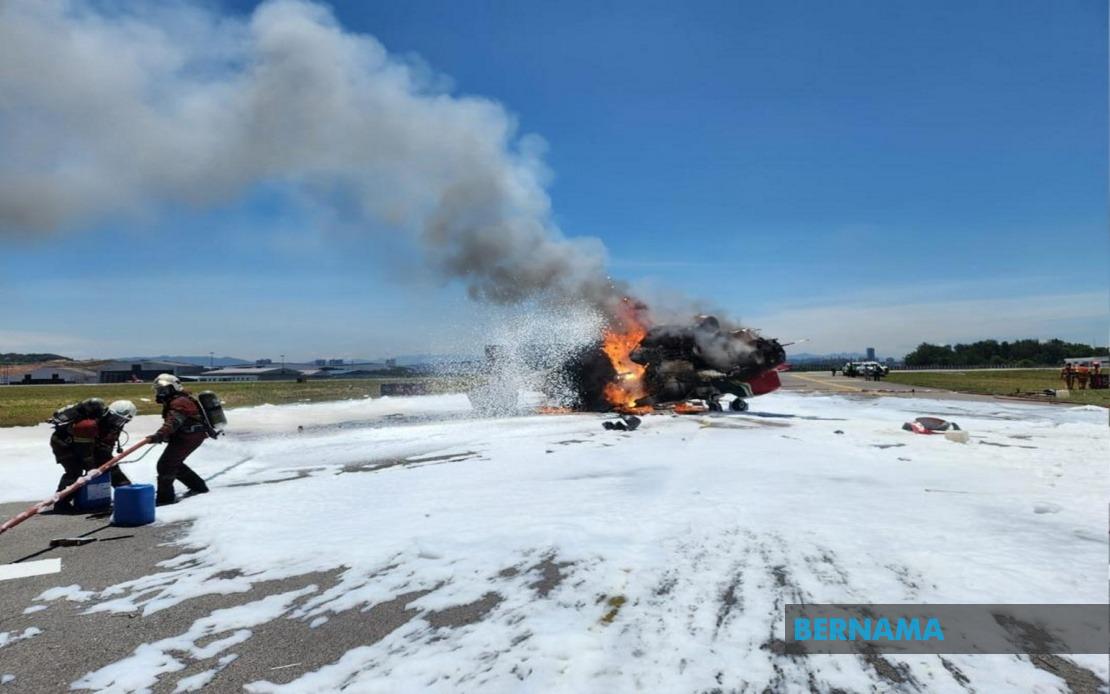
Sultan Abdul Aziz Shah Airport in Subang resumed normal runway operations on August 15 afternoon, less than three hours after a Ukrainian-registered helicopter caught fire during routine maintenance activities. The Malaysian Civil Aviation Authority (CAAM) cleared the airfield for traffic at 2.57 pm, allowing delayed departures to proceed and inbound aircraft to land normally. The incident, which unfolded at Taxiway Victor around midday, highlighted both the airport's emergency response protocols and the inherent risks associated with aircraft maintenance operations at busy civilian hubs.
The explosion involved a Kamov KaV-32S helicopter registered in Ukraine, which ignited at 12.28 pm while undergoing an engine run-up test. This type of maintenance procedure, essential for verifying engine performance and safety systems, typically occurs on taxiways or designated maintenance areas away from passenger terminals. However, even controlled testing carries inherent fire risks when combustible fluids, high temperatures, and rotating machinery converge. The aircraft became fully engulfed in flames, prompting immediate emergency response from airport fire and rescue teams.
Four Ukrainian nationals were aboard the helicopter during the incident—the pilot, co-pilot, and two additional crew members who were conducting the maintenance test. One crew member sustained minor injuries from debris ejected during the explosion, though none of the personnel faced life-threatening conditions. The rapid response of airport emergency services likely prevented what could have escalated into a more serious accident, particularly given the aircraft's proximity to active taxiways and airport infrastructure.
CAAM chief executive officer Capt Datuk Norazman Mahmud confirmed the runway closure was precautionary, necessary to allow emergency services unfettered access and to investigate the incident's full scope. His statement emphasised passenger communication, urging travellers to liaise directly with airlines for schedule updates. This approach reflects international best practices in aviation incident management, where transparency and prompt information dissemination help maintain public confidence in airport safety systems.
The brief closure generated measurable disruption to airport operations. Eight inbound flights were redirected to alternative airports, including Kuala Lumpur International Airport and potentially Penang or Ipoh facilities, depending on aircraft type and destination requirements. Three departing flights experienced delays as ground crews repositioned aircraft and runway inspections concluded. While these numbers appear modest, they underscore how even short airfield closures cascade through flight networks, affecting hundreds of passengers and requiring airlines to coordinate with ground handlers, catering services, and destination airports.
Flight information displays throughout the terminal building reflected the evolving situation, with electronic boards cycling through revised departure times and gate assignments. Passengers navigating these changes would have experienced the characteristic airport disruption—gate changes, announcement repetition, and uncertainty about whether their flights would depart as originally scheduled. Airlines typically absorb costs associated with diversions and delays, including additional fuel for aircraft redirected to alternate airports, though operational expenses eventually factor into ticket pricing across the industry.
The incident raises questions about maintenance scheduling at civilian airports, particularly regarding the proximity of testing areas to active runway and taxiway systems. While Sultan Abdul Aziz Shah Airport maintains dedicated maintenance facilities, the Kamov helicopter's engine test occurred at Taxiway Victor, suggesting either scheduled maintenance activities or unplanned repairs requiring accessible ground locations. Aviation authorities worldwide continue refining protocols for ground testing to minimise risks to airport operations and personnel.
From a regional perspective, this incident illustrates how civilian aviation infrastructure remains vulnerable to mechanical failures and maintenance-related accidents. Southeast Asian airports, including those in Malaysia, handle increasing traffic volumes and aircraft diversity, including specialised helicopters and cargo operators. The Kamov KaV-32S, a Russian-designed heavy-lift helicopter, represents the type of non-traditional aircraft increasingly common at regional hubs, each bringing distinct operational and maintenance requirements.
CAAM's rapid runway reopening demonstrates institutional confidence in the investigation's preliminary findings—that the incident posed no ongoing structural or environmental threat to airport infrastructure. The authority's coordination with airlines and ground services, evident in the swift resumption of traffic flow, reflects competent crisis management. However, the incident will likely trigger detailed accident investigation, potentially examining maintenance procedures, aircraft serviceability records, and adherence to testing protocols.
Looking forward, Sultan Abdul Aziz Shah Airport will conduct enhanced inspections of affected taxiway sections and review maintenance scheduling procedures with all operators conducting ground engine tests. These measures aim to prevent recurrence while balancing the operational necessity of allowing essential maintenance activities. The airport's role as Malaysia's second-busiest facility serving both scheduled and charter operations makes such preventative measures critical for sustained reliability and passenger confidence.
Passengers planning to use the airport in coming weeks can expect normal operations, with minimal residual effects from this incident. However, the event serves as a reminder that even modern, well-managed airports operate within environments where technical failures remain possible. Travellers are accordingly advised to maintain awareness of flight status through airline channels and to allow additional time for potential schedule variations, as airport operations continue processing the accumulated effects of disruptions across interconnected flight networks.

