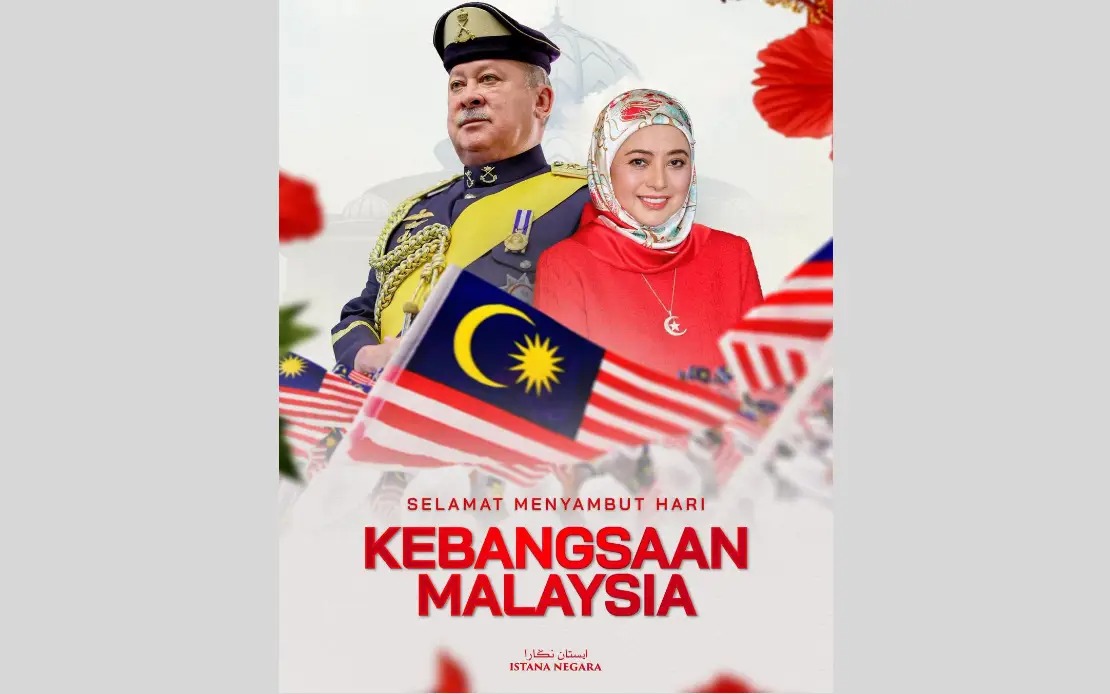
Malaysia's Yang di-Pertuan Agong Sultan Ibrahim Sultan Iskandar and Queen Raja Zarith Sofiah presided over the nation's 69th National Day festivities in Putrajaya on August 31, conveying messages of celebration and national pride to Malaysians. The royal couple shared their greetings through an official social media post, marking a significant moment in the country's annual commemoration of independence and nationhood.
The monarchs arrived at the ceremonial ground in Putrajaya at 8 am, where they were received by Prime Minister Datuk Seri Anwar Ibrahim and his spouse Datuk Seri Dr. Wan Azizah Wan Ismail. Also present at the reception was Communications Minister Datuk Seri Fahmi Fadzil, who currently chairs the National Day and Malaysia Day (HKHM) 2026 Main Committee, underscoring the government's commitment to elevating these national observances in the coming years.
The celebration embraced the "Malaysia MADANI: Kesejahteraan Dinikmati" theme, a framework that centres on ensuring prosperity reaches all segments of Malaysian society while celebrating the nation's inherent diversity. This thematic direction reflects the current administration's emphasis on inclusive development and social cohesion, core pillars of the Malaysia MADANI agenda that has shaped policy priorities since 2023.
The ceremonial programme opened with a formal military ceremony that set a solemn, dignified tone for the proceedings. Following this, elaborate stage performances and a meticulously choreographed parade dominated the main event, each element deliberately crafted to showcase Malaysia's pluralistic identity and the aspirations embedded within the Malaysia MADANI framework. The visual spectacle served not merely as entertainment but as a symbolic representation of the nation's commitment to unity in diversity.
The scale of participation demonstrated the logistical complexity and national significance attributed to the occasion. Organisers mobilised 10,819 participants organised into 76 distinct contingents, alongside 22 brass bands that provided musical accompaniment throughout the parade. The procession featured 11 elaborately decorated vehicles and incorporated 328 land, sea, and air assets—a considerable deployment of military and civilian resources that underscored the ceremonial importance of the day.
Animal contingents added a distinctive element to the festivities, with 112 service animals participating in various formations and marching segments. Complementing the ground-based elements, organisers also showcased the nation's technological progress through the inclusion of 22 electric vehicles, signalling Malaysia's gradual transition towards more sustainable transport solutions in public ceremonies and daily life.
A particularly striking feature involved coordinated human graphics displayed across the terraces, where precisely positioned participants created 26 distinct formations that collectively illustrated Malaysia's multicultural tapestry. This innovative approach to visual storytelling transformed spectators into active participants in the narrative of national identity, creating memorable imagery that would resonate with both attendees and viewers of broadcast coverage.
The National Day celebration reflects Malaysia's ongoing emphasis on commemorating August 31, 1957, when the nation attained independence from British colonial rule. Over nearly seven decades, this annual observance has evolved from marking a purely political transition into a comprehensive celebration of Malaysian identity, encompassing civic pride, national achievements, and collective aspirations for the future.
For Malaysian observers, the prominence given to the Malaysia MADANI theme signals the government's determination to position prosperity and social wellbeing as central to national governance discourse. This messaging carries particular resonance amid ongoing conversations about economic inequality, cost of living pressures, and the need for more equitable resource distribution across different regions and demographic groups within the country.
The involvement of the Yang di-Pertuan Agong as patron and participant in these festivities reinforces the constitutional monarchy's role as a unifying national symbol, transcending partisan political divisions. The King and Queen's presence, combined with Prime Minister Anwar Ibrahim's participation, demonstrated institutional consensus around the importance of the Malaysia MADANI vision and shared commitment to advancing this agenda across government structures.
Regionally, Malaysia's National Day celebrations carry significance beyond domestic boundaries. As one of Southeast Asia's major multiethnic, multireligious democracies, Malaysia's public commitment to pluralism through ceremonial occasions sends important signals about the feasibility and value of managing diversity within complex modern states—a lesson not lost on regional neighbours navigating similar challenges.
The 69th National Day observance also set the stage for upcoming commemorations, with the National Day and Malaysia Day (HKHM) 2026 Main Committee now in active preparation phases. The appointment of a dedicated chairperson signals that organisers intend to elevate next year's celebrations, potentially introducing new thematic elements or expanding the scale of participation and spectacle.

