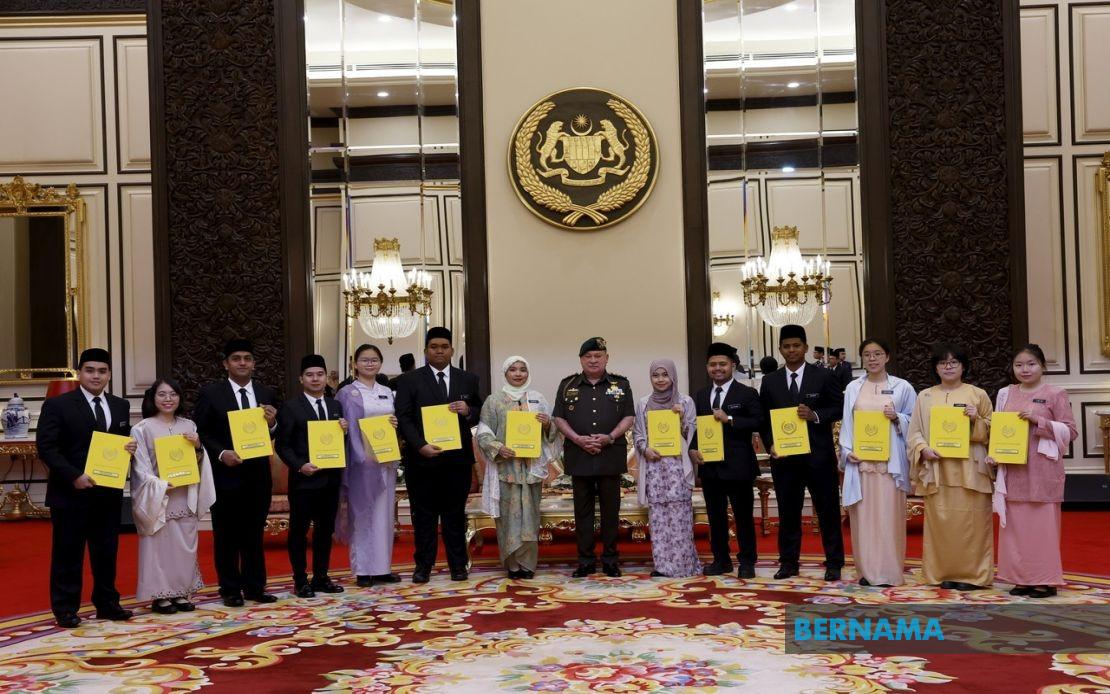
His Majesty Sultan Ibrahim, King of Malaysia, has conferred the 2026 Yang di-Pertuan Agong Scholarships upon 14 deserving recipients during a formal presentation ceremony at Istana Negara in Kuala Lumpur on June 24. The occasion underscores the monarchy's commitment to nurturing academic excellence and supporting Malaysia's brightest minds in their pursuit of advanced postgraduate qualifications.
The scholarship recipients have been evenly divided between two levels of postgraduate study. Seven scholars will embark on doctoral programmes leading to PhDs, while the remaining seven have been selected for Master's degree courses with a research focus. This balanced distribution reflects the scheme's broad mission to develop expertise across various academic disciplines and research fields that are critical to the nation's long-term development and innovation capacity.
The geographic distribution of these scholarships demonstrates the programme's dual commitment to strengthening Malaysia's domestic research institutions whilst maintaining engagement with world-leading academic centres. Four recipients will pursue their studies at prominent universities outside Malaysia, positioning them to acquire international perspectives and exposure to cutting-edge research methodologies. Simultaneously, the remaining ten scholars will conduct their postgraduate research at established local universities, contributing to the advancement of research capabilities within Malaysian institutions and ensuring that state-of-the-art knowledge flows back into the domestic academic ecosystem.
The ceremony was attended by several senior government officials, including Tan Sri Wan Ahmad Dahlan Abdul Aziz, the Director-General of the Public Service, and Tan Sri Dr Azmi Rohani, the Comptroller of the Royal Household at Istana Negara. Their presence highlighted the significance of the occasion within Malaysia's civil service and governance framework, signalling that this scholarship programme ranks among the government's most valued talent development initiatives.
Tan Sri Wan Ahmad Dahlan, speaking with journalists after the formal presentation, characterised the BYDPA as one of Malaysia's most prestigious scholarship offerings. He emphasised that the scheme provides substantially higher funding levels compared to other government scholarship programmes, reflecting its status as a premier route for supporting exceptional Malaysian scholars. This distinction is particularly important for postgraduate research, where adequate financial support often determines whether promising academics can sustain lengthy doctoral or extended master's projects without compromising research quality through part-time employment.
The Yang di-Pertuan Agong Scholarships serve a strategic purpose within Malaysia's human capital development framework. By investing in advanced research training, the programme builds a cadre of highly qualified researchers and academics capable of driving innovation across sectors including science, technology, engineering, medicine, and the social sciences. For a nation seeking to transition towards a knowledge-driven economy, the existence of scholars trained in rigorous research methodology is foundational.
For Malaysian universities and research institutions, the influx of these scholarship recipients represents both opportunity and competitive pressure. The ten scholars remaining in Malaysia will strengthen research outputs at their host universities, potentially boosting institutional rankings and research productivity metrics. Conversely, their presence also raises expectations regarding the quality of supervision, research facilities, and academic environment that local universities must provide to justify their selection as venues for such prestigious scholarship holders.
The international placement of four recipients carries distinct strategic benefits. These scholars will establish networks within global academic communities, gather exposure to international best practices in research management and dissemination, and potentially forge collaborative relationships that yield mutual benefits for Malaysian and foreign institutions. Upon return, they often become ambassadors for Malaysia within international academic circles and serve as bridges connecting local research communities to global developments in their fields.
The timing of the 2026 scholarship awards occurs within a broader context of heightened emphasis on research and development across Southeast Asia. Regional governments increasingly recognise that sustained competitive advantage depends on building indigenous research capacity rather than relying exclusively on external knowledge transfer. Malaysia's investment in postgraduate scholarships positions the nation competitively within this regional ecosystem, signalling commitment to producing world-class researchers whilst strengthening ties with international academic institutions.
The selection process for these scholarships is notoriously competitive, with applicants typically exceeding available places by a significant margin. The 14 recipients therefore represent Malaysia's intellectual elite at the postgraduate threshold, individuals whose future contributions to knowledge production and professional advancement could influence their disciplines for decades. The monarchy's personal involvement in presenting these awards adds ceremonial weight and public recognition that reinforces societal valuation of academic achievement.
Looking forward, tracking the career trajectories of these scholarship recipients will provide valuable data about the scheme's effectiveness. Alumni who advance into leading research, academic, or professional roles validate the investment, whilst their publications, patents, and innovations create tangible returns that justify government expenditure. For prospective scholarship applicants, the visibility of successful alumni serves as inspiration and demonstrates realistic pathways to significant achievement.
The BYDPA programme remains an enduring symbol of Malaysia's dedication to developing intellectual capital through direct investment in promising scholars. As the nation navigates economic transitions and confronts complex challenges requiring sophisticated research-based solutions, the continued strength of such scholarship initiatives becomes ever more crucial to maintaining competitive advantage and building institutions capable of contributing meaningfully to regional and global knowledge communities.