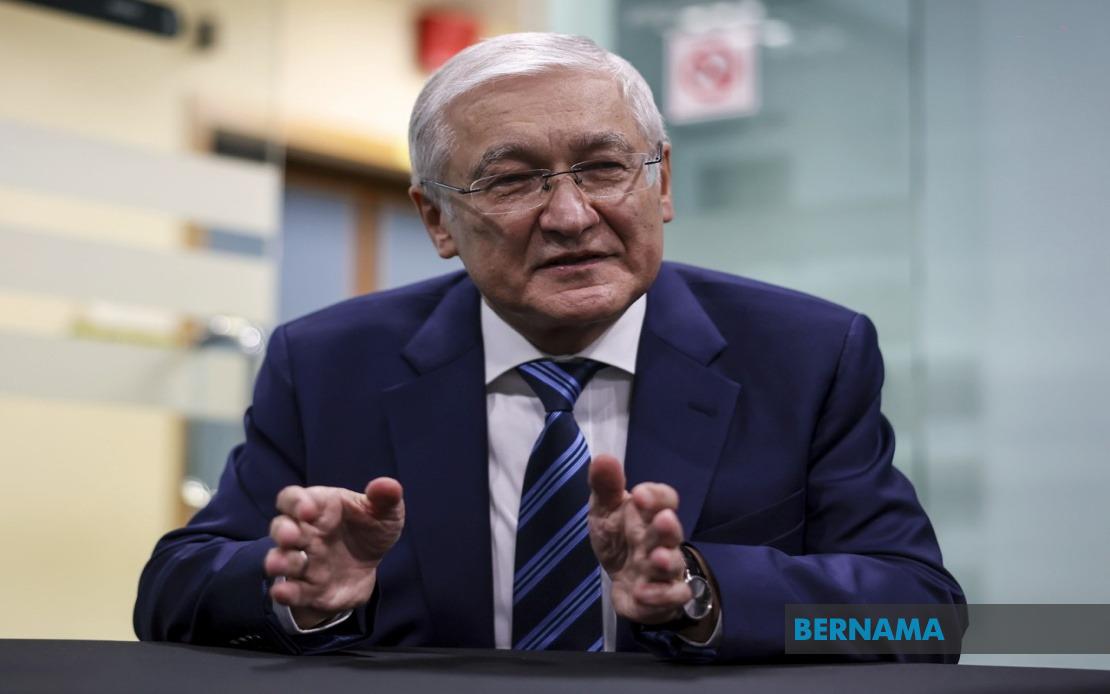
The diplomatic landscape between Malaysia and Russia is undergoing a significant transformation, driven largely by the personal engagement of Sultan Ibrahim, Malaysia's King. In a recent interview with the national news agency, Russian Ambassador to Malaysia Naiyl Latypov underscored how His Majesty's approach has infused warmth and substance into ties that had previously remained at a more conventional level, positioning the two nations for deeper cooperation as they mark six decades of formal relations next year.
Latypov's commendation reflects a notable shift in bilateral dynamics. The ambassador specifically credited Sultan Ibrahim's diplomatic initiatives with transcending the geographical and geopolitical distance separating the two countries, creating what he termed a "new sphere of diplomatic engagement." This characterization is significant given Malaysia's careful navigation of great power dynamics in Southeast Asia, where balanced relationships are essential to preserving regional autonomy. The Russian envoy's comments suggest that Moscow views the enhanced ties not as transactional but as rooted in genuine mutual respect and shared strategic interests.
The trajectory of royal engagement has been remarkable. In August 2023, Sultan Ibrahim made history by undertaking the first state visit to Russia by a Malaysian monarch since diplomatic ties commenced in 1967. This symbolic gesture was followed by a January 2024 special visit during which the King toured St Petersburg's Hermitage Museum alongside President Vladimir Putin, an intimate setting that underscored the personal nature of their developing relationship. These visits stand in stark contrast to the more formal, ceremonial exchanges that have historically characterized Malaysia-Russia relations, suggesting a deliberate effort to forge deeper personal bonds between the two nations' leaders.
The momentum continued through 2024, with Sultan Ibrahim returning to Russia in May for the Victory Day celebrations—a distinctly Russian observance that carries profound historical and emotional significance. The King's participation in this commemoration demonstrated a willingness to engage with Russian national identity and values, not merely economic interests. During this visit, His Majesty held substantive talks with President Putin, resulting in agreements that Latypov described as likely to provide "fresh impetus" to bilateral relations. More intriguingly, according to reports from Russian news outlets Sputnik and RIA Novosti, Sultan Ibrahim extended an invitation for Putin to undertake a reciprocal state visit to Malaysia in 2027, coinciding with the 60th anniversary of diplomatic relations.
Meanwhile, practical outcomes have accompanied the ceremonial aspects of engagement. In June, Russia signaled its intention to eliminate visa requirements for Malaysian citizens as part of a broader policy affecting select nations, a development that would substantially facilitate people-to-people exchange. Simultaneously, Prime Minister Datuk Seri Anwar Ibrahim attended the ASEAN-Russia Commemorative Summit in Kazan, where Putin indicated that bilateral trade had expanded by 12.9 per cent in the previous year. Most significantly, Russia committed to guaranteeing long-term supplies of petroleum, oil, and gas to Malaysia—a commitment with profound implications for Southeast Asia's energy security amid global supply chain uncertainties.
The strategic value of these developments extends well beyond conventional commerce. Prof Dr Azmi Hassan, a geostrategist and senior fellow at the Nusantara Academy for Strategic Research, identifies Sultan Ibrahim's diplomatic efforts as opening crucial "windows of opportunity" inaccessible through standard diplomatic channels. Hassan emphasizes that the initial August visit catalyzed cooperation extending far beyond ceremonial exchanges, particularly in the critical domain of energy security. For a nation like Malaysia, which depends heavily on imported energy to fuel its manufacturing and services sectors, Russia's assurances of long-term fuel supplies represent tangible economic security.
Hassan further contends that royal diplomacy serves an outsized role in strengthening the relationship between Malaysia's Prime Minister and the Russian President, suggesting that the personal authority and prestige vested in the monarchy facilitates negotiations that conventional diplomatic officials might struggle to advance. This observation carries particular relevance in the Malaysian context, where the institution of the monarchy commands deep respect and where the Yang di-Pertuan Agong's personal commitment to a foreign relationship carries symbolic weight that transcends ordinary diplomatic courtesy.
Looking toward Putin's anticipated 2027 visit, Hassan advocates for Malaysian policymakers to think strategically beyond traditional trade considerations. He argues that Russia possesses scientific and technological capabilities comparable to Western nations, yet is willing to provide access at substantially more competitive costs—a proposition of considerable importance for Malaysia's long-term development aspirations. In an era where technology transfer and advanced knowledge acquisition increasingly determine competitive advantage, Russia represents an alternative pathway that avoids the geopolitical complications and expense associated with Western sources. This dimension of the relationship remains underdeveloped in public discourse but may prove crucial to Malaysia's technological advancement.
The current bilateral trade relationship, while substantial, suggests considerable untapped potential. In 2025, Russia ranked as Malaysia's ninth-largest trading partner among European nations, with total bilateral commerce valued at RM8.72 billion (US$2.04 billion). Malaysian exports to Russia emphasize electrical and electronic products, machinery, equipment and components, plus processed food items, while imports concentrate on petroleum products, minerals, and chemical-based goods. This composition reflects complementary economic structures, yet the volume remains modest relative to Malaysia's trade with other major partners, indicating scope for expansion.
The historical foundation for current engagement stretches back to April 3, 1967, when Malaysia and the Soviet Union formally established diplomatic relations through a trade agreement. Institutional infrastructure developed methodically thereafter, with the Russian Trade Office opening in Kuala Lumpur in November 1967, followed by the embassy in April 1968. Malaysia reciprocated by establishing its embassy in Moscow in November 1968. These institutional frameworks have provided the scaffolding for bilateral relations, yet the personal engagement of Sultan Ibrahim appears to be infusing these structures with renewed purpose and dynamism.
As the two nations prepare for their 60th diplomatic anniversary, the relationship enters a phase of heightened potential. Sultan Ibrahim's sustained engagement, culminating in Putin's anticipated 2027 visit, signals that Malaysia is consciously cultivating a deeper partnership with Russia beyond the constraints of Cold War legacies or contemporary Western-centric geopolitical alignments. For Southeast Asia, Malaysia's recalibrated approach to Russia represents a small but meaningful example of how regional nations navigate great power competition while pursuing legitimate national interests in energy security, technology acquisition, and strategic autonomy.

