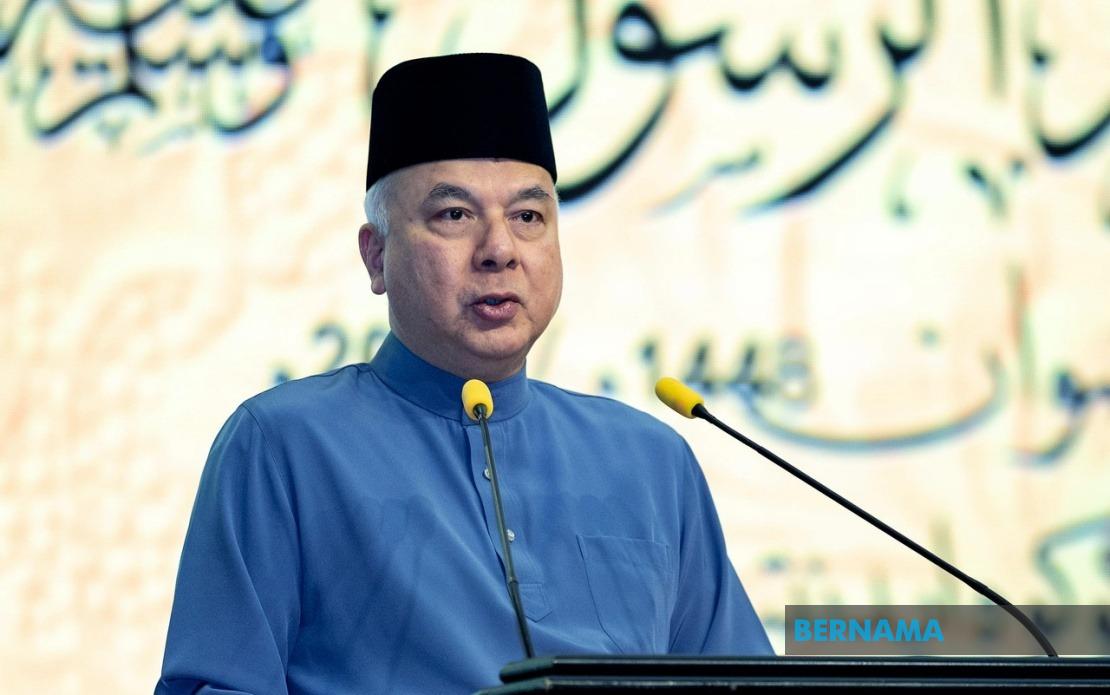
Sultan Nazrin Shah of Perak has sounded an alarm about the fragmentation threatening Muslim communities across the region, identifying a confluence of factors that are steadily eroding the bonds of brotherhood among the faithful. Speaking at the Perak-level Maulidur Rasul celebration in Ipoh on Sunday, the Sultan articulated concerns that transcend local politics, reflecting broader anxieties about cohesion within the global Muslim community. His intervention signals how Malaysia's hereditary rulers continue to position themselves as moral arbiters during periods of social and political tension.
The Sultan identified a troubling constellation of divisive forces: political disagreements, competing interpretations of Islamic doctrine, ethnic tensions, and the pursuit of individual ambitions. These factors, he explained, have grown increasingly dominant over time, gradually displacing the collaborative ethos that traditionally characterised Muslim societies. What distinguishes his critique is not merely the identification of these problems but his framing of them as systemic issues requiring structural responses rather than individual piety alone. The emphasis on how personal interests and the accumulation of wealth, status, and comfort have supplanted communal solidarity suggests a diagnosis rooted in contemporary materialism and individualism.
Central to Sultan Nazrin's message was a direct appeal to Muslim leaders, religious organisations, and Islamic movements to fundamentally recalibrate their priorities. Rather than expend energy on factional disputes and political competition, he urged these institutions to channel resources toward initiatives that would tangibly strengthen both the Islamic faith and its adherents. This distinction between internal rivalries and external strengthening offers a constructive framework for reconciliation. By reorienting focus outward—toward community welfare and progress—the Sultan suggested that competitive impulses might be redirected toward productive ends. His intervention carries particular weight given Malaysia's complex tapestry of Islam practiced across diverse ethnic groups and political jurisdictions.
Recognising that not all actors within the Muslim sphere have succumbed to divisive impulses, Sultan Nazrin acknowledged the laudable work being undertaken by various individuals and organisations. He specifically praised efforts spanning Islamic education, Islamic economics and finance, halal industry development, waqf management, digital religious outreach, and family institution strengthening. These initiatives represent what might be termed constructive Islam—efforts focused on practical advancement within Islamic frameworks rather than doctrinal disputation. By publicly commending these endeavours, the Sultan effectively positioned them as models worthy of emulation and expansion. For Malaysian readers familiar with the tension between progressive Islamic finance and traditional religious conservatism, this validation of multiple approaches to Islamic development carries symbolic importance.
Yet perhaps the Sultan's most pressing concern relates to the globalised environment in which Muslims now operate. He highlighted the mounting challenges posed by worldwide cultural flows, particularly through digital platforms, entertainment media, and lifestyle trends originating from Western secular societies. This preoccupation reflects anxieties shared across Muslim-majority nations regarding cultural sovereignty in an age of instantaneous global information exchange. The challenge, as Sultan Nazrin articulated it, is not resistance to modernity itself but rather navigation of modernisation in ways that do not fundamentally undermine Islamic values and collective identity. His framing acknowledges that Muslim societies must engage with contemporary technologies and practices rather than retreat from them entirely.
The Sultan's emphasis on balancing modernisation with identity preservation speaks to a central tension within contemporary Southeast Asia. Malaysia, with its status as a Muslim-majority nation that has pursued rapid economic development and technological integration, exemplifies this balancing act. His call for "wise approaches and strategies" suggests that solutions cannot be formulaic or imposed universally, but must emerge from thoughtful contextual analysis. The concern about eroding confidence in one's own Islamic identity—a consequence he identified as potentially flowing from uncritical embrace of external influences—points to psychological and cultural dimensions of religious life often overlooked in policy discussions.
The attendance of senior Perak royalty and state government officials underscores the formal institutional backing for these messages. The presence of Perak Menteri Besar Datuk Seri Saarani Mohamad alongside the Sultan's family indicates alignment between traditional and executive authority on these matters. In Malaysia's constitutional system, where sultans retain formal headship of Islam in their respective states, such royal pronouncements carry both ceremonial and substantive weight. The gathering at a Maulidur Rasul celebration—marking the Prophet Muhammad's birthday—provided an appropriate forum for emphasising Islamic unity and shared purpose.
For Malaysia and the broader Southeast Asian region, Sultan Nazrin's intervention highlights how traditional institutions remain engaged with contemporary challenges. Unlike purely ecclesiastical or secular governmental responses to religious fragmentation, royal addresses occupy a distinctive space, appealing simultaneously to tradition and progressive development. The Sultan's message implicitly critiques both rigid conservatism that resists necessary adaptation and uncritical modernisation that abandons cultural moorings. This middle path, which he advocates, reflects sophisticated understanding of how Muslim societies navigate twenty-first-century complexities.
The specific initiatives Sultan Nazrin highlighted—halal industry development, Islamic finance, waqf systems, and digital religious engagement—represent tangible domains where Muslims can demonstrate practical excellence and innovation. These areas offer pathways for Muslim communities to exercise agency and leadership within global markets and technological systems rather than positioning themselves primarily as consumers or passive recipients of external influences. Islamic finance, for instance, has evolved into a sophisticated sector attracting non-Muslim participation; framing it as a vehicle for ummah strengthening recontextualises it beyond mere commercial activity. Similarly, digital dakwah leverages contemporary communication tools while maintaining religious objectives, exemplifying how modernisation need not contradict Islamic purpose.
The underlying diagnosis in Sultan Nazrin's address suggests that Muslim fragmentation stems not from theology alone but from structural incentives favouring individual advancement over collective welfare. This analysis, if adopted by policymakers and religious leaders across Southeast Asia, could inform institutional reforms encouraging cooperation. Educational curricula emphasising Islamic history's collaborative achievements, economic models rewarding community participation, and governance structures that institutionalise consultation rather than hierarchical pronouncement might flow from such insights. For Malaysia specifically, where inter-state and intra-party Islamic politics regularly generate friction, the Sultan's call for minimising "unnecessary disputes" may prove particularly resonant.
The challenge articulated by Sultan Nazrin extends beyond Malaysia to encompass Muslim communities throughout Southeast Asia and globally. Indonesia, with its vast Muslim population and experience managing religious diversity within democratic frameworks, similarly navigates tensions between modernisation and tradition. Brunei and Thailand face distinct but related questions about Islam's role in rapidly changing societies. The Sultan's emphasis on proactive community-building rather than reactive defence against external influences offers a constructive narrative applicable across contexts. Rather than framing Islam as perpetually under siege, he proposed reorienting toward demonstrable achievements and positive contributions to human flourishing.
Moving forward, the reception accorded to Sultan Nazrin's message will partly determine its practical impact. Religious scholars and Islamic movement leaders must translate his broad principles into concrete programmes and institutional changes. The tendency toward political competition and factional rivalries will not automatically diminish through exhortation alone; structural incentives require reshaping. Nonetheless, royal sanction for initiatives emphasising unity, modernisation balanced with identity preservation, and constructive engagement with contemporary challenges provides important political cover for reformers and bridge-builders. In Malaysia's context, where sultanates retain genuine institutional significance, such messages can catalyse meaningful shifts in how Islamic institutional life develops.

