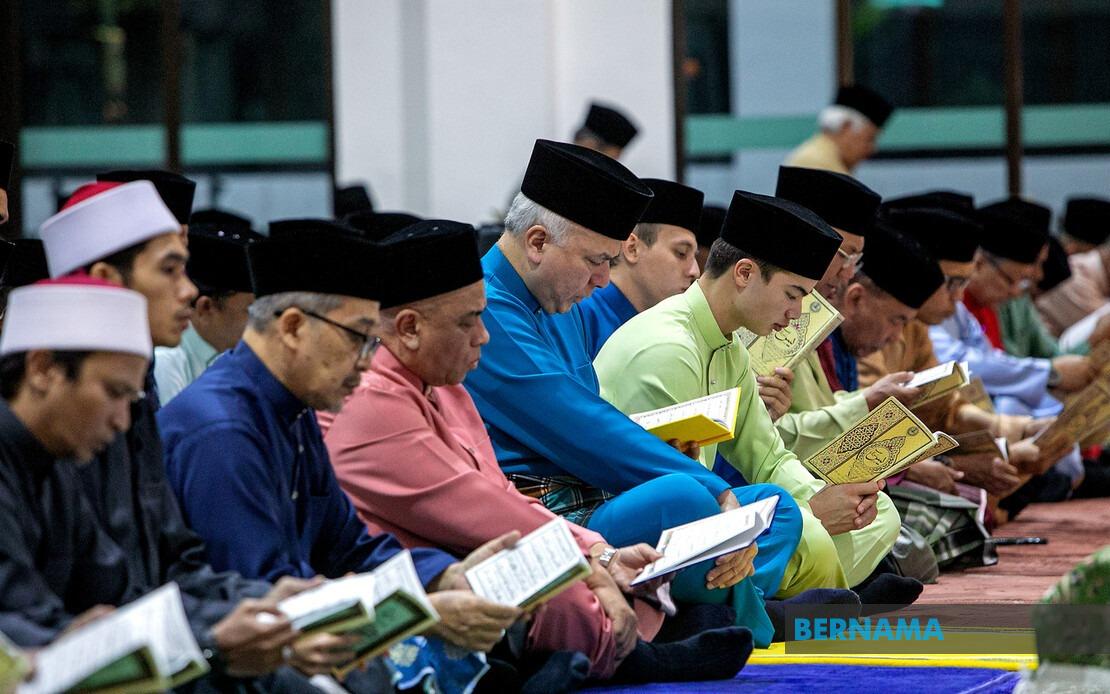
Sultan Nazrin Shah, the Sultan of Perak, presided over the state-level National Day commemoration in Ipoh on Friday evening, lending royal significance to the ceremonial opening of a major new religious institution and leading congregational prayers at Masjid Imam As Syafie. The occasion brought together prominent state figures including Menteri Besar Datuk Seri Saarani Mohamad and Tan Sri Mohd Annuar Zaini, who serves as president of the state Islamic Religious and Malay Customs Council, drawing approximately 1,000 worshippers to participate in the festivities.
The mosque, which represents a substantial investment in religious infrastructure for Perak's Muslim community, was constructed at a total cost of RM8.7 million and officially completed in the preceding year. The facility was designed with considerable capacity, accommodating approximately 1,600 people simultaneously, making it a significant addition to places of worship in the state. The scale of the project underscores the continued government commitment to developing Islamic religious facilities across Malaysia's states, reflecting the integral role such institutions play in community life and social cohesion.
During the official inauguration ceremony, Sultan Nazrin performed a symbolic gesture to formally open the mosque by unveiling the plaque affixed to the building's entrance. Following this ceremonial act, His Royal Highness participated in the doa selamat, a supplication prayer commonly performed to seek blessings and divine protection for the nation and community. The Sultan's active participation in these religious observances demonstrated the constitutional monarch's important role as guardian of Islam in Perak, a responsibility embedded within Malaysia's federal structure where rulers hold custodial authority over Islamic affairs within their respective states.
The evening's religious programme proceeded with the recitation of Yasin, one of the Quran's most frequently recited chapters during communal gatherings and celebrations, followed by tahlil, a form of remembrance involving the repetition of Islamic phrases. These devotional practices, deeply rooted in Southeast Asian Islamic tradition, serve to unite congregants in collective spiritual expression. The proceedings were led by Masjid As Syafie's Imam II Muhammad Luqmaan Mohd Helmi, who guided the congregation through the various components of the religious service.
Following the completion of these special observances, Sultan Nazrin remained at the mosque to join the congregational Isyak prayer, the last of the five daily Islamic prayers, demonstrating sustained engagement with the community throughout the evening. This participation extended beyond ceremonial requirements, reflecting a deeper involvement in the religious life of Perak's population. The Sultan's presence at extended prayer sessions sends a powerful message about the importance placed on regular observance of Islamic practices at the highest levels of state leadership.
The timing of the mosque's inauguration during National Day celebrations is particularly significant for Malaysia's multiethnic and multifaith society. These annual commemorations provide opportunities for different communities to celebrate national identity while maintaining their distinct cultural and religious traditions. By integrating the opening of a major Islamic institution into National Day programming, the state demonstrated how religious development and national patriotism can be harmoniously combined, avoiding any perception of sectarian division during moments of national reflection.
For Ipoh and the surrounding region, the completion and activation of Masjid Imam As Syafie addresses growing demands for adequate prayer facilities and Islamic community spaces. With a capacity of 1,600 worshippers, the mosque is positioned to serve as a hub for religious instruction, social welfare initiatives, and community gathering, functions that modern Islamic institutions increasingly undertake beyond traditional prayer services. The substantial financial commitment of RM8.7 million reflects the resource allocation prioritized for Islamic infrastructure development in Perak.
The presence of state-level Islamic council leadership alongside the Sultan and Menteri Besar underscores the collaborative governance structure governing religious affairs in Malaysia. The Islamic council's involvement in organizing and overseeing such ceremonies ensures alignment with Islamic jurisprudence and community standards while maintaining institutional coordination between religious and secular governance bodies. This institutional arrangement represents the unique constitutional framework that characterizes Malaysian federalism, where Islam holds a special position while the nation maintains commitment to religious pluralism.
The National Day observance at Masjid Imam As Syafie also reflects broader patterns of how Malaysian states integrate religious commemoration into national celebrations. Unlike some secular-focused national day events, the Perak programme demonstrated how Islamic practice can occupy centrepiece roles in state-level observances without diminishing the pluralistic character of national identity. For Malaysian and Southeast Asian observers, such events illustrate how Muslim-majority nations balance religious observance with inclusive national values.
Looking forward, the operational activation of this new mosque facility will likely generate increased usage across Perak's Muslim population for daily prayers, Quranic study circles, and community programmes. The substantial capacity suggests planners anticipated growing religious participation and demographic expansion in Ipoh. The mosque's establishment also contributes to Perak's evolving urban religious landscape, as expanding towns require corresponding development of community facilities to support population growth and spiritual needs.

