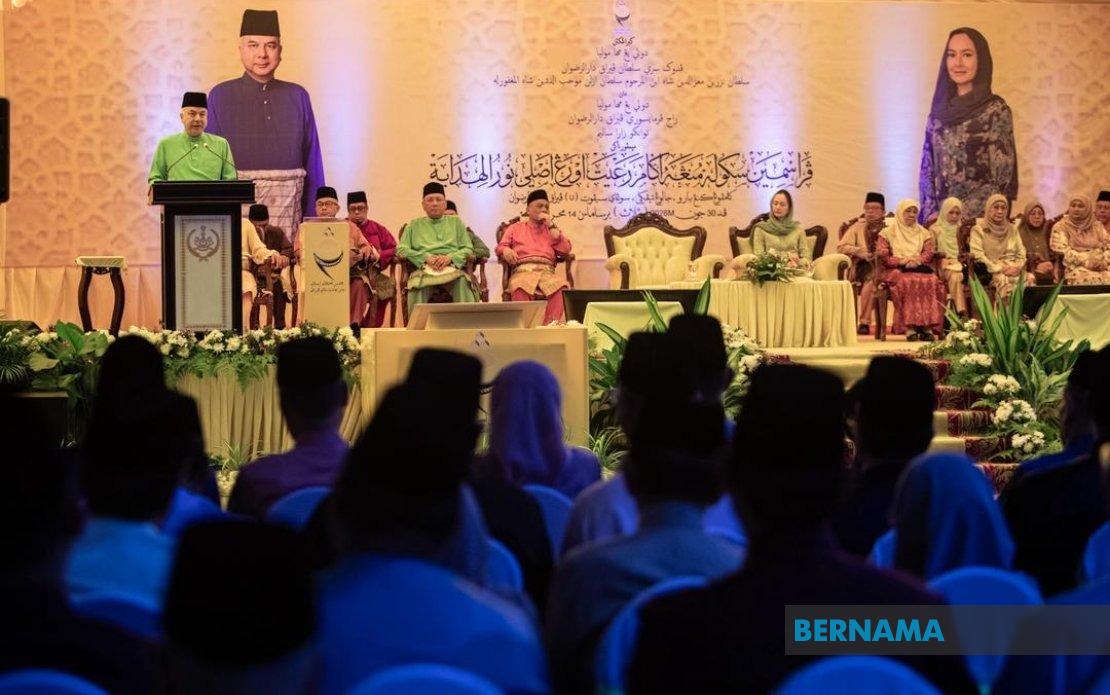
Sultan Nazrin Shah of Perak formally opened Sekolah Menengah Agama Rakyat (SMAR) Orang Asli Nurul Hidayah in Kampung Kenang, Sungai Siput Utara on June 30, recognising the institution as a watershed moment in advancing educational opportunities and human capital development within the Orang Asli community across Perak. The ceremonial opening brought together significant figures in the state's political and religious leadership, including the Raja Muda of Perak, Raja Jaafar Raja Muda Musa, and the Raja Di Hilir Perak, Raja Iskandar Dzurkarnain Sultan Idris Shah, underscoring the importance placed on the initiative by the state's institutions.
Menteri Besar Datuk Seri Saarani Mohamad alongside senior officials from the Perak Islamic Religious and Malay Customs Council (MAIPk) and the Perak Islamic Religious Department (JAIPk) were present at the event. The convergence of executive, royal and religious representatives highlighted the multifaceted commitment required to address education gaps affecting indigenous populations in Malaysia, a demographic often sidelined in mainstream development narratives across the country.
In addressing the gathering, Sultan Nazrin emphasised that SMAR Nurul Hidayah occupies a unique position as the nation's inaugural Orang Asli Islamic secondary school, functioning as a transformative force within Kampung Kenang's indigenous population. The institution's trajectory from a simple dakwah and religious learning centre operating more than three decades ago to a comprehensive educational establishment demonstrates the potential for grassroots initiatives to evolve into significant institutional frameworks serving marginalised communities. This evolution reflects both community determination and strategic institutional support necessary to translate educational aspirations into tangible infrastructure and programmes.
The Ruler framed the school's significance beyond mere physical construction, presenting it instead as an investment in securing improved prospects for Orang Asli youth and by extension, their communities' future development pathways. This reframing carries particular relevance for Malaysian policymakers grappling with persistent educational disparities affecting indigenous populations, particularly in rural Peninsular Malaysia where access to quality secondary education remains constrained by geography and resource availability. By characterising educational investment as foundational economic and social policy, Sultan Nazrin positioned indigenous education within broader narratives of national development and inclusive growth.
The school's integrated curriculum approach, combining conventional academic subjects with Islamic religious instruction, addresses a specific educational philosophy gaining traction across Southeast Asia. This model attempts to balance contemporary skill development required for economic participation with value transmission central to preserving community identity and cohesion. For Orang Asli students whose cultural contexts often diverge significantly from mainstream Malaysian educational experiences, such integrated frameworks potentially offer more culturally responsive pedagogical approaches than conventional models alone.
Sultan Nazrin highlighted the school's documented success in producing academically accomplished graduates whilst maintaining Islamic values and moral grounding, metrics that extend beyond standard academic performance indicators. The fact that former students have returned to contribute to their communities represents a particularly valuable outcome, suggesting that educational institutions serving indigenous populations can cultivate leadership cadres capable of addressing local challenges with contextual understanding unavailable to external actors. This cyclical benefit—whereby education strengthens capacity for subsequent community development—demonstrates how targeted educational initiatives generate multiplier effects beyond individual student advancement.
The Ruler's emphasis on MAIPk's commitment to ensuring equitable educational access regardless of socioeconomic background or geographic location speaks to persistent structural inequities in Malaysia's education system. Despite decades of national development, many Orang Asli settlements remain geographically isolated with limited educational infrastructure, constraining students' capacity to access secondary schooling. SMAR Nurul Hidayah's establishment in Kampung Kenang therefore represents not merely institutional expansion but a deliberate policy choice to bring educational services to underserved populations rather than requiring communities to migrate toward existing facilities.
The Sultan articulated a comprehensive vision of education transcending knowledge transmission to encompass character development, spiritual formation, emotional maturation and physical wellbeing. This holistic conceptualisation aligns with international educational frameworks emphasising human development as multidimensional rather than strictly academic. For Orang Asli communities experiencing complex social pressures including economic marginalisation and cultural erosion, schools functioning as comprehensive developmental institutions address needs extending beyond classroom instruction.
Sultan Nazrin's recognition that education serves as the primary mechanism for unlocking progress, shaping individual character and elevating societal dignity resonates with Malaysia's broader development discourse yet carries particular urgency within indigenous contexts. Educational advancement for Orang Asli populations directly correlates with improved economic outcomes, health indicators, and reduced vulnerability to exploitation historically characterising their engagement with dominant society. When senior leadership articulates education as fundamental to dignity restoration, it validates previously marginalised populations' aspirations whilst signalling policy commitment to addressing systemic inequities.
The opening of SMAR Nurul Hidayah occurs amid growing regional recognition that Southeast Asian nations must deliberately invest in indigenous education to achieve inclusive development outcomes. Countries across the region, from Thailand to the Philippines, increasingly acknowledge that indigenous populations' educational marginalisation perpetuates intergenerational poverty and limits human potential contribution to national economies. Malaysia's establishment of dedicated institutions serving Orang Asli students through integrated religious and academic curricula positions the country alongside regional leaders in indigenous education policy innovation.
The school's emphasis on preserving syariah values and religious identity among Orang Asli youth reflects evolving religious dynamics within indigenous communities. Historical Christian missionary engagement in Orang Asli areas created religious diversity within communities, and the establishment of Islamic educational institutions represents contemporary policy effort to strengthen Islamic identity whilst maintaining religious pluralism. This nuanced approach acknowledges that education serves identity formation purposes extending beyond economic preparation, particularly consequential for minority populations navigating majority-dominated national contexts.
For Malaysian policymakers evaluating indigenous education strategies, SMAR Nurul Hidayah's model offers implementable lessons regarding integrated curriculum design, geographic accessibility and community engagement. The institution's three-decade longevity suggests sustainability potential when educational initiatives embed themselves within community structures rather than remaining externally-imposed programmes dependent on temporary funding cycles. As Malaysia pursues targets for inclusive educational access under sustainable development frameworks, Orang Asli populations' educational advancement through models like SMAR represents measurable progress toward equity objectives.

