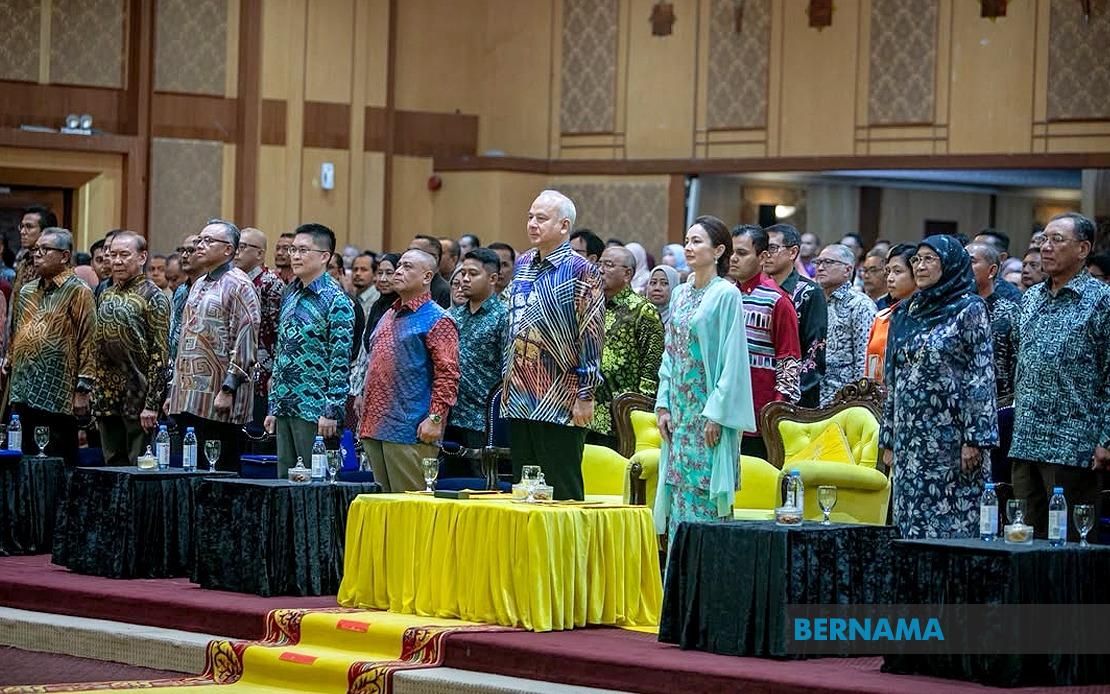
Sultan Nazrin Shah, the Sultan of Perak, presided over the state-level Merdeka Month celebration at Bangunan Perak Darul Ridzuan in Ipoh, underscoring the importance of cultivating patriotism and loyalty among the younger generation. Joining the Sultan at the event were Raja Permaisuri Tuanku Zara Salim, Menteri Besar Datuk Seri Saarani Mohamad, and Deputy Education Minister Wong Kah Woh, reflecting the high-level commitment of both the royal household and state government to the initiative.
The programme represents a flagship effort within Perak's educational ecosystem to blend celebration of national independence with practical skill-building among students. Rather than serving as a ceremonial occasion alone, the event functioned as a culmination of months of preparation and competition across the state's primary and secondary schools, showcasing achievements in language proficiency, artistic expression, and public speaking prowess.
According to Perak Education Department director Zulkafli Mohamed Mokhtar, participation numbers demonstrated substantial momentum. The programme attracted 214,095 entries from students, representing 83.6 per cent of Perak's primary and secondary school population. This widespread engagement signals that the initiative has transcended niche appeal and gained genuine traction among families and educational institutions throughout the state.
The surge in participation carries particular significance when measured against historical trends. A fifteen per cent increase compared with the previous year indicates the programme is not plateauing but accelerating, suggesting that both schools and parents view it as a valuable vehicle for talent identification and personal development. For a state-level programme in Malaysia's education landscape, achieving such consistent year-on-year growth is noteworthy and reflects effective promotion and coordination by the Education Department.
Beyond raw numbers, the programme embodies a strategic approach to national education policy outlined in the Malaysia Education Plan 2026-2035. The focus encompasses more than academic excellence, targeting instead a holistic development model that emphasizes moral fortitude, critical thinking, patriotic consciousness, and historical awareness. These competencies align with contemporary educational philosophy that recognizes students need preparation for leadership roles requiring both intellectual capacity and ethical grounding.
Sultan Nazrin's presentation of the special award for Best Achievement by District Education Office to Kinta Utara District Education Office, accompanied by RM20,000 in cash prize, demonstrated tangible royal recognition of institutional excellence. This direct reward mechanism incentivizes district education offices to enhance their coordination and support for such programmes, creating a cascading effect throughout administrative structures that ultimately benefits participating schools and students.
The diversity of competitions featured across the event reflected a deliberate attempt to identify and nurture talent across multiple disciplines. Malay and English language public speaking competitions targeted linguistic proficiency and communication skills essential for future professionals. Ifwat Arrafi Mohd Amin of SMK Tun Abd Razak in Bagan Datuk claimed the upper secondary Malay language championship, while E Johnnes Abysia from SMK Sungai Pari in Kinta Utara prevailed in the English category. The inclusion of choral speaking, poetry, essay writing, caricature drawing, and poster design competitions indicates recognition that excellence manifests across artistic, linguistic, and creative domains.
The participation of both Sultan Nazrin and Raja Permaisuri Tuanku Zara Salim in presenting awards carried symbolic weight beyond ceremonial obligation. Royal presence at such events reinforces the message that national identity and patriotic values command the highest levels of institutional attention and personal commitment from state leadership. For young recipients, receiving recognition directly from the reigning monarch creates memorable impressions that reinforce the connection between individual achievement and national service.
For Malaysian education stakeholders and Southeast Asian observers, Perak's experience offers a model of how traditional celebrations of national independence can be leveraged as platforms for contemporary educational objectives. The programme demonstrates that Merdeka Month observance need not remain confined to flag-waving and historical recitations but can serve as catalyst for identifying talent, building confidence, and creating networks among high-achieving students and educational practitioners.
The state's approach also reflects broader efforts within Malaysian education to balance standardized curricula with experiential learning and competitive forums. Such programmes provide outlets for students whose talents might not fully surface in conventional classroom assessment, particularly in creative and performative domains. The substantial participation rate indicates schools recognize value in dedicating resources and class time to these activities, suggesting they are perceived as integral rather than supplementary to educational missions.
Looking forward, the programme's trajectory raises questions about sustainability and scaling. Maintaining fifteen per cent annual growth requires consistent funding, coordination, and enthusiasm across dispersed schools and communities. The state government's continued investment, evidenced by cash prizes and ministerial-level attendance, suggests institutional commitment, but long-term viability will depend on whether the programme remains responsive to student interests and continues producing tangible benefits for participants in terms of skills development and future opportunities.
For Southeast Asia more broadly, Perak's initiative offers a case study in how regional states are adapting independence celebrations to serve contemporary nation-building agendas. As Malaysia and its neighbours grapple with questions about civic participation, identity formation, and educational excellence in the twenty-first century, programmes that combine patriotic messaging with practical skill development provide a framework worthy of attention and adaptation.

