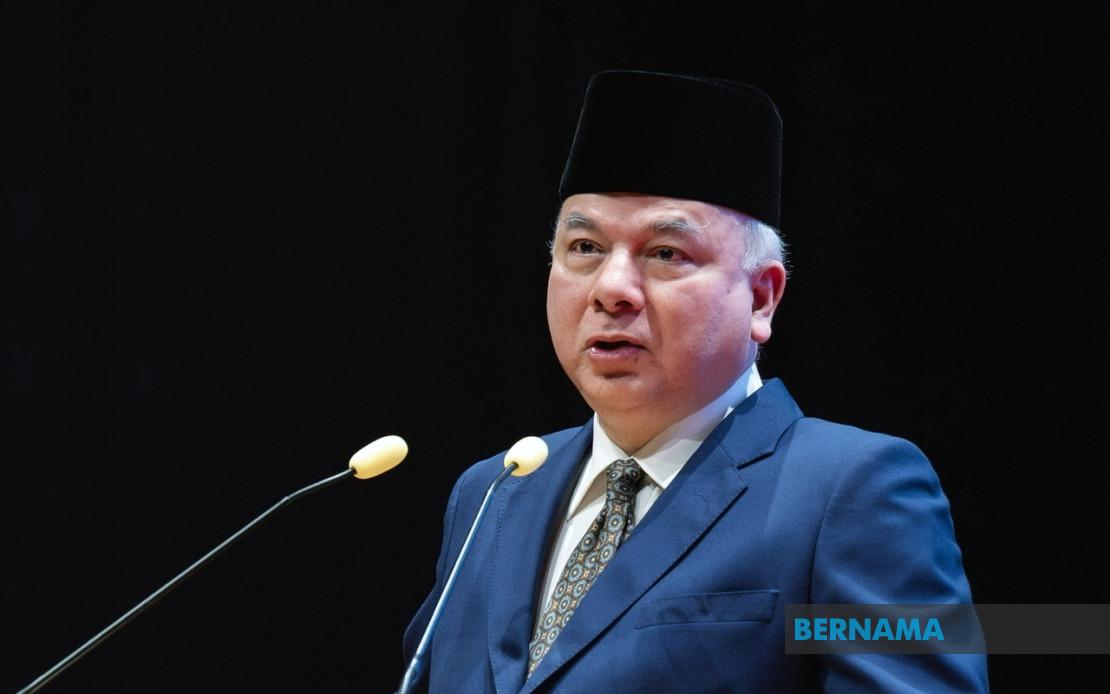
Sultan Nazrin Shah has thrown his weight behind a transformative vision for Islamic endowments, calling for the development of a harmonised governance framework that could be adopted across borders and cultures. Speaking at the opening of the International Waqf Da'wah Convention 2026 at the Kuala Lumpur Convention Centre on 27 July, the Perak Sultan advocated for moving beyond fragmented approaches to waqf administration, proposing instead a structured international collaboration that builds on proven models already in existence within the Muslim world.
The Sultan's intervention addresses a longstanding challenge facing Islamic finance and religious institutions across the globe. Rather than reinventing governance structures from the ground up, he suggested that an open, inclusive working group should synthesise the best practices already developed by leading jurisdictions such as Indonesia and Kazakhstan, while drawing on the technical expertise of the Accounting and Auditing Organisation for Islamic Financial Institutions (AAOIFI). This pragmatic approach acknowledges that solutions to waqf governance already exist in pockets around the Muslim world; the task now is to connect these disparate efforts into a coherent, voluntary framework.
Crucially, Sultan Nazrin proposed that INCEIF University, a world-class Malaysian institution specialising in Islamic finance education, should serve as the secretariat for this initiative. Such a positioning would place Malaysia at the intellectual and institutional centre of efforts to professionalise waqf management globally, elevating the country's standing as a thought leader in Islamic economics and reinforcing Kuala Lumpur's role as a hub for Islamic financial innovation. The proposal positions Malaysian expertise as the natural anchor for international standards-setting in this domain.
Transparency emerges as a cornerstone of the Sultan's vision. He urged the rapid adoption of digital cash waqf platforms equipped with real-time public dashboards, transforming how these institutions account for funds and engage with stakeholders. This technological pivot directly addresses long-standing concerns about accountability in waqf administration. By moving from opaque, paper-based systems to digitised platforms with immediate public visibility, waqf institutions can rebuild public trust and demonstrate the integrity that should characterise the management of assets held in trust for religious and charitable purposes. For Malaysia specifically, such digital infrastructure could position local waqf bodies as frontrunners in transparent Islamic philanthropy.
The Sultan identified a critical problem haunting waqf institutions globally: dormant assets that fail to generate the social and economic benefits they were intended to provide. Vast holdings of land and property sit idle, records remain fragmented and incomplete, ownership disputes fester unresolved, and administrative capacity falls short of the potential these endowments represent. This systemic underutilisation reflects not a shortage of resources but rather governance failures and institutional weaknesses that have accumulated over decades. In Malaysia alone, where waqf holdings are substantial, activating these assets through improved management could unlock significant funding for healthcare, education, and poverty alleviation.
Recognising the urgent imperatives of environmental sustainability and regional stability, Sultan Nazrin proposed a pilot initiative titled "Waqf for Peace and Planetary Resilience." This scheme would harness waqf funding to support renewable energy projects and climate-resilient infrastructure across selected institutions in Malaysia, Indonesia, and other ASEAN nations. By channelling Islamic endowments towards environmental stewardship and peaceful coexistence among communities, the initiative bridges religious obligations with contemporary development challenges. For Southeast Asia, where many nations face mounting climate pressures and resource scarcity, this represents an innovative mechanism for mobilising capital towards shared regional priorities.
The Sultan grounded his prescriptions in Islamic principles, emphasising that waqf governance must incorporate the values of balance, justice, mercy, and stewardship. These are not merely aspirational ideals but operational requirements that should guide how trustees discharge their duties. The concept of amanah—sacred trusteeship—carries profound legal and moral weight in Islamic tradition, obligating those administering waqf assets to uphold the highest standards of integrity. By reconnecting governance frameworks to these foundational principles, the Sultan articulated a vision in which technical reforms and spiritual accountability reinforce each other.
The event drew senior figures from Malaysia's political and religious establishment. The presence of Sarawak Premier Tan Sri Abang Johari Tun Openg, who chairs PERKIM, and Minister Zulkifli Hasan of the Prime Minister's Department (Religious Affairs) signalled high-level government endorsement for the Sultan's proposals. This alignment between royal initiative and ministerial support suggests momentum for translating the Sultan's vision into concrete policy and international engagement.
The Sultan's call for immediate action carries particular resonance given the stakes involved. He invoked a generational responsibility, warning that allowing another era to pass without activating waqf potential would constitute a failure to honour the legacy of forefathers while neglecting obligations to future beneficiaries. This framing elevates the discussion beyond technical administration into questions of institutional stewardship and historical continuity. For Malaysian policymakers and religious leaders, the Sultan has articulated both an urgent challenge and a strategic opportunity to position the nation at the forefront of Islamic finance innovation while simultaneously addressing pressing regional development goals.

