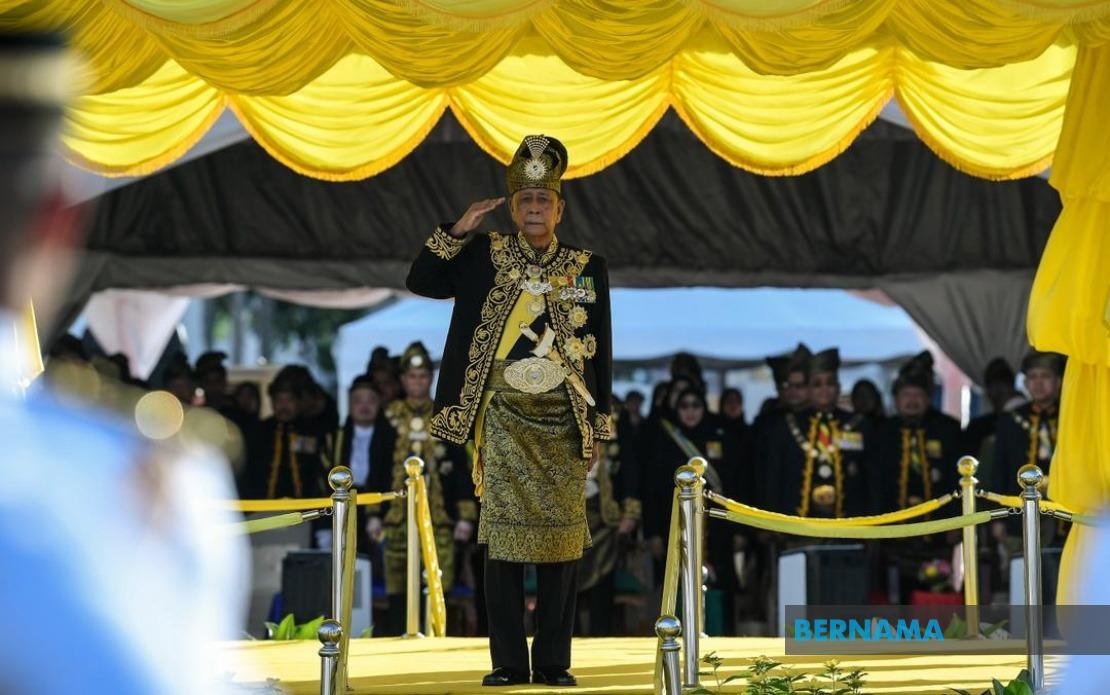
The Sultan of Kedah, Al Aminul Karim Sultan Sallehuddin Sultan Badlishah, was the centre of a full military pageant in Alor Setar on July 5, celebrating his 84th birthday with a formal guard of honour ceremony at Dataran Medan Bandar. The occasion brought together senior state officials, military units, and royal dignitaries to pay tribute to the long-serving monarch, underscoring the ceremonial traditions that remain central to Malaysia's constitutional monarchies.
The Raja Muda of Kedah, Tengku Sarafudin Badlishah Sultan Sallehuddin, joined the festivities alongside Kedah Menteri Besar Datuk Seri Muhammad Sanusi Md Nor and State Secretary Datuk Seri Norizan Khazali. The presence of the heir apparent and the full State Executive Council reflected the importance accorded to the celebration within Kedah's political establishment. Such gatherings serve not only as personal tributes to the reigning sovereign but also as public demonstrations of institutional continuity and respect for constitutional monarchy in Malaysia's federal system.
The military component of the ceremony was substantial, with a contingent of 103 personnel and three officers drawn from the 6th Battalion of the Royal Malay Regiment (RAMD) staging the main parade. The unit was commanded by Major Muhammad Nasrullah Abdullah, while the ceremonial aspects were meticulously orchestrated with Lieutenant Mohamad Aiman Hanif Samsudin carrying the colour and Warrant Officer 1 Mohd Fairuz Ramli bearing the regimental standard. This level of formality reflects the protocols observed across Malaysian states for significant royal occasions.
Musical accompaniment came from the RAMD Central Band, directed by Captain Muhamad Fauzee Japar and supported by Sergeant Mohd Shahrilaizad Bakhtiar, providing the traditional military band arrangements that have long characterised such ceremonies. The integration of musical, ceremonial, and military elements follows established protocols within the Malaysian armed forces, ensuring that royal celebrations maintain their dignity and formal character regardless of the venue or occasion.
A distinctive feature of the proceedings was an aerial display involving multiple military aircraft. Two EC120B helicopters from the Flying Training Institute (INSPEN) 2 and three PC-7 MK II aircraft from INSPEN 1 conducted a ceremonial flypast over the gathering, adding a modern dimension to what might otherwise be a purely ground-based ceremony. Such aerial components have become increasingly common at major state occasions in Malaysia, showcasing military capabilities while creating memorable visual elements for attendees and observers.
Complementing the aircraft display was a traditional 21-gun salute fired by the 41st Battery of the Royal Artillery Regiment (Ceremonial), commanded by Major Hafizan Md Ghani and based at Sungai Buloh Camp in Selangor. The ceremonial artillery unit travelled to Alor Setar specifically for this purpose, demonstrating the nationwide coordination involved in honouring the state's monarch. The salute, consisting of twenty-one shots, represents one of the most solemn and formal tributes within military tradition and signals the significance placed upon the occasion.
The Sultan of Kedah holds a prominent position within Malaysia's constitutional framework as one of the nine hereditary rulers who form the Conference of Rulers, the highest deliberative body in matters affecting the monarchy and federation. Celebrations marking significant milestones in a Sultan's life therefore carry implications beyond mere ceremonial display, serving as public recognition of continuity in leadership and the ongoing commitment to Malaysia's monarchical institutions.
Alor Setar, the state capital, has served as the seat of Kedah's administration and the focal point of royal ceremonies for generations. The selection of Dataran Medan Bandar as the venue for this celebration ensured accessibility for state officials and representatives while maintaining the formal atmosphere necessary for such proceedings. The location's prominence in the capital's civic landscape made it an appropriate setting for a ceremony involving all three service branches of the armed forces.
The coordination required to assemble military units from across Malaysia—including personnel from Selangor's Sungai Buloh Camp and aircraft from two separate INSPEN facilities—demonstrates the integration of national defence structures in supporting state-level royal occasions. Such mobilisation underscores how Malaysia's military remains oriented toward ceremonial and constitutional duties alongside its primary security functions, a balance that has characterised the armed forces since independence.
For Kedah specifically, such occasions reinforce the state's connection to Malaysia's broader constitutional and ceremonial traditions while celebrating the particular role of Sultan Sallehuddin in Kedah's governance and development. The Sultan's advanced age and continued active participation in public ceremonies signal stability and continuity of leadership within the state, factors that hold particular resonance in Malaysia's context where both constitutional monarchy and strong local governance remain valued political institutions.
The comprehensive nature of the ceremony—spanning military personnel, aircraft, artillery, and senior civil leadership—reflects the weight accorded to royal occasions throughout Malaysia. These gatherings, while centred on individual celebration, serve as public affirmation of the constitutional order and the role played by hereditary rulers within it. For Malaysian readers, such events represent both the continuation of established traditions and the ongoing adaptation of ceremonial practices to incorporate modern military capabilities.

