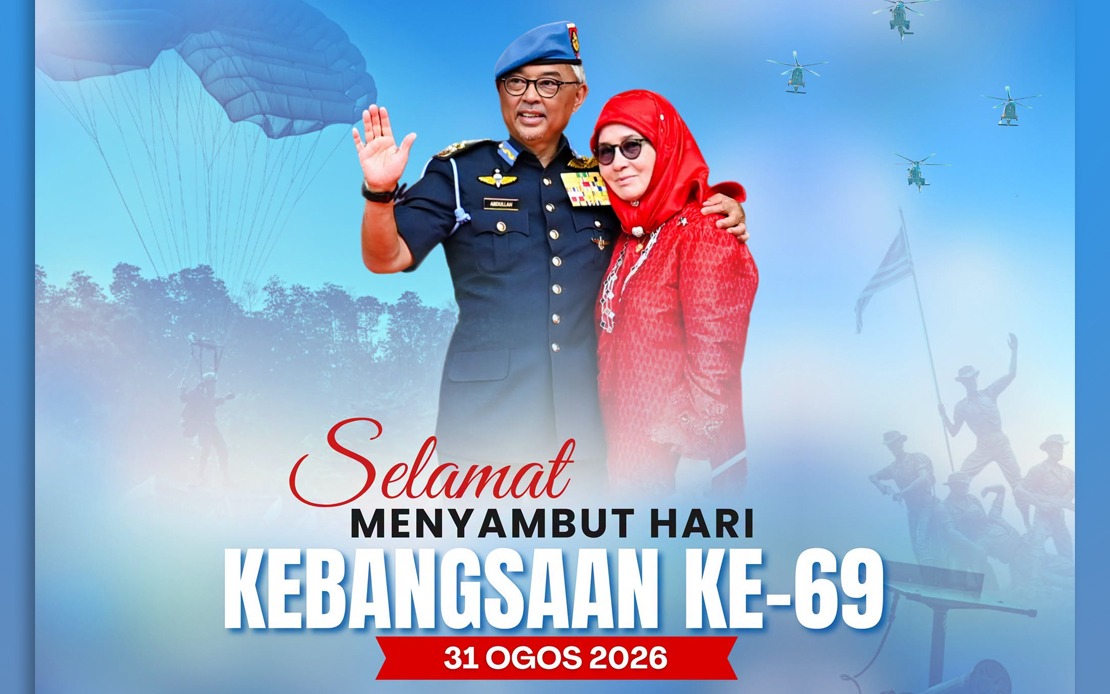
Malaysia's 69th National Day has drawn reflective messages from Pahang's royal household, with Al-Sultan Abdullah Ri'ayatuddin Al-Mustafa Billah Shah and Tengku Ampuan Pahang Tunku Azizah Aminah Maimunah Iskandariah addressing the state's residents with calls for continued commitment to nation-building. The joint statement, released through official channels on August 30, reflects the ceremonial yet substantive role that Malaysia's constitutional monarchs play in reinforcing national values during significant commemorative occasions.
The royal couple's message centred on gratitude for nearly seven decades of independence marked by relative stability and prosperity. Their emphasis on divine blessings—peace, well-being, and social harmony—reflects the spiritual dimension that underpins Malaysia's approach to nationhood, where the monarchy serves not merely as a constitutional institution but as a repository of values rooted in Islam and local traditions. This framing is particularly significant in Pahang, where the sultanate maintains considerable influence over state affairs and cultural identity.
A key theme in the royal message was the preservation of national independence and sovereignty as a collective responsibility. By characterising these achievements as "great trusts," the Sultan and Tengku Ampuan elevated the notion of statehood beyond political administration to a sacred custodianship that binds current and future generations. This language resonates deeply in Malaysia, where independence from British colonial rule in 1957 remains a defining historical moment, and where regional geopolitical pressures continually test national cohesion.
The royals specifically invoked the Rukun Negara—the five national principles comprising belief in God, loyalty to King and country, upholding the Constitution, rule of law, and good conduct—as foundational to harmonious coexistence. This invocation carries practical implications for Malaysia's multi-ethnic and multi-religious society, where social stability depends on citizens actively embracing these shared frameworks rather than merely observing them passively. The appeal to practise these principles in daily life suggests recognition that national unity requires continuous, deliberate effort at community and individual levels.
Unity, mutual respect, and tolerance were positioned as interconnected pillars rather than separate virtues. This integration reflects the delicate balance Malaysia must maintain as a Muslim-majority nation with significant Chinese and Indian populations, each with distinct cultural and religious practices. For Pahang specifically, which has undergone demographic shifts and economic transitions, this message carries weight in encouraging peaceful pluralism amid development pressures.
Particularly noteworthy was the royals' focus on younger Malaysians and their relationship with national history and heritage. By explicitly calling on the younger generation to appreciate the independence struggle and preserve cultural and social harmony, the monarchy addressed a persistent concern across Southeast Asia: whether youth increasingly oriented toward global digital culture will maintain connection to national narratives and local traditions. This concern is especially acute in Malaysia, where generational differences on matters of religion, identity, and social values have occasionally surfaced in public discourse.
The message also implicitly touched on identity preservation, a topic of ongoing sensitivity in Malaysian politics. Cultural heritage, when discussed by the monarchy, often encompasses Islamic traditions alongside indigenous Malaysian customs and the multicultural fabric that distinguishes the nation regionally. The royal household's role in articulating these dimensions provides legitimacy and continuity to identity discussions that might otherwise become politically fractious.
From a regional perspective, Malaysia's National Day messaging carries subtle diplomatic weight. As Southeast Asian nations navigate great power competition and economic uncertainties, Malaysia's emphasis on internal stability and national cohesion serves as both domestic reinforcement and regional signal. Pahang, as a significant contributor to Malaysia's economy through agriculture, manufacturing, and natural resources, occupies particular importance in national stability equations.
The concluding prayer for Pahang's continued protection and blessing under divine providence reflects a governance philosophy where secular administration and spiritual wellbeing are understood as complementary rather than contradictory. This approach, rooted in Malaysia's constitutional arrangement where Islam holds special position while other religions remain protected, shapes how the monarchy communicates about national purpose and collective welfare.
Royal messages during National Day observances serve several functions simultaneously: they provide ceremonial acknowledgment of shared identity, reinforce values that transcend partisan politics, and offer guidance on national priorities framed through traditional authority. In Malaysia's context, where the monarchy remains broadly respected across communities, such messages can reach audiences who might discount government pronouncements as overtly political. The Pahang Sultan's emphasis on unity, heritage preservation, and active patriotism thus contributes to a broader national conversation about what binds Malaysians together at a moment when economic challenges and social changes test those bonds.

