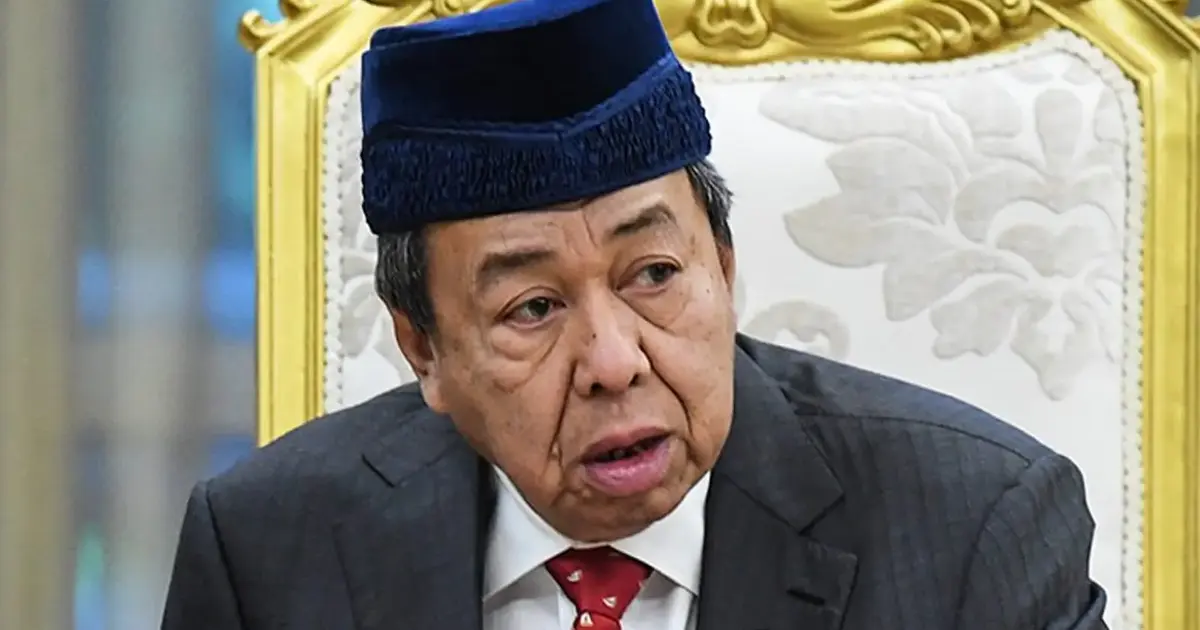
Sultan Sharafuddin of Selangor has publicly recognised the contributions of both former Prime Minister Najib Razak and incumbent Premier Anwar Ibrahim towards the development of the Light Rail Transit Line 3, drawing attention to the shared responsibility across different administrations for the state's major infrastructure initiative. In remarks that traverse the typical political divides, the Selangor ruler's acknowledgement underscores how significant transportation projects can transcend partisan boundaries, though his selective praise also reveals lingering tensions within the broader coalition governing Malaysia.
The Light Rail Transit Line 3, or LRT3, represents one of Selangor's most ambitious public transport undertakings, designed to expand urban mobility across the Klang Valley. The project's gestation spans multiple political cycles, explaining why the Sultan's remarks encompass leadership from different eras. By crediting Najib for his role during the previous administration, Sultan Sharafuddin highlights continuity in state development priorities despite the dramatic political transitions Malaysia has experienced in recent years. This acknowledgement carries particular weight given the complex political atmosphere surrounding the former Prime Minister's current legal proceedings and public perception.
Simultaneously, the Sultan's commendation of Anwar Ibrahim reflects the incumbent government's sustained commitment to advancing critical infrastructure that directly impacts Selangor residents' daily lives. Anwar's tenure has prioritised transport connectivity as part of broader developmental goals, and the LRT3 project exemplifies this strategic focus. The completion and expansion of rapid transit networks align with Malaysia's broader urbanisation patterns and the economic aspirations of the Klang Valley, one of the country's most densely populated and economically significant regions.
However, the Sultan's decision to single out DAP leaders Lim Guan Eng and Tony Pua for criticism introduces a more contentious dimension to his remarks. Both individuals hold significant positions within the governing coalition: Lim Guan Eng serves as Deputy Finance Minister, while Tony Pua holds responsibility in economic-related portfolios. The criticism suggests disagreements regarding implementation approaches or priority allocation concerning the LRT3 project, possibly reflecting broader policy disputes between state and federal levels or different vision interpretations for the infrastructure's scope and timeline.
The nature of the Sultan's censure warrants careful examination, as it potentially signals substantive policy disagreements within the coalition rather than merely ceremonial concerns. DAP, as a major component of the Pakatan Harapan coalition, has championed transparent governance and scrutinised expenditure on large projects. The party's approach to infrastructure development emphasises accountability and cost-efficiency, which may have created friction with other stakeholders whose priorities emphasize rapid project completion or alternative implementation methodologies. This divergence in perspectives reflects deeper ideological differences between coalition partners regarding development pace and financial prudence.
For Malaysian observers, particularly those in Selangor, the Sultan's bifurcated commentary illustrates the complex interplay between state institutions, federal governance, and coalition politics. Rulers in Malaysia's constitutional monarchy system exercise significant symbolic authority and occasionally substantive influence over state affairs. When a Sultan publicly criticises specific political figures or commends others, such statements carry weight beyond ordinary political discourse, potentially influencing public perception and creating pressure on the targeted ministers to respond or adjust course.
The LRT3 project itself carries enormous significance for Selangor's future trajectory. The line promises to alleviate traffic congestion, reduce commuting times, and catalyse economic development along its corridor. For the approximately 7 million Selangor residents, improved public transport connectivity directly enhances quality of life and economic opportunity. The project also represents a substantial financial commitment, making governance and implementation quality paramount concerns for stakeholders at all levels—government, civil society, and residents alike.
The Sultan's remarks also underscore the reality that Malaysian infrastructure projects rarely remain apolitical. Development initiatives become platforms for political credit-claiming, factional disputes, and broader ideological contests about the nation's direction. By acknowledging both Najib and Anwar, Sultan Sharafuddin pragmatically recognised that large projects benefit from cross-administration momentum. Yet his criticism of DAP figures suggests he views certain approaches or decisions within the current implementation phase as problematic or inadequate, raising questions about whether project delivery remains on schedule and within parameters all stakeholders consider acceptable.
The coming months will likely reveal whether the Sultan's public commentary reflects isolated concerns or signals emerging tensions that could affect project momentum. If implementation challenges intensify or coalition coordination deteriorates, the ruler's early warning may prove prescient. Conversely, if the project proceeds smoothly toward completion, the Sultan's remarks may fade as historical footnotes. Either way, his intervention demonstrates that in Malaysia's political ecosystem, even large infrastructure projects remain subject to scrutiny and commentary from constitutional institutions whose voices command respect across factional lines.
For regional observers watching Malaysian governance dynamics, this episode illustrates how constitutional monarchies operate within modern democratic systems, how coalition governments manage internal disagreements, and how development projects intersect with political accountability. The balance between completing critical infrastructure and maintaining governance standards, which the Sultan's comments implicitly raise, remains a perennial challenge for Southeast Asian governments seeking simultaneous advancement in both dimensions. Selangor's success with LRT3 will be instructive for neighbouring jurisdictions facing similar pressures and choices regarding urban transport and accountability frameworks.

