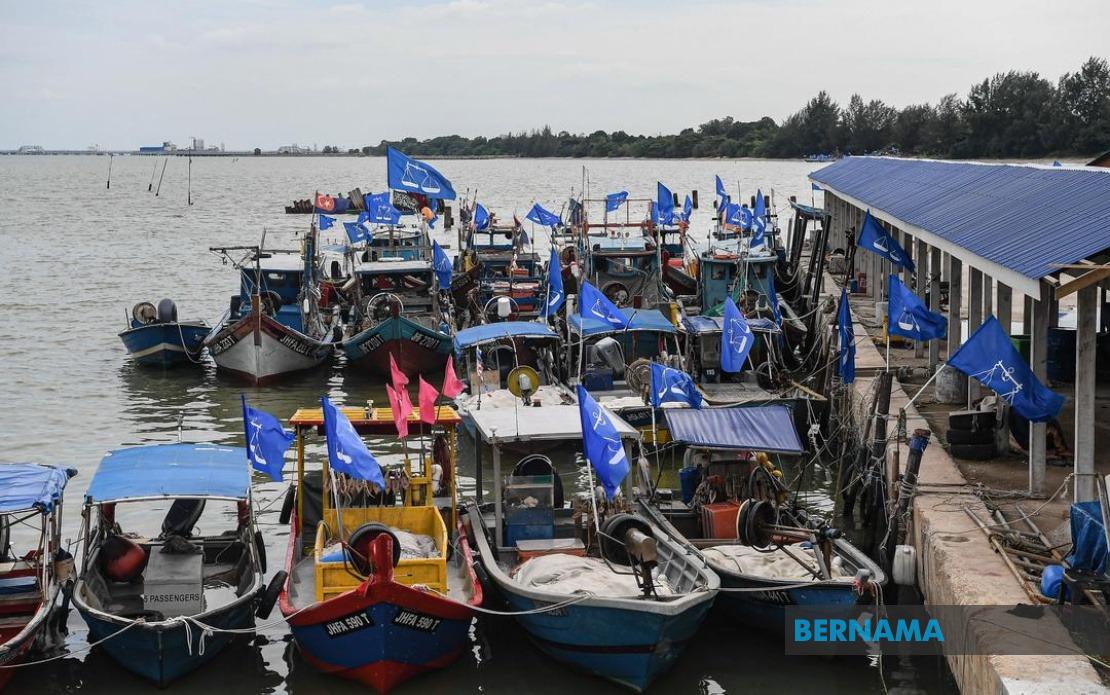
The coastal settlement of Sungai Rengit, nestled within Johor's Tanjung Surat state constituency, is confronting an urgent crossroads as voters prepare to elect a new representative. The community—comprising food court operators and fishing families whose fortunes are intertwined with the region's role as a service hub for the nearby Pengerang Integrated Petroleum Complex—has spent nearly ten years grappling with deteriorating infrastructure and security concerns that now dominate their electoral hopes.
At the heart of the grievance lies Medan Selera Sungai Rengit, a temporary food court that was supposed to be a short-term arrangement. Traders relocated from their original location to accommodate a development project, only to find themselves stranded at an interim site that lacks the basic amenities expected of a permanent commercial space. The promise of transition to a new, purpose-built facility has repeatedly faltered, leaving business owners uncertain whether they will ever achieve stable operational conditions.
Beverage vendor Lai Swee Hong, who has operated her business for three decades, articulated the frustration that pervades the trader community. The alternative site offered by authorities presents its own complications: severely constrained parking capacity and a one-way road configuration that deters both customer traffic and vendor accessibility. These logistical barriers, though seemingly mundane, directly erode the commercial viability of small enterprises already operating on thin margins. Lai emphasised that the current location, despite its temporary designation, retains a strategic advantage precisely because customers have become accustomed to visiting there—a factor that officials appear to have underestimated when planning relocation.
What began as a projected eighteen-month transition has metastasised into an indefinite ordeal. Traders were never provided with transparent explanations for the delays, compounding their sense of abandonment by authorities. The ramshackle construction of the temporary site—canopy roofs and plywood partitions—offers negligible protection against Johor's tropical climate, while the complete absence of lockable stall doors has rendered vendors vulnerable to theft and weather damage alike. These primitive conditions stand as a daily reminder of bureaucratic inertia.
Security has emerged as an equally pressing concern, with multiple theft incidents documented since the previous year. Food trader Wini Fasiha Zawawi reported that despite lodging police reports and formally notifying local authorities, tangible preventive measures remain absent. Though individual losses have not reached substantial figures, the cumulative psychological and financial toll on already-struggling small business operators cannot be dismissed. Regular police patrols have proven insufficient deterrence, leaving traders to wonder whether their economic survival registers as a genuine priority for the authorities responsible for their jurisdiction.
Beyond the trading community, Sungai Rengit's fishing population faces its own set of existential pressures. The sector has been buffeted by persistent increases in operational costs, particularly fuel expenses incurred during fishing expeditions. Veteran fisherman Sin Hock Hwee, who has pursued this livelihood since adolescence, highlighted the critical role that government fuel subsidies play in maintaining the viability of his profession. Without continued and enhanced subsidy support, he and his peers face a narrowing economic margin that could force many out of an industry already characterised by arduous conditions and unpredictable yields.
Younger members of the fishing community harbour comparable aspirations but frame them through a lens of infrastructure modernisation. Hidayat Isa, aged thirty-five and representing the next generation of fishermen, has articulated a desire for upgraded jetty facilities and greater institutional responsiveness to the concerns of younger fishing families. His hope that Kampung Sungai Rengit could be designated as the elected representative's adopted village reflects a broader yearning for sustained political engagement rather than episodic attention during electoral cycles.
The Tanjung Surat state seat contest represents the convergence of these community expectations with electoral competition. Pakatan Harapan fielded Faizul Abdul Ghani to challenge the incumbent Aznan Tamin from Barisan Nasional. Voters in this constituency have signalled through their pre-election sentiments that the successful candidate must demonstrate concrete commitment to resolving long-standing grievances rather than offering rhetorical reassurances. The specificity and consistency of complaints suggests that both traders and fishermen have prepared a de facto manifesto of their own.
Within the broader context of the 16th Johor state election, where 172 candidates competed across 56 seats, Tanjung Surat occupies a position of particular significance. The constituency's unique composition—combining industrial workers, service sector entrepreneurs, and a traditional fishing community—makes it emblematic of Johor's economic transition and the challenge of ensuring that development does not systematically disadvantage those operating in informal or semi-formal sectors.
For Malaysian policymakers observing this election, the Sungai Rengit narrative offers instructive lessons about the importance of transparent communication, timely infrastructure delivery, and proactive governance in communities experiencing rapid industrial change. The fact that traders and fishermen are not demanding revolutionary economic restructuring but rather basic facility upgrades and consistent policy support underscores the relatively modest nature of their expectations. That these modest expectations remain unfulfilled after a decade speaks to systemic governance gaps rather than resource constraints.
The polling date of July 11, with early voting scheduled for July 7, provided voters the opportunity to render their verdict on whether existing or alternative leadership would better serve their interests. The community's clearly articulated priorities—functioning market infrastructure, effective crime prevention, sustained fisheries support, and genuine responsiveness to constituent concerns—established a measurable standard against which the successful candidate's subsequent performance could be evaluated. Whether this election would catalyse meaningful change or represent merely another cycle of unmet promises remained to be determined by the elected representative's actions in the months and years following the vote.

