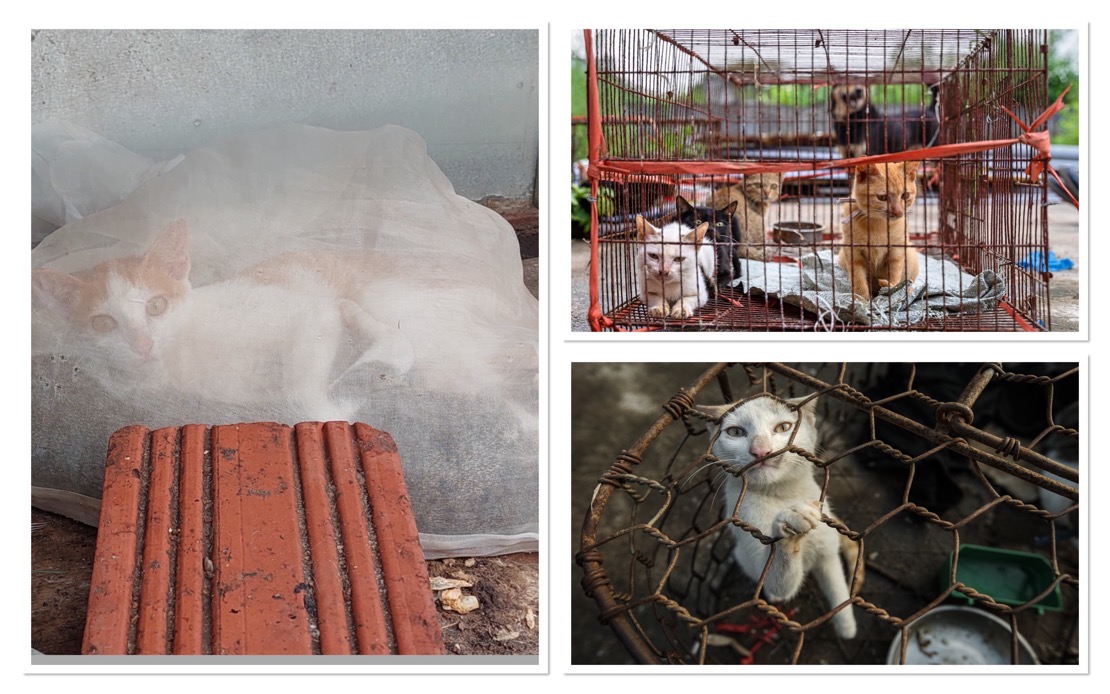
A thriving underground trade in cat meat continues to devastate animal populations across Indochina, with animal welfare groups estimating that approximately one million cats are killed annually in Vietnam alone. The trade extends into Cambodia and Laos, where demand is similarly rooted in traditional beliefs about the medicinal and spiritual properties of feline meat. This persistent market, despite coordinated international and governmental efforts to curtail it over decades, represents one of Southeast Asia's most troubling examples of how cultural superstition can override modern sensibilities about animal welfare.
According to FOUR PAWS, a global animal welfare organisation, the cats destined for slaughter are sourced through theft from households and streets, then trafficked across provincial borders to supply demand driven primarily by cultural tradition rather than nutritional necessity. Jon Rosen Bennett, who directs dog and cat welfare initiatives at FOUR PAWS, emphasises that consumption patterns reflect deeply ingrained beliefs rather than dietary staples. In Vietnam specifically, certain lunar calendar periods are believed to be auspicious times for consuming cat meat to attract fortune or reverse bad luck, while other consumers pursue the meat for purported medicinal and health-enhancing properties that lack scientific foundation.
The scale of the underground operation became starkly apparent in Ho Chi Minh City recently when local police dismantled a trafficking network and liberated approximately 500 cats from captivity. Nine gang members were apprehended following investigations into a three-year smuggling operation involving the systematic theft and sale of felines across provincial boundaries. This single bust illustrates how organised crime has embedded itself within the cat meat supply chain, transforming superstitious demand into a profitable criminal enterprise that operates with relative impunity across borders.
A significant paradox undermines justifications for the trade's continuation. According to FOUR PAWS research, approximately 90 percent of Vietnamese citizens express support for banning the dog and cat meat trade entirely. Even more tellingly, more than 90 percent of survey respondents reject the notion that consuming these animals constitutes an authentic element of Vietnamese culture. This stark disconnect between actual public opinion and the persistence of the trade suggests that demand is concentrated among a dedicated minority whose purchasing power sustains networks of suppliers, traffickers, and slaughterers.
Economic data collected by FOUR PAWS during 2020 investigations reveals the financial incentives perpetuating the trade. Live cats commanded prices between US$6 and US$8 per kilogramme, translating to approximately RM25 to RM33. Processed cat meat fetched considerably higher prices, ranging from US$10 to US$12 per kilogramme, or RM41 to RM49. Black cats particularly attracted premium pricing due to widespread beliefs about their superior luck-bringing properties and enhanced medicinal potency, creating a perverse financial incentive to target and traffic specific animal varieties.
Vietnam's absence of nationwide legislative prohibition on cat meat slaughter, sale, or consumption represents a critical regulatory failure. Unlike some nations that have enacted comprehensive bans, Vietnam lacks comprehensive legal protections against the trade, effectively permitting operators to function within a poorly monitored grey market. This legislative vacuum, combined with weak enforcement of animal welfare standards that do exist, allows trafficking networks to operate with minimal fear of serious legal consequences.
Beyond the immediate animal welfare catastrophe, the trade poses significant public health risks that extend far beyond those directly engaged in handling infected animals. The mass undocumented movement of cats across provincial and international borders, frequently under conditions of severe stress and confinement, creates ideal conditions for disease transmission and mutation. Rabies, a universally fatal disease once infection becomes symptomatic, poses particular danger given the frequent movement of infected animals through populated areas before slaughter. Additional zoonotic diseases spread through cat meat trafficking threaten broader regional health security, with the potential for pathogens to establish new reservoirs in human populations.
International animal welfare responses have expanded recently as awareness campaigns intensify. In early June, FOUR PAWS activated an online public reporting platform specifically designed to document and combat the dog and cat meat trade in Cambodia, enabling citizens to report suspected trafficking and abuse directly to authorities. Such technological interventions, combined with sustained public education about disease risks and cultural arguments against the trade, represent emerging strategies to create demand-side pressure that complements top-down regulatory approaches.
The broader Southeast Asian context amplifies concerns about feline suffering. Estimates suggest that more than ten million dogs are slaughtered for meat consumption annually across the region, indicating that cats represent only a portion of the companion animal exploitation problem. However, dog meat consumption has generated greater public mobilisation and legislative response in some jurisdictions, whereas cat meat trafficking often receives less international attention despite comparable scale and severity.
Regional variation in public sentiment and legislative action creates enforcement challenges. While majority populations in Vietnam, Cambodia, and Laos oppose the trade, deeply entrenched cultural minorities continue purchasing, and governments struggle with enforcement priorities and resource allocation. The sensitivity surrounding meat consumption practices means that campaigns risk being perceived as external cultural impositions rather than grassroots animal welfare initiatives, complicating advocacy strategies.
The persistence of the cat meat trade despite overwhelming scientific evidence of its public health risks, ethical problems, and minority status within actual local populations represents a failure of governance and enforcement. Supply chains continue operating because demand, however concentrated, encounters minimal legal obstacles and economic penalties. Meaningful progress requires simultaneous action across multiple fronts: strengthened legislation with serious penalties for trafficking and slaughter; enhanced border monitoring to interrupt trade flows; public health communication linking the trade to disease transmission risks; and sustained campaigns framing the trade as incompatible with contemporary Vietnamese, Cambodian, and Laotian cultural identity rather than as a traditional practice worthy of preservation.

