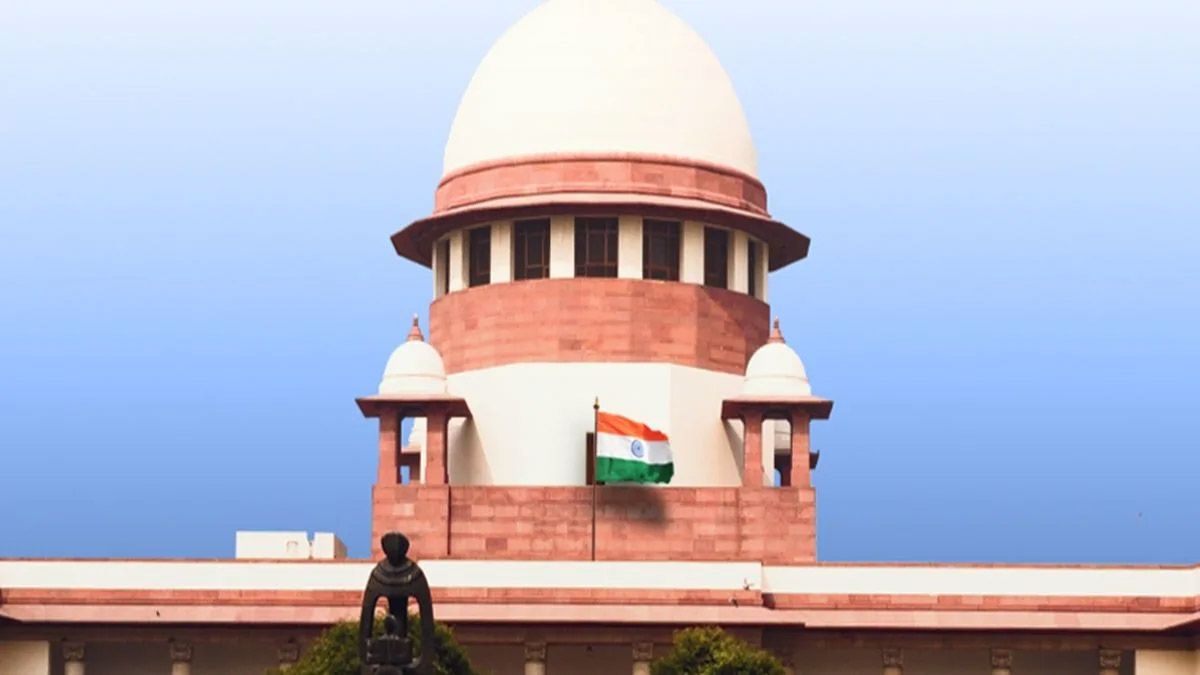
The Supreme Court of India has intervened in a contentious Tamil Nadu animal welfare dispute by staying a sweeping prohibition on cow and calf slaughter across the state. Justices Vikram Nath and Sandeep Mehta granted an interim suspension of the Madras High Court's May 27 ruling after the Tamil Nadu government challenged what it characterised as a judicial overreach. The bench issued notice on the state's Special Leave Petition and signalled that the impugned order required "correction" before granting relief, suggesting serious concerns about the High Court's reasoning and authority.
The underlying conflict stems from how two different courts interpreted the same legal question. The original public interest litigation, filed by K Surya Prasanth, General Secretary of Hindu Makkal Katchi, sought narrow intervention: prevention of cow slaughter in public spaces and enforcement of slaughter activities only within authorised facilities. The petition was triggered by allegations that temporary structures had been erected in Coimbatore specifically for cow slaughter during Bakrid celebrations. The High Court, however, transformed this targeted request into a sweeping statewide prohibition that would affect all cattle slaughter regardless of location, occasion, or whether facilities were properly licensed.
Tamil Nadu's government took the position that the High Court's blanket ban fundamentally contradicted the state's existing legal framework governing animal slaughter. The Tamil Nadu Animal Preservation Act, 1958, which governs cattle slaughter within the state, operates on a regulatory principle rather than an absolute prohibition model. The legislation establishes specific conditions and circumstances under which cattle slaughter may be lawfully permitted, thereby contemplating that such slaughter remains permissible when conducted in compliance with statutory requirements. By imposing a total ban, the High Court's order would have rendered these regulatory provisions redundant and unenforceable, creating a direct conflict between judicial directive and legislative intent.
The state further argued that the High Court's interpretation ignored multiple layers of applicable legislation designed to balance animal welfare with legitimate economic and cultural practices. The Prevention of Cruelty to Animals Act, 1960, and its associated Slaughter House Rules from 2001, establish minimum humane standards for any animal slaughter that occurs. Similarly, the Tamil Nadu Urban Local Bodies Act, 1998, and subsequent 2023 rules provide a framework for local governance of slaughterhouse operations. Additional food safety regulations across Indian law contemplate lawful slaughter under specified conditions. Together, these statutes create a comprehensive regime of regulation and oversight, not prohibition. The government's submission highlighted that constitutional and legislative frameworks in India recognise animal welfare and cultural-religious practices as competing interests requiring careful legal balance rather than categorical bans.
The High Court had grounded its reasoning in Article 48 of the Indian Constitution, which directs states to take steps toward prohibiting cattle slaughter. The court also relied heavily on a 1976 Government Order that ostensibly banned cow and heifer slaughter in Tamil Nadu's slaughterhouses, arguing this administrative directive carried the force of law and remained binding. However, the Supreme Court's decision to stay this order indicates that senior judges view the High Court's interpretation as problematic. The gap between Article 48's aspirational language—which many scholars read as guidance rather than a binding mandate for absolute prohibition—and enforceable law appears to be a key point of contention.
For Malaysia and Southeast Asian observers, this case illuminates ongoing tensions in India's legal system between religious nationalism, animal welfare advocacy, and religious-cultural pluralism. Tamil Nadu's diverse population includes substantial Muslim, Christian, and other communities for whom cattle slaughter holds legitimate cultural or religious significance. A blanket prohibition affects these communities' fundamental rights and practices. The Supreme Court's willingness to scrutinise the High Court's decision suggests the judiciary recognises these broader concerns and remains committed to preventing judicial overreach that marginalises minority communities without adequate legal basis.
The case also demonstrates how public interest litigation, while important for protecting diffuse public interests, can become a vehicle for imposing majoritarian preferences through the courts. When a petition challenging slaughter in unauthorised public spaces transforms into a total statewide ban, fundamental questions about judicial restraint and democratic legitimacy arise. The Supreme Court's intervention suggests concern that courts ought not substitute their policy preferences for those of elected legislatures, particularly on matters touching religious practice, cultural tradition, and community rights.
With the Supreme Court's interim stay now in effect, Tamil Nadu's existing regulatory framework for cattle slaughter remains operational pending full adjudication. The state can continue licensing and overseeing slaughter activities in authorised facilities according to established rules. This preservation of the status quo provides breathing room for proper legal argumentation and reduces the disruptive effect of the High Court's sudden prohibition. The Supreme Court will likely take time to hear full arguments on whether Article 48, the 1976 Government Order, and the specific facts of this case genuinely support the High Court's categorical interpretation.
The implications extend beyond Tamil Nadu's borders. Several Indian states grapple with similar tensions between animal welfare concerns and plural communities' religious and cultural practices. Court decisions in one state often influence litigation strategies and judicial reasoning elsewhere. If the Supreme Court ultimately finds that the High Court exceeded its authority, it may establish important precedent limiting how comprehensively courts can rewrite regulatory schemes through public interest litigation. Conversely, if the court ultimately upholds prohibition principles, it would reinforce the constitutional trajectory toward restricting cattle slaughter across India despite economic and cultural consequences for affected communities.
The Supreme Court's observation that the impugned order required "correction" hints at the bench's view that the High Court committed substantive errors warranting reversal or significant modification. Whether those errors concerned jurisdictional excess, misinterpretation of existing law, or inadequate consideration of competing rights remains to be clarified through further proceedings. For now, the interim stay preserves the capacity for reasoned deliberation on difficult questions at India's apex court, preventing hasty implementation of a transformation of Tamil Nadu's established animal slaughter regulations.

