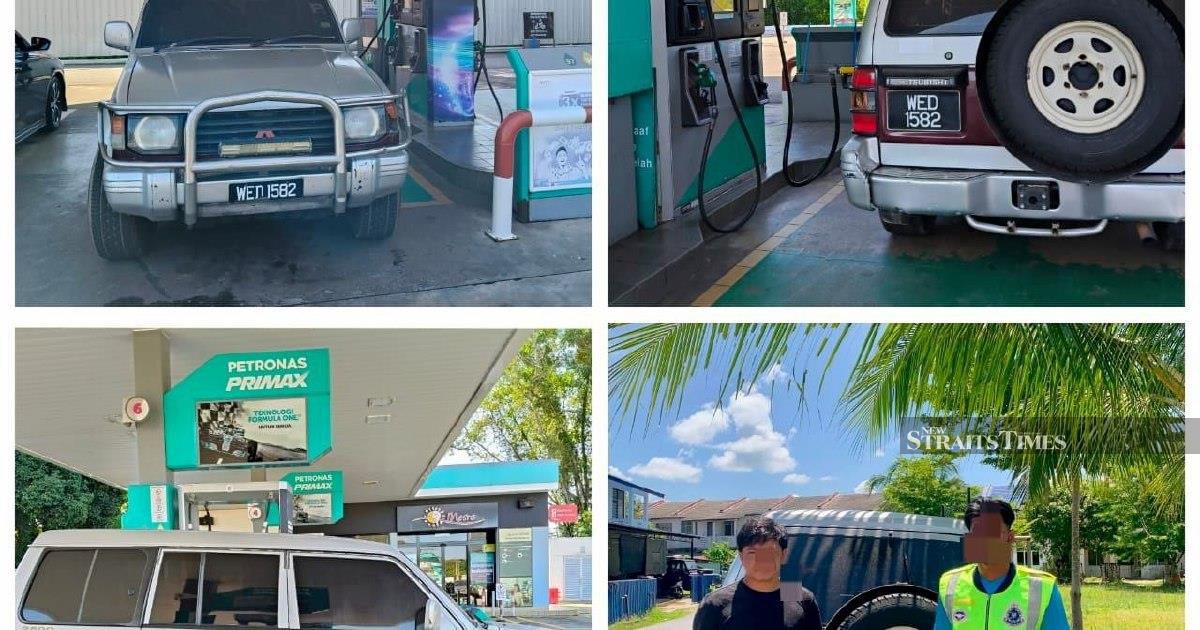
Enforcement officials arrested a 36-year-old male suspect at a petrol station in Rantau Panjang yesterday in connection with what authorities believe was a pattern of fuel procurement activities linked to cross-border smuggling operations destined for Thailand. The arrest represents another law enforcement response to ongoing concerns about illicit fuel trafficking in the border region of Kelantan, an issue that has persistently challenged authorities across Malaysia's northern frontier.
The suspect's apprehension came during what appeared to be a routine transaction at the petrol station, where officers detected suspicious patterns in his purchasing behaviour. According to investigators, the individual had been making multiple trips to purchase petrol in what authorities characterise as repeated runs specifically intended for smuggling operations. The sequential nature of these acquisitions raised red flags among enforcement personnel monitoring petrol station activity in the border district, prompting intervention before the fuel could allegedly cross into Thai territory.
Rantau Panjang, strategically positioned along Malaysia's border with Thailand in Kelantan, has long served as a focal point for smuggling activities due to its geographical proximity to Thai jurisdictions and the considerable price differential between Malaysian and Thai petroleum products. The location's accessibility and the relatively porous nature of the border in this area have made it an attractive corridor for those seeking to exploit fuel price advantages. Petrol prices in Malaysia have historically been substantially lower than those in Thailand, creating significant profit incentives for smugglers willing to circumvent legal restrictions.
The fuel smuggling issue carries implications extending beyond simple customs violations. Authorities across Southeast Asia have expressed concern about the broader consequences of illicit fuel trafficking, including revenue losses to governments, environmental impacts from unregulated transport and storage, and potential security ramifications associated with underground cross-border networks. The Malaysian government, in particular, has maintained strict monitoring of fuel-related smuggling as part of broader border security operations.
The arrest underscores the persistent challenges facing customs and law enforcement agencies tasked with monitoring thousands of daily cross-border movements across Malaysia's extensive frontier with Thailand. While individual apprehensions like this one provide occasional tactical victories, enforcement officials acknowledge the difficulty of disrupting organised smuggling operations that often involve multiple participants and sophisticated coordination mechanisms. The scale and profitability of fuel smuggling activities mean that detention of individual smugglers frequently achieves only marginal impact on overall trafficking volumes.
Rantau Panjang's designation as a smuggling hotspot reflects broader regional dynamics affecting Malaysia's northern states. Communities in border areas often exist within complex economic ecosystems where illicit trade activities coexist with legitimate commerce. Local residents and businesses may find themselves inadvertently or deliberately entangled in smuggling networks, creating law enforcement complications that extend beyond simple border interception.
The suspect remains in custody pending further investigation and potential prosecution. Authorities typically file smuggling charges under Malaysia's customs legislation, which carries penalties including substantial fines and imprisonment terms proportionate to the quantities and circumstances of the alleged offences. The legal process will likely involve comprehensive examination of the suspect's involvement, the scope of his activities, and potential connections to larger smuggling networks.
This incident aligns with long-standing patterns of enforcement activity documented across Malaysia's border regions. Authorities periodically announce arrests related to fuel smuggling, though comprehensive statistics on the overall effectiveness of enforcement operations remain limited. The challenge facing Malaysian customs agencies involves balancing interception efforts with the reality that smuggling operations frequently adapt tactics and routes in response to increased enforcement presence.
The capture also reflects the resource commitments Malaysia has dedicated to border security operations, particularly following initiatives aimed at strengthening enforcement infrastructure in northern states. Enhanced surveillance technology, increased personnel deployment, and improved inter-agency coordination have collectively contributed to enhanced detection capabilities, though smugglers continue identifying vulnerabilities within existing systems.
Looking forward, the case illustrates why sustainable solutions to fuel smuggling require approaches extending beyond individual arrests. Policymakers increasingly acknowledge that bridging the fuel price differential between Malaysia and neighbouring countries addresses underlying economic incentives driving smuggling activity. Meanwhile, enforcement agencies continue pursuing operational improvements in detection and interdiction capabilities, recognising that tactical measures alone cannot eliminate smuggling networks operating across relatively porous borders.

