The financial architecture underpinning Southeast Asia's energy transition is undergoing rapid transformation, with banks increasingly placing sustainable finance at the centre of their commercial strategy rather than treating it as a peripheral concern. What was once viewed as niche territory for conscientious investors has evolved into mainstream banking practice, driven by genuine market demand for financing solutions that support the region's shift towards low-carbon economies. This shift reflects both technological advancement in renewable energy and changing consumer preferences, creating commercial opportunities that financial institutions can no longer afford to overlook.
The clearest indicator of this trend lies in the region's burgeoning electric vehicle market. Malaysia's EV sales doubled during 2025, whilst Indonesia's market expanded by more than a hundred percent year-on-year, according to data from the International Energy Agency. These figures are not merely statistical curiosities—they represent millions of consumers actively seeking financing arrangements that make zero-emission vehicles accessible to middle-income families. The scale and speed of this adoption has caught many traditional lenders by surprise, forcing them to rapidly develop product lines and expertise in automotive finance tied to sustainability criteria.
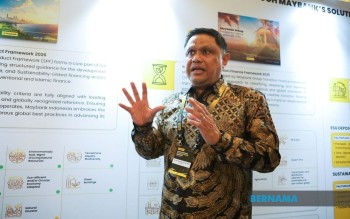
Maybank Group's renewed commitment exemplifies this institutional pivot. The banking giant has pledged to channel RM300 billion into sustainable finance initiatives across ASEAN between 2026 and 2030, a figure that dwarfs previous efforts. Datuk Shahril Azuar Jimin, the group's chief sustainability officer, revealed during the inaugural Maybank Indonesia Sustainable Finance Forum 2026 that implementation is tracking ahead of schedule despite the programme being less than six months underway. This acceleration suggests that anticipated demand projections were, if anything, conservative—a striking reversal from earlier concerns about whether sufficient market appetite existed for green financial products.
The previous five-year cycle, concluding at the end of 2025, provides compelling evidence of market maturation. Maybank mobilised RM176 billion in sustainable finance, more than doubling its original RM80 billion target announced in 2021. This overperformance dismantles a persistent misconception that liquidity constraints hamper sustainable finance. Banks possess ample capital and eagerness to deploy it towards sustainability-aligned projects. The bottleneck, if one exists, lies elsewhere—in client awareness, regulatory clarity, or the capacity of financial institutions to effectively communicate value propositions to prospective borrowers.
Malaysia's regulatory environment has facilitated this expansion. The Energy Transition and Water Transformation Ministry increased the residential quota under the Net Energy Metering (Rakyat) programme by an additional 100 megawatts in May 2025 after the initial allocation sold out completely. This policy adjustment recognises that household demand for rooftop solar installations vastly exceeds available capacity, validating the market-driven nature of the energy transition. When regulatory frameworks respond dynamically to genuine consumer interest, financing solutions naturally follow, creating virtuous cycles of investment and innovation.
The scope of sustainable finance has simultaneously expanded beyond traditional definitions of green projects. Maybank's Sustainable Product Framework now encompasses transition finance for carbon-intensive industries undergoing structural reform, EV financing, green mortgages, social finance serving disadvantaged communities, and green bond issuance. This broadening reflects the complexity inherent in real-world energy transitions. Companies cannot simply cease high-carbon operations overnight; they require financing vehicles that support gradual movement towards sustainability targets. Similarly, low-income households need affordable access to clean energy and electric transport solutions, not merely aspirational products for wealthy early adopters.
This expansion has fundamentally altered how commercial banks conceptualise the role of their frontline staff. Relationship managers can no longer function as mere transaction facilitators, arranging financing with minimal engagement on underlying economics or environmental implications. Contemporary banking demands that these professionals develop sophisticated understanding of climate risks, sustainability metrics, and sectoral transition pathways. They must guide corporate clients through strategic decisions about carbon reduction trajectories and help retail customers understand how investments in rooftop solar or EV purchases align with long-term financial planning.
Maybank has responded to this transformation through significant investment in capacity-building and formal sustainability certification programmes for relationship managers. This institutional commitment to human capital development indicates seriousness about sustaining the expansion beyond short-term fads. Financial institutions that rely on external consultants or superficial training programmes risk reputational damage when their staff cannot credibly address client concerns about climate impacts or sustainability authenticity. By building internal expertise, Maybank positions itself as a trusted advisor rather than a mere product vendor.
Indonesia's market dynamics further illustrate the scalability of this transition. Maybank Indonesia mobilised approximately Rp17 trillion in sustainable financing during the previous commitment cycle, with transportation emerging as the strongest segment. Demand for EV financing continues accelerating, but the portfolio extends to affordable housing and low-cost electric two-wheelers designed for lower-income communities. This product mix demonstrates that sustainable finance transcends wealthy-world preoccupations. When financing mechanisms enable ordinary Indonesians to access cleaner transport or housing options, sustainability shifts from aspirational to practical.
Maybank Indonesia has pioneered development of ESG deposit products within the group, allowing customers to earn returns whilst supporting environmental and social outcomes. Malaysia is expected to introduce similar offerings, suggesting this innovation will soon become standard across the region. Simultaneously, the institution is preparing green bond initiatives that will mobilise capital markets for sustainability investments, complementing traditional banking channels. These parallel developments indicate that financial institutions increasingly view sustainable finance not as a separate business line but as foundational to competitive positioning.
The broader implications for Southeast Asia warrant attention. As millions of consumers adopt electric vehicles, install renewable energy systems, and seek green housing solutions, financing capacity becomes the rate-limiting factor in energy transition acceleration. Banks that develop genuine expertise and commit substantial capital to these segments position themselves advantageously for the next decade. Conversely, institutions treating sustainability as marketing window-dressing risk losing clients to more seriously engaged competitors. The market has moved beyond debates about whether sustainable finance is commercially viable—it is increasingly obvious that capital scarcity affects sustainable projects less than capital abundance affects traditional high-carbon ventures.

