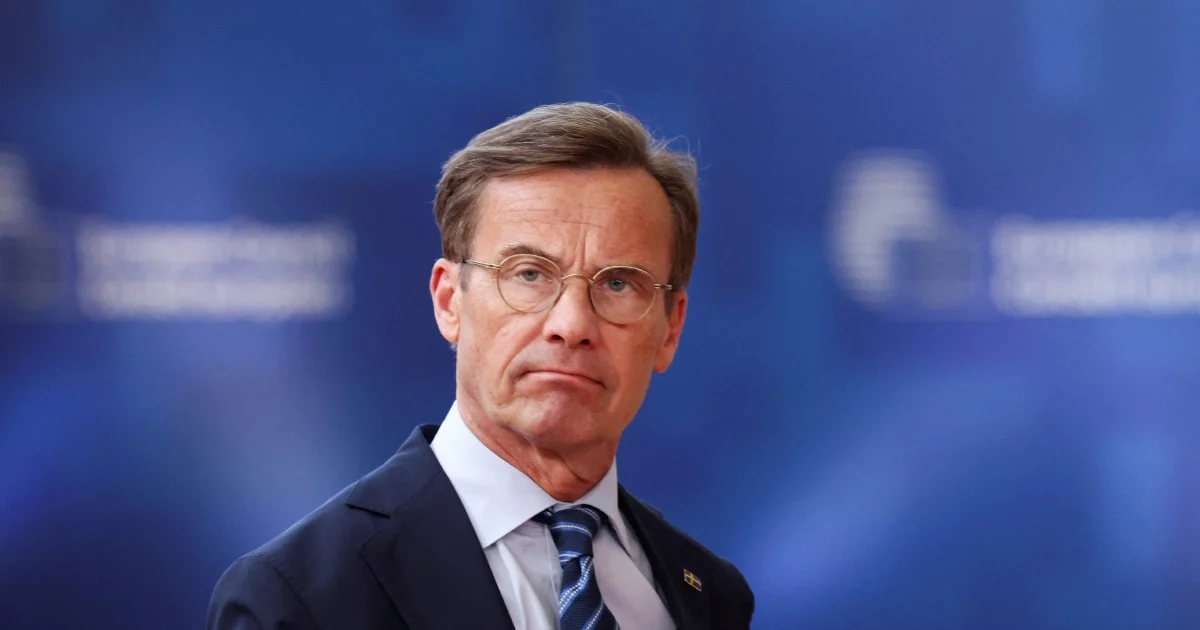
Swedish Prime Minister Ulf Kristersson finds himself embroiled in fresh corruption allegations as the country prepares for legislative elections in just three months. The latest claims represent another chapter in what has become a defining characteristic of his premiership: the ability to deflect serious political damage despite recurring scandals that would have toppled many other leaders. This resilience, whether attributable to political skill, a fractured opposition, or simply public fatigue with controversy, has allowed Kristersson to maintain his grip on power even as critics question the state of Swedish governance.
The new allegations compound an already dense portfolio of controversies that have shadowed Kristersson throughout his time leading Sweden's government. Rather than dissolving his political standing, each previous scandal appears to have slipped away with minimal lasting impact, suggesting either a remarkable capacity for political survival or deeper questions about accountability within Swedish political culture. His government has weathered the storms with sufficient dexterity that observers have begun to wonder whether conventional consequences apply to his administration at all.
The timing of these fresh corruption claims is particularly significant for Swedish politics. With elections looming merely three months away, new allegations could ordinarily reshape campaign dynamics and voter sentiment. However, given the established pattern of Kristersson emerging unscathed from previous controversies, many observers wonder whether this latest development will gain substantive traction or dissipate like its predecessors. The proximity to the electoral contest raises questions about whether Swedes will hold their prime minister accountable at the ballot box or whether the accumulated weight of unresolved allegations will prove insufficient to shift political calculations.
For Southeast Asian readers monitoring Swedish politics, the situation offers instructive parallels regarding democratic resilience and political accountability. Sweden has long served as a reference point for Nordic governance standards and rule-of-law commitments. The apparent disconnect between serious allegations and political consequences in Kristersson's case thus carries symbolic weight beyond Sweden's borders, suggesting that even well-established democracies can experience erosion of accountability mechanisms when political circumstances align unfavourably for opposition forces or when public attention becomes fractured across multiple scandals.
Kristersson's government assumed office following the 2022 elections, when a centre-right coalition took control with support from the controversial Sweden Democrats, a nationalist party whose involvement in governance remains contentious. This political foundation has itself contributed to the fraught atmosphere surrounding his administration, as critics have questioned both the legitimacy of the governing arrangement and the implications of far-right political influence on Swedish policy directions. The scandals that have subsequently engulfed his premiership must be understood within this context of underlying political tension.
The pattern of crisis and survival that has characterised Kristersson's tenure suggests several competing explanations. Some analysts argue that his political opponents have failed to effectively capitalise on the numerous opportunities to mobilise public opinion against his administration, indicating possible weakness within Sweden's opposition movement. Others contend that Swedish voters have simply become inured to political controversy, with each new allegation competing for attention in an already crowded landscape of grievances. A third interpretation emphasises the fragmentation of Swedish political discourse, where media coverage becomes dispersed across so many issues that no single controversy achieves the sustained focus necessary to generate meaningful electoral consequences.
The corruption allegations now facing Kristersson inevitably raise broader questions about institutional checks and balances within Swedish governance. If a prime minister can successfully navigate multiple serious allegations without experiencing substantial political penalty, this may indicate either that Swedish institutions are functioning as designed—containing potential abuses through established procedures—or that something has gone systematically awry in the accountability process. The distinction matters considerably for understanding whether Sweden's democratic systems remain robust or whether they have developed unexpected vulnerabilities.
For the Swedish electorate preparing to cast ballots in coming months, these fresh allegations present a stark choice about the type of governance they wish to endorse. Voters must decide whether they view Kristersson's survival of previous controversies as evidence of his political competence or as grounds for concern about normalised corruption. The nature of this collective judgment will carry implications extending well beyond Sweden, potentially influencing how other democracies grapple with comparable challenges regarding accountability and political consequences in an era of constant scandal fatigue.
The corruption charges themselves demand serious investigation and adjudication through proper institutional channels. However, the broader political phenomenon—a prime minister's remarkable capacity to generate controversy without visible personal cost—deserves equal analytical attention. This pattern reveals something significant about contemporary political dynamics, whether about the strength of institutional safeguards, the effectiveness of opposition movements, or the limits of public patience with persistent allegations of official misconduct.
As Sweden approaches its electoral reckoning, the stakes extend beyond domestic political calculations. The country's handling of these allegations and the resulting voter verdict will resonate throughout the Nordic region and across democratic systems worldwide that face similar pressures regarding political accountability. Whether Kristersson's government emerges strengthened, diminished, or reconfigured will carry symbolic meaning for assessments of democratic resilience in the face of sustained controversy.