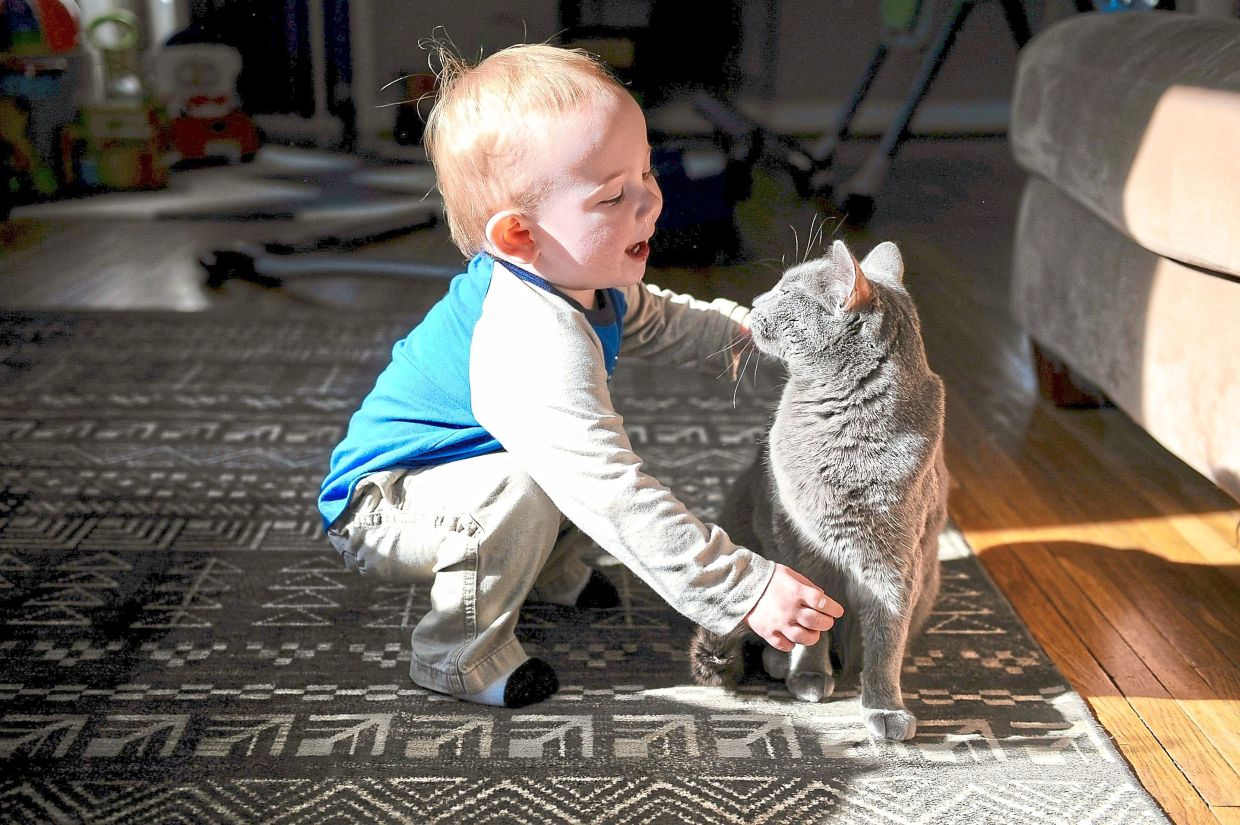
For decades, paediatricians and allergists have cautioned families with asthmatic children to avoid keeping cats, citing anecdotal reports that exposure to feline allergens triggers attacks and worsens respiratory control. Yet a sweeping new investigation from Sweden's Karolinska Institutet has upended this conventional wisdom, revealing that children living in households with cats experience asthma outcomes virtually identical to those living pet-free—a finding that could significantly reshape clinical guidance across the region.
Asthma remains the most prevalent chronic condition affecting children globally, representing one of the primary drivers of paediatric hospitalisation and school absences. The Global Asthma Network places childhood prevalence at 9.1 per cent worldwide, though this figure fluctuates considerably depending on geography, climate and socioeconomic factors. Southeast Asia has experienced rising asthma rates in recent decades, particularly in urbanised areas where air pollution and rapid lifestyle changes converge. The disease burden extends beyond health systems into family economics, as managing exacerbations demands repeated medical visits and medication costs that strain household budgets across the region.
Well-established environmental triggers for childhood asthma include air pollution exposure, parental smoking, earlier viral respiratory infections, childhood obesity and pre-existing allergic conditions such as eczema or allergic rhinitis. Yet the relationship between household pet ownership and asthma progression has remained scientifically murky, resting largely on patient testimonies and small, non-representative studies rather than rigorous population-level analysis. This knowledge gap has created anxiety for families balancing the emotional benefits of pet companionship against perceived respiratory risks.
The Swedish research team, led by Dr Resthie R Putri at Karolinska Institutet in Stockholm, leveraged an exceptionally comprehensive dataset to resolve this ambiguity. Beginning in 2023, they enrolled 30,277 children aged four to seventeen years who had received asthma or airway allergy diagnoses between 2006 and 2020. The cohort was monitored continuously over twenty-four months through 2024, with researchers extracting detailed clinical information from multiple national registers including hospital diagnoses, emergency department visits, medication prescriptions, standardised asthma control assessments and lung function measurements via spirometry tests.
The study design incorporated a novel advantage unavailable to previous researchers: Sweden's mandatory National Cat Register, introduced in 2023, which catalogues all pet cats born after 2008. This allowed the team to objectively determine which households contained cats rather than relying on parental recall or questionnaire responses. Approximately 9.4 per cent of participating children lived with at least one feline, providing sufficient statistical power to detect meaningful differences in asthma trajectories between the two groups.
The findings proved striking in their uniformity. Moderate-to-severe asthma, defined by prescription patterns for controller medications, affected 9.6 per cent of cat-exposed children compared to 10.1 per cent among unexposed peers—a clinically negligible difference. Acute asthma exacerbations, or attacks, occurred in 3.3 per cent of cat-owning households versus 3.5 per cent elsewhere. Among the subset of 1,428 children for whom detailed lung function data existed, cat exposure showed no association with measured respiratory capacity or bronchial responsiveness. As Dr Putri explained, "children living with a cat had similar asthma severity, exacerbation, asthma control and lung function to children living without cats in the short term," and critically, "we also did not see any differences in asthma outcomes related to the number of cats, the cat's sex, or the cat's age."
Understanding why cat ownership proved inconsequential requires examining patterns of allergen exposure beyond the home environment. Dr Putri proposed that feline allergens permeate shared spaces such as schools, public transportation and community facilities, meaning even children without household cats encounter significant allergen loads. This environmental ubiquity may homogenise exposure across populations, rendering the presence or absence of a pet cat within one residence relatively insignificant compared to cumulative community-level exposure. For Malaysian families living in dense urban settings with high population density, this mechanism likely applies with particular force.
The research carries important implications for Southeast Asian healthcare systems and families navigating asthma management. Malaysia's tropical climate, elevated humidity and significant indoor air pollution create inherent respiratory challenges that dwarf the marginal contribution of cat allergens. Policymakers and clinicians might reconsider blanket recommendations against cat ownership, recognising instead that asthma control depends far more substantially on pollution mitigation, smoking cessation, medication adherence and infectious disease prevention. For families, especially those in middle-income households where pet companionship provides psychological and social benefits, the study offers reassurance that cat ownership need not be abandoned solely for respiratory protection.
Yet the research does acknowledge methodological limitations worth noting. The team lacked information about which specific allergens individual children were sensitised to—some children may possess genuine immunological reactions to cats despite the population-level analysis revealing no difference. Additionally, because Sweden's National Cat Register only became mandatory in 2023, some households with older cats remained undetected, potentially misclassifying cat-exposed children as unexposed and therefore understating any genuine associations. These caveats temper confidence in absolute conclusions, though they do not substantially alter the robust nature of the main findings across such a large cohort.
Moving forward, the study's methodology and scale establish a template for similar investigations across other jurisdictions, including Southeast Asian nations with growing asthma burdens. Malaysian researchers might pursue comparable analyses using electronic health records and pet registration data to confirm whether these Swedish findings generalise to different ethnic populations, genetic backgrounds and environmental contexts. Given the region's rapid urbanisation and rising chronic disease prevalence, population-level evidence on modifiable risk factors and lifestyle choices carries outsized value for public health planning and family counselling.
The implications extend beyond individual clinical decisions to reshape cultural narratives around pet ownership and health. In many Southeast Asian societies, pets remain less universally normalised than in Western countries, and lingering health concerns—whether grounded in evidence or assumption—may suppress ownership rates. By demonstrating through rigorous epidemiology that cats do not meaningfully worsen childhood asthma, this research removes one barrier to the psychological and social benefits of human-animal companionship. For children and adolescents managing a chronic condition, the emotional support provided by a household pet may itself confer health advantages that offset any theoretical allergen exposure, a possibility warranting investigation in future studies.

