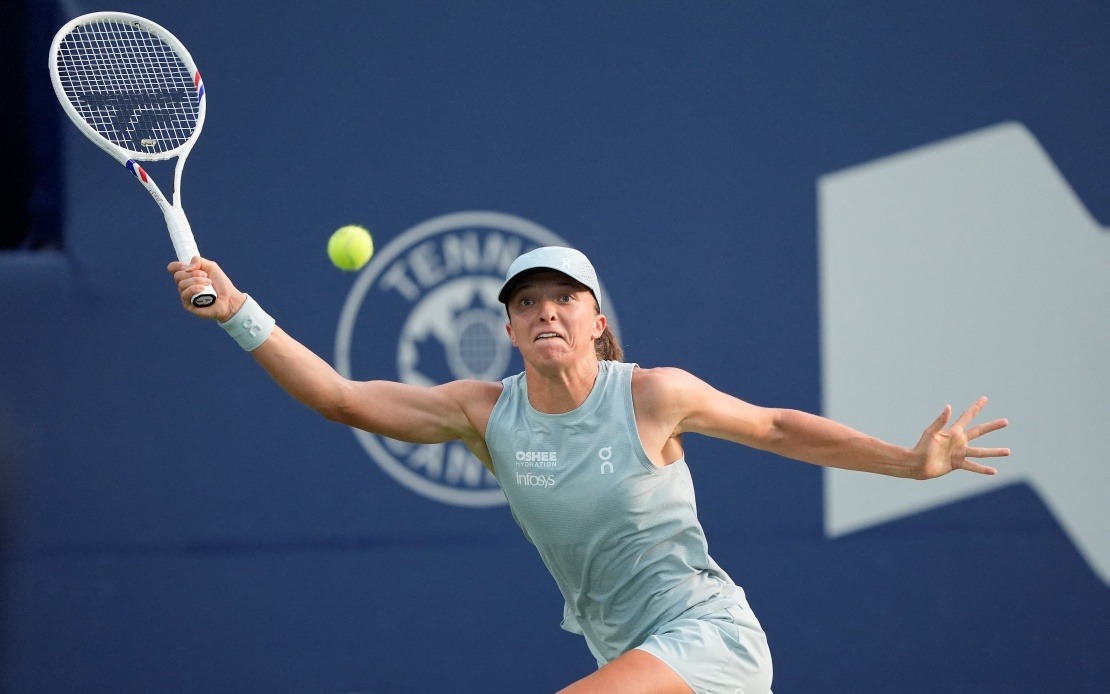
Iga Swiatek has ended her title drought for the year, capturing the National Bank Open crown in Toronto with a commanding performance that saw her dispatch world number two Elena Rybakina 6-2, 6-3 in the championship match. The victory marks Swiatek's first tournament triumph since last September, cementing her status as one of the tour's most formidable competitors and delivering momentum as the professional tennis calendar moves into its closing months.
The Polish seventh seed seized control from the opening exchanges, capitalizing immediately on Rybakina's unforced errors to establish an early break. The Kazakhstan-born defending champion's struggle with consistency proved costly when she produced consecutive double faults while defending break point, gifting Swiatek the advantage she would never surrender. This early momentum proved decisive as Swiatek's aggressive baseline game overwhelmed her opponent's traditional strength off the ground.
Swiatek's dominance accelerated through the opening set as she maintained her winning tempo without allowing Rybakina any meaningful opportunity to regain footing. The seventh seed's shot selection and court positioning reflected the confidence she had built through her earlier-round performances in the tournament, with each point seemingly played with growing assurance. She claimed the first set with impressive efficiency, establishing psychological leverage heading into the second period.
The second set followed a similar narrative as Rybakina's difficulties with execution persisted rather than diminishing. Two critical missed backhands in succession presented Swiatek with another break opportunity, which she converted to extend her advantage. Despite showing some resistance, Rybakina's attempts to stem the tide proved insufficient against an opponent in complete command of the match's rhythm and intensity.
Rybakina's only moment of defiance came when she managed to save one championship point, briefly suggesting a potential comeback could materialise. However, Swiatek's composure under pressure remained unshaken, and the Polish competitor converted her second title opportunity to secure the crown. The victory demonstrated not merely technical superiority but also the mental fortitude required to close out matches against elite opposition without lapsing in concentration.
For Malaysian and Southeast Asian tennis enthusiasts, Swiatek's success underscores the depth of competition at the women's professional level and the particular demands of hard-court tournaments, which are increasingly common across Asia-Pacific events. The National Bank Open represents one of the WTA's most prestigious tune-up events before major championships, making its prestige significant for career trajectory assessment.
At the awards ceremony, Swiatek offered remarks that transcended the sporting context, dedicating her achievement to "everyone who is dealing with unfair judgement and hate." She encouraged perseverance and self-focus, stating that observers should "keep pushing, keep growing, keep focusing on yourself because you know what's best for you." The message carried particular resonance given the heightened scrutiny that elite athletes increasingly face across social media platforms and broader public discourse.
Swiatek's counsel to "always remember what's ahead and what might be possible" reflected a forward-looking mindset essential for sustained excellence in professional sport. Rather than dwelling on the title drought that preceded this triumph, she pivoted toward anticipation of future opportunities. This psychological approach—compartmentalising disappointment while maintaining confidence in one's capabilities—represents a hallmark of champions across competitive disciplines.
The victory positions Swiatek advantageously as the tennis calendar approaches its final major championship events and year-end tournaments where rankings points concentrate and professional legacies crystallize. Breaking an extended period without titles can fundamentally shift momentum and restore confidence that may have been eroded by inconsistent results. For a player of Swiatek's calibre and ranking status, such confirmation of sustained competitiveness carries implications beyond immediate tournament success, affecting seeding positions and psychological standing heading into 2025.
Rybakina's loss, while representing a disappointing result for the defending champion, should be contextualised within the unpredictable nature of professional tennis where any opponent can perform brilliantly on a given day. The world number two's unforced errors, rather than deficiencies in technique, primarily determined the match outcome, suggesting that future encounters could follow entirely different trajectories should either player maintain or adjust their level of precision.

