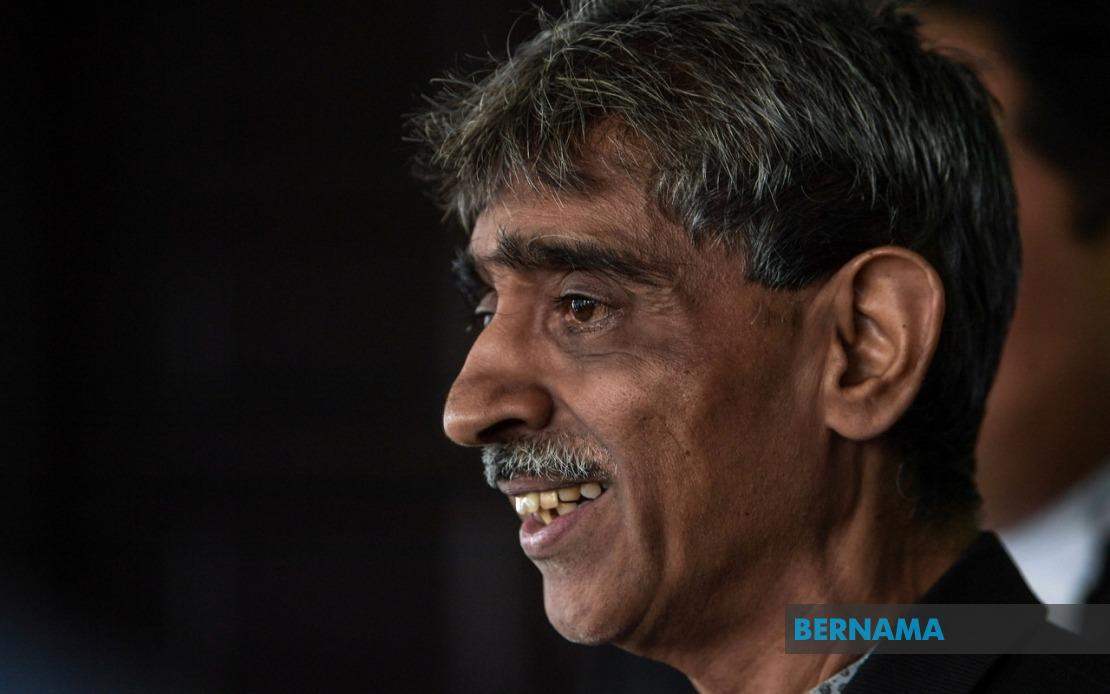
The path from investigation findings to courtroom prosecution in the Tabung Haji scandal must be expedited once sufficient evidence is in hand, legal expert Mohamed Haniff Khatri Abdulla has stressed, arguing that decisive action regardless of individual rank is essential to restore public faith in the troubled institution. Speaking to Bernama, the lawyer emphasised that prosecution represents a critical mechanism for translating the Royal Commission of Inquiry recommendations into tangible legal consequences and rebuilding depositor confidence that has been severely dented by years of governance lapses and investment controversies.
Mohamed Haniff, who participated directly in the RCI proceedings, outlined a clear threshold for legal intervention: once investigation concludes and official decision-makers possess sufficient evidence, criminal action must follow without delay or deference to the suspect's position or rank. He argued this approach serves a dual purpose—demonstrating to the public that accountability genuinely operates across all levels while simultaneously converting the RCI's recommendations from advisory documents into substantive legal remedies. The lawyer characterised this expectation as fundamental to what Malaysians demand from their justice system following a high-profile inquiry into alleged mismanagement and potential misconduct.
However, Mohamed Haniff cautioned against misinterpreting individual prosecutions as signals that investigations have concluded comprehensively. He advocated for a staged communication strategy wherein authorities periodically brief the public on prosecution milestones while clarifying that wider investigations continue across multiple investigative fronts. This nuanced messaging becomes crucial to prevent the perception—particularly relevant two years hence—that prosecutorial decisions reflect political calculations rather than evidence-driven determinations. The lawyer stressed that careful narrative management prevents public cynicism about whether actions represent genuine accountability or simply manifestations of changing administrations.
The investigation into Tabung Haji encompasses multifaceted dimensions requiring thorough examination: governance structures, investment decision-making processes, fund management practices, and potential legal violations spanning years of operations. According to information available to Mohamed Haniff, approximately 200 individuals have already been summoned by the Royal Malaysia Police and the Malaysian Anti-Corruption Commission to provide statements, underscoring the inquiry's sprawling scope. This scale necessarily elongates the investigative timeline, he noted, anticipating that resolving the matter comprehensively will consume an additional three to six months minimum from his speaking date.
The complexity intensifies when considering that two distinct law enforcement agencies—PDRM and MACC—are conducting parallel investigations with differing procedural frameworks and reporting protocols. To address this structural challenge, Mohamed Haniff proposed establishing a specialist unit within the Attorney General's Chambers dedicated exclusively to evaluating investigation papers emanating from both agencies. This dedicated team, he suggested, should comprise three experienced Deputy Public Prosecutors with expertise in both anti-corruption cases and conventional criminal law, thereby enabling integrated assessment of evidence from disparate sources and ensuring consistency in prosecutorial recommendations.
Former Court of Appeal judge Datuk Yaacob Md Sam reinforced these themes, underscoring a fundamental legal reality often misunderstood by the public: RCI reports, while authoritative, cannot independently serve as prosecutorial foundations. His involvement as a conducting officer in multiple RCIs, including the Sultan Abdul Halim Ferry Terminal jetty collapse inquiry, provided Yaacob direct perspective on the gap between investigative findings and prosecutable evidence. Under the Commissions of Inquiry Act 1950, RCI reports lack legal binding force and cannot function as admissible evidence in criminal or civil proceedings, he explained. This distinction proves consequential: enforcement agencies must independently reconstruct the investigative puzzle through their own procedures to gather testimony and documentary evidence meeting courtroom standards.
Yaacob stressed that RCIs operate within strictly defined terms of reference, producing findings and recommendations that merely signpost directions for further action rather than constituting legal instruments themselves. Consequently, PDRM, MACC, and prosecutorial authorities must re-examine all materials methodically to establish whether specific individuals' conduct violated criminal statutes. This secondary investigation phase, while appearing redundant to observers frustrated by delays, represents an indispensable constitutional safeguard ensuring prosecution decisions rest on independently verified evidence rather than inquiry findings that, however thorough, operate outside the criminal justice framework's evidentiary requirements.
The implications for Malaysian governance extend beyond Tabung Haji specifically. The public's faith in institutional accountability depends increasingly on demonstrating that RCI processes translate meaningfully into legal consequences for wrongdoing. Yet the Malaysian legal system faces genuine constraints: investigations require time, evidence collection follows procedural rules designed to protect defendant rights, and prosecutorial decisions must withstand appellate scrutiny. These realities demand public education about reasonable timelines for complex multi-agency investigations rather than expectations shaped by media narratives or political pressures for rapid convictions.
For Tabung Haji depositors who have endured years of uncertainty regarding their savings, the prospect of prosecution provides psychological reassurance even if recovery remains uncertain. The institution's rehabilitation hinges not merely on legal remedies but on demonstrating that systemic accountability mechanisms function independently and impartially. Every prosecution decision, therefore, carries weight beyond the individual defendant—it either reinforces or undermines public confidence in whether similar institutions and their stewards will face consequences for misconduct.
Mohamed Haniff's emphasis on communicating investigation progress incrementally addresses a critical governance challenge: maintaining public confidence throughout necessarily protracted legal processes. The alternative—silence punctuated by dramatic announcements—risks feeding speculation and conspiracy theories detrimental to institutional legitimacy. Regular, transparent updates explaining investigative status, evidentiary challenges, and prosecutorial decisions, even when declining to proceed in particular cases, establish accountability narratives grounded in factual deliberation rather than political theatre.
The proposed Attorney General's Chambers unit exemplifies structural solutions to investigative complexity. By concentrating expertise and ensuring consistent evaluation standards across PDRM and MACC submissions, this mechanism could accelerate prosecutorial decision-making without sacrificing rigour. Such institutional innovations become increasingly necessary as investigations expand in scope and involve multiple agencies with distinct organisational cultures and procedures. The model, if implemented effectively in the Tabung Haji context, might establish precedent for handling other complex multi-agency inquiries anticipated in Malaysian governance going forward.
Ultimately, the Tabung Haji prosecution trajectory will test whether Malaysia's accountability institutions can deliver substantive consequences while maintaining public confidence in impartiality and legal rigor. The lawyers' counsel emphasises neither rush nor indefinite delay but rather systematic progression from investigation to prosecution grounded in sufficient evidence and transparent communication. For Malaysian citizens monitoring this process, the emerging standard will likely influence expectations about governmental and institutional accountability across multiple sectors in coming years.

