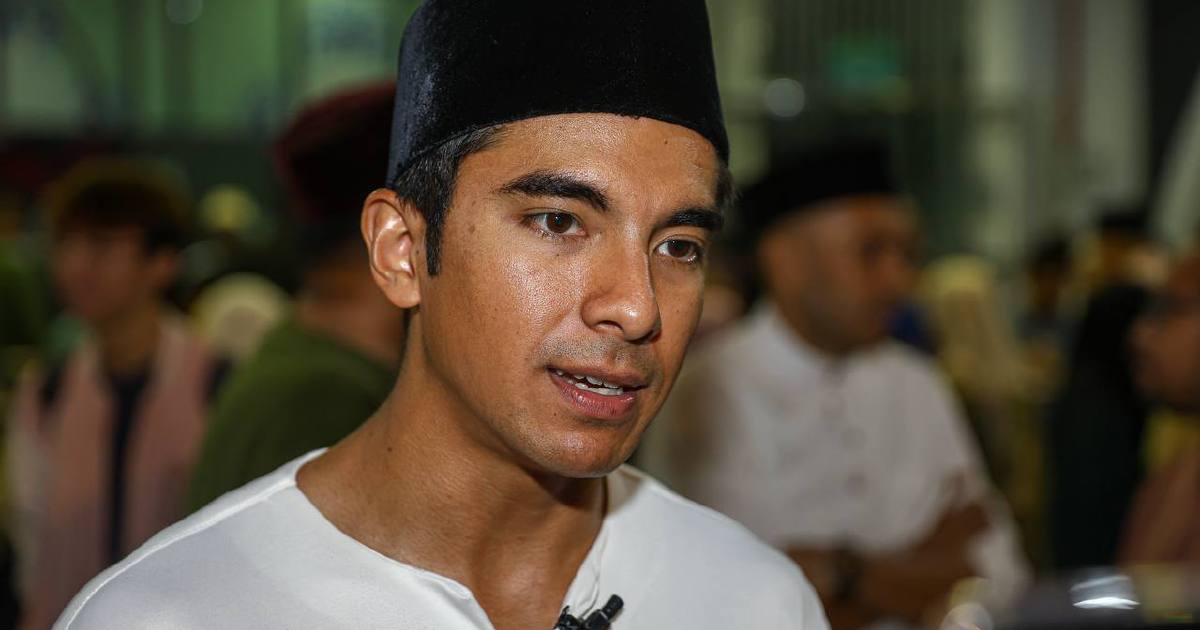
Syed Saddiq Saidin, the Muar MP and ex-Youth and Sports Minister, has signalled his acceptance of whatever decision the Federal Court delivers, framing the anticipated ruling as ultimately a matter of divine will rather than human determination. His statement comes as legal proceedings in his case near conclusion, with the court set to hand down its judgment following the conclusion of hearings. The positioning reflects a measured public demeanour from the prominent Pakatan Harapan politician as he navigates what appears to be a significant legal juncture in his political career.
The remarks underscore the psychological pressure that accompanies high-stakes judicial decisions in Malaysia's legal system, where Federal Court rulings can determine the trajectory of political figures' futures. By publicly ceding control to forces beyond his influence, Syed Saddiq has adopted a posture that balances legal optimism with realistic acknowledgement of judicial unpredictability. This rhetorical strategy allows him to maintain political standing regardless of the outcome, positioning himself as a figure of principle rather than one consumed by anxiety over legal proceedings.
Federal Court cases involving sitting members of parliament or former ministers typically attract significant public attention, particularly when they intersect with questions of ministerial conduct or political integrity. The case touching Syed Saddiq's name represents part of a broader pattern within Malaysian politics whereby legal challenges frequently ensnare members of the political establishment. The specifics of the case have shaped political discourse within his party and broader parliamentary dynamics, making the court's decision consequential not merely for the individual respondent but potentially for the administrative and political institutions involved.
Syed Saddiq's political standing has evolved considerably since his appointment as Youth and Sports Minister during the initial Pakatan Harapan administration. His tenure in that portfolio and subsequent parliamentary activities have positioned him as a figure of generational significance within Malaysian politics, representing younger voices within the coalition. The legal proceedings now occupying the Federal Court's calendar represent a potential inflection point in his political narrative, one that will resonate throughout his party's calculations regarding leadership succession and ministerial appointments in future administrations.
The approach of accepting judicial outcomes as reflecting higher purpose rather than purely technical legal judgment reflects cultural and religious perspectives prevalent in Malaysian public discourse. Politicians across the spectrum frequently invoke divine will when confronting uncertain legal prospects, a rhetorical choice that resonates with Malaysia's Muslim-majority population and religious sensibilities. For Syed Saddiq, whose political identity has incorporated Islamic values and youth-oriented modernisation, such language carries particular weight and authenticity within his political constituency.
The timing of the Federal Court's anticipated ruling carries weight within Malaysia's broader political calendar. Parliamentary sessions, coalition negotiations, and preparations for potential electoral contests all operate within temporal frameworks that legal decisions can disrupt or accelerate. Should the court's judgment impose significant constraints on Syed Saddiq's political activities, it could necessitate adjustments within Pakatan Harapan's parliamentary strategy and ministerial planning. Conversely, a decision favouring his legal position would strengthen his hand within internal party dynamics and enhance his profile as a resilient political figure.
Observers of Malaysian politics have noted that legal challenges frequently serve as mechanisms through which factional disputes within political coalitions find expression. Whether the case touching Syed Saddiq originated from genuine legal concerns or emerged from intersectional political rivalries remains a subject of analytical debate among parliamentary watchers. The Federal Court's imminent ruling will provide definitive clarification on the legal merits of the matter, though interpretations of its political significance will likely remain contested.
The Malaysian public and political establishment await the Federal Court's decision with particular interest given Syed Saddiq's profile as a modernising voice within Pakatan Harapan. His parliamentary interventions on youth issues, digital economy development, and institutional reform have distinguished him from some peers within his party. The court's judgment will therefore carry implications extending beyond his individual circumstances to encompassing questions about the future direction of Malaysia's ruling coalition and its capacity to nurture emerging political talent.
Syed Saddiq's invocation of divine providence in the face of judicial uncertainty reflects both personal conviction and strategic political communication. By publicly accepting the court's forthcoming decision as consonant with his faith, he constructs a narrative framework within which any outcome can be interpreted as part of a larger trajectory aligned with his values and principles. This rhetorical positioning simultaneously demonstrates humility before legal institutions and confidence in his fundamental political integrity, allowing him to preserve credibility and support within his constituency irrespective of the judgment's content.
The Federal Court's ruling, when delivered, will mark a significant moment in Malaysian parliamentary politics, determining not only the immediate legal status of the individual respondent but potentially reshaping factional alignments and career trajectories within the governing coalition. Political observers and parliamentary analysts will scrutinise the decision's language and reasoning as much as its outcome, searching for signals regarding judicial approach to cases involving political figures and ministerial conduct. Until that moment arrives, Syed Saddiq's philosophical stance of acceptance offers a public face of political composure, whatever the internal calculations and strategic deliberations accompanying the imminent judgment.

