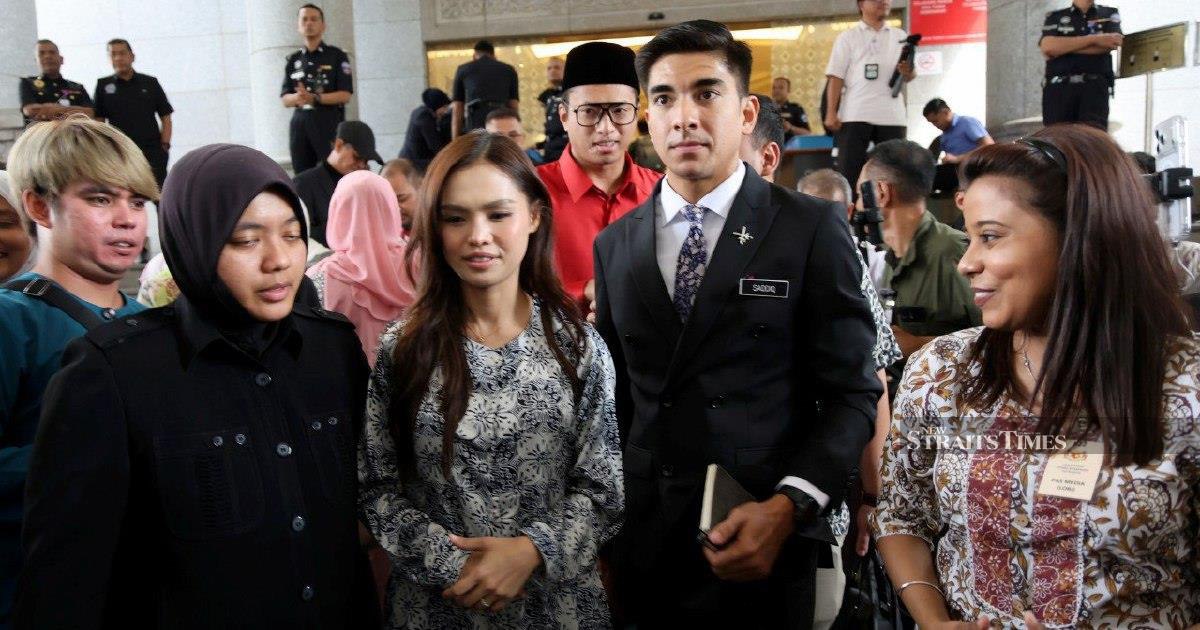
Muar member of parliament Syed Saddiq Syed Abdul Rahman has signalled that questions about reclaiming his former position within Muda will have to wait. The young politician, who was recently cleared by the courts of previous allegations, is channelling his immediate focus toward his personal life rather than any imminent party manoeuvre. During a recent appearance in his constituency, he made clear that matrimonial plans take precedence over political manoeuvres at the present time.
The Muda party, which Syed Saddiq founded in 2020 as a vehicle for youth-driven politics, has been operating without him since his stepping aside from the leadership role. His absence from the helm has left questions lingering about whether his legal vindication would prompt a swift return to active party direction. However, his statement suggests that any such move remains speculative and distant rather than imminent.
Syed Saddiq's circumspection reflects a broader maturation in his public positioning. At the age of 34, the Muar MP has experienced a compressed political arc, from founding an ambitious new party to stepping back from its leadership amid legal complications. His decision to deprioritise party leadership calculations in favour of personal milestones indicates a recalibration of priorities that may influence how he approaches his political career going forward.
The timing of his remarks is significant for Muda, which has been navigating the political landscape without its founder's direct leadership since 2021. The party has remained in the opposition bloc, participating in coalition discussions and seeking to consolidate its position among younger voters and urban constituencies. With Syed Saddiq's potential return to the leadership uncertain, Muda's current leadership structure must continue to function independently and demonstrate its viability as a political force separate from its founding figure.
For Malaysian politics more broadly, the situation underscores the challenges that personality-driven political vehicles face when their founders step back. Unlike established parties with deep institutional roots and succession mechanisms, newer movements such as Muda depend heavily on the momentum and visibility of their founders. Syed Saddiq's deliberate distance from immediate party concerns creates both a challenge and an opportunity for Muda to prove itself as an organisation capable of functioning beyond any single individual.
The legal proceedings that previously occupied much of Syed Saddiq's attention have now concluded in his favour, theoretically freeing him to pursue other ambitions without the burden of ongoing litigation. His acquittal removes a significant complicating factor that may have constrained his political options previously. Yet rather than immediately seizing this newfound clarity to launch a comeback bid, he has chosen to compartmentalise and address personal aspirations first.
This approach may also carry tactical advantages. A period of relative quiet allows the political environment to settle and prevents the appearance of opportunistic manoeuvring. Should Syed Saddiq eventually decide to contest for the Muda leadership, doing so after stabilising his personal circumstances could present a more credible and grounded candidacy than one pursued in the immediate aftermath of legal clearance, which might otherwise invite cynicism about motivation.
Muda's trajectory over the coming months will become clearer as the party continues to establish its identity and role within Malaysian politics. The youth-focused party has attracted members and support from voters dissatisfied with the traditional political establishment, positioning itself as an alternative voice. However, sustained growth and relevance will require demonstrating that it can develop policy ideas, maintain internal cohesion, and build electoral capacity independent of its founder's profile.
Syed Saddiq's focus on marriage also signals a desire to lead a more balanced life than his previous intensive political engagement permitted. After years of building and managing a political party while facing legal challenges, a shift toward personal consolidation may help him develop the kind of stability and perspective that could inform more thoughtful political decisions in the future. Whether such reflection eventually leads him back to active party leadership remains his prerogative to decide.
For observers of Malaysian politics and Muda in particular, the key question is not when Syed Saddiq might return, but rather whether his eventual choice—whether to reclaim the leadership or to chart a different political course—will represent a genuine reassessment of his role in the political landscape. His willingness to declare personal priorities publicly suggests an evolution from the more single-minded political ambition he displayed earlier in his career, potentially setting a different tone for how he might lead the party if he chooses to do so.
The coming months and years will test whether Muda can solidify itself as a lasting political force while its founder pursues other chapters of his life. In many respects, the party's ability to function effectively without daily input from Syed Saddiq represents the ultimate test of whether it was built with sufficient institutional depth to survive beyond the enthusiasm of a single founding figure.

