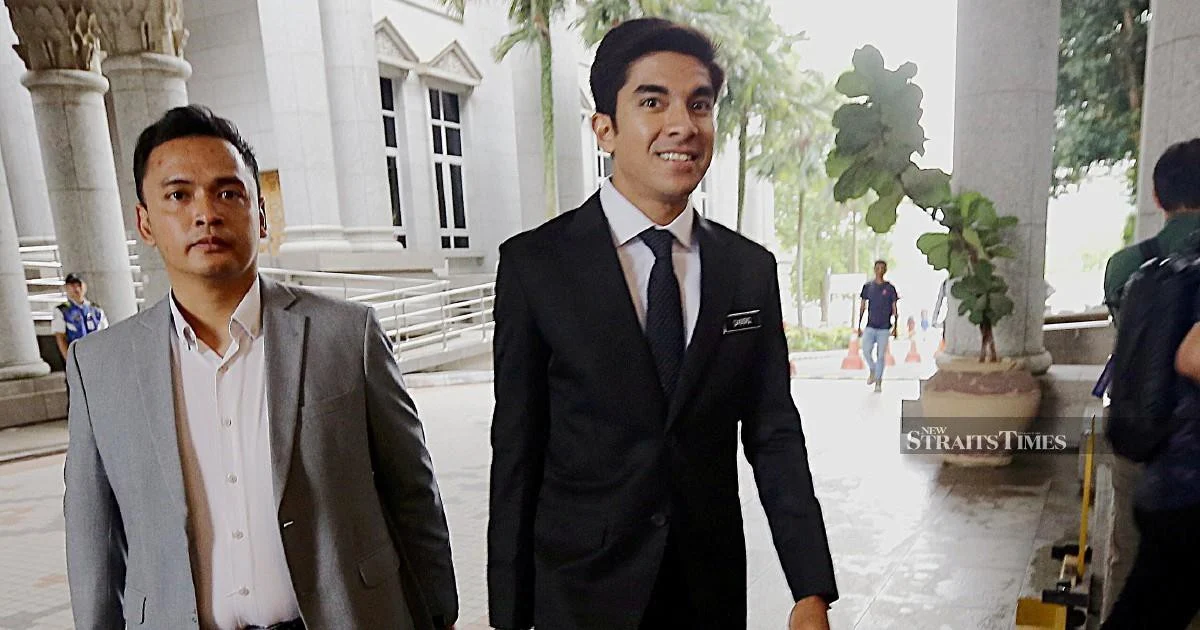
Amir Fiqri, commonly known as Amir Jack and a trusted special officer to Muar member of parliament Syed Saddiq Syed Abdul Rahman, has been nominated to contest the Maharani state assembly seat in the forthcoming Johor election. His candidacy represents an important manoeuvre for the Malaysian United Democratic Alliance (Muda), the younger sibling party within the Pakatan Harapan coalition, as it positions itself strategically across the southern state.
The decision to field Amir Jack underscores Muda's confidence in mobilising close associates of established political figures to expand its grassroots reach. Syed Saddiq, who has long been identified as a rising political star within the reform movement, maintains considerable personal influence among younger voters and urban constituencies. By deploying someone from his immediate circle, Muda appears intent on translating that existing support base into votes across multiple districts.
Maharani, situated within Johor's political landscape, represents a challenging but strategically significant battleground. The seat requires candidates capable of navigating both urban and semi-rural voter demographics, a demographic mix increasingly important for parties seeking to broaden their appeal beyond traditional strongholds. Amir Jack's positioning as a professional political operative rather than a party veteran may resonate with voters fatigued by conventional political hierarchies.
Muda's overall strategy of fielding four candidates across the Johor election demonstrates the party's ambitions to move beyond its traditional metropolitan bases into state-level politics. Since its establishment, Muda has struggled to translate parliamentary-level support into consistent state assembly representation, making this electoral cycle particularly crucial for demonstrating viability as a serious electoral force. Each candidate nomination therefore carries weight beyond the individual contest.
The timing of such announcements typically signals broader party-building efforts ahead of voting. Amir Jack's nomination likely comes alongside intensive campaign preparations, including voter engagement initiatives and policy platform refinement. For Malaysian political observers, these grassroots movements often precede larger coalition adjustments and strategic repositioning within the Pakatan Harapan framework.
For Southeast Asian readers monitoring Malaysian political evolution, Muda's trajectory remains instructive. The party emerged from civil society activism and youthful aspirations for governance reform, principles that candidates like Amir Jack are expected to embody during their campaigns. However, translating idealistic mandates into electoral wins remains the perennial challenge confronting reformist movements across the region.
Syed Saddiq himself has navigated considerable political turbulence since joining elected office, weathering allegations and internal party dynamics while maintaining parliamentary representation from Muar. His continued backing by those within his political circle, such as Amir Jack choosing to contest under Muda's banner, suggests sustained confidence in his political durability despite external pressures. This personal loyalty often determines campaign momentum in Malaysian electoral contests.
The Johor election cycle presents particular significance because the state remains economically vital to Malaysia's overall prosperity and geopolitically important given its proximity to Singapore. Electoral outcomes here therefore influence national coalition stability and resource allocation priorities. Muda's performance across these four seats will be closely analysed by party strategists and coalition observers as indicators of the younger party's sustainability within the Pakatan framework.
For voters in Maharani, Amir Jack represents a candidate profile increasingly common across Malaysian politics: professional political operatives leveraging proximity to established figures to gain electoral entry. Whether such positioning translates into substantive local advocacy or merely reflects opportunistic career advancement remains a question voters will ultimately answer through the ballot.
Muda's four-candidate strategy also reflects pragmatic calculations about resource allocation and seat viability. Rather than spreading efforts thinly across numerous contests, the party has apparently identified Maharani and three other constituencies as winnable propositions based on organisational capacity and existing voter sentiment. Amir Jack's selection for Maharani suggests internal confidence in his campaigning abilities and personal network strength within that electorate.
The broader political context in Johor involves complex negotiations between Pakatan Harapan components, incumbent state government arrangements, and opposition positioning. Muda's role within these dynamics remains defined by its ability to capture votes that might otherwise default to established coalition partners or swing toward opposition candidates. Amir Jack's candidacy therefore represents one tactical element within much larger strategic calculations governing state-level politics in Malaysia's second-largest state by population.
%22%2F%3E%3C%2Fpattern%3E%3C%2Fdefs%3E%3Crect%20width%3D%22100%25%22%20height%3D%22100%25%22%20fill%3D%22url(%23ph1hwmjg)%22%2F%3E%3Crect%20width%3D%22100%25%22%20height%3D%22100%25%22%20fill%3D%22url(%23ph1hwmjp)%22%2F%3E%3Ctext%20x%3D%2250%25%22%20y%3D%2250%25%22%20text-anchor%3D%22middle%22%20dominant-baseline%3D%22central%22%20fill%3D%22rgba(255%2C255%2C255%2C0.95)%22%20font-family%3D%22Georgia%2C%20'Times%20New%20Roman'%2C%20serif%22%20font-weight%3D%22700%22%20font-size%3D%22272%22%20letter-spacing%3D%22-0.02em%22%3EDeath%3C%2Ftext%3E%3C%2Fsvg%3E)
%22%2F%3E%3C%2Fpattern%3E%3C%2Fdefs%3E%3Crect%20width%3D%22100%25%22%20height%3D%22100%25%22%20fill%3D%22url(%23ph16uycg)%22%2F%3E%3Crect%20width%3D%22100%25%22%20height%3D%22100%25%22%20fill%3D%22url(%23ph16uycp)%22%2F%3E%3Ctext%20x%3D%2250%25%22%20y%3D%2250%25%22%20text-anchor%3D%22middle%22%20dominant-baseline%3D%22central%22%20fill%3D%22rgba(255%2C255%2C255%2C0.95)%22%20font-family%3D%22Georgia%2C%20'Times%20New%20Roman'%2C%20serif%22%20font-weight%3D%22700%22%20font-size%3D%22320%22%20letter-spacing%3D%22-0.02em%22%3EIran%3C%2Ftext%3E%3C%2Fsvg%3E)