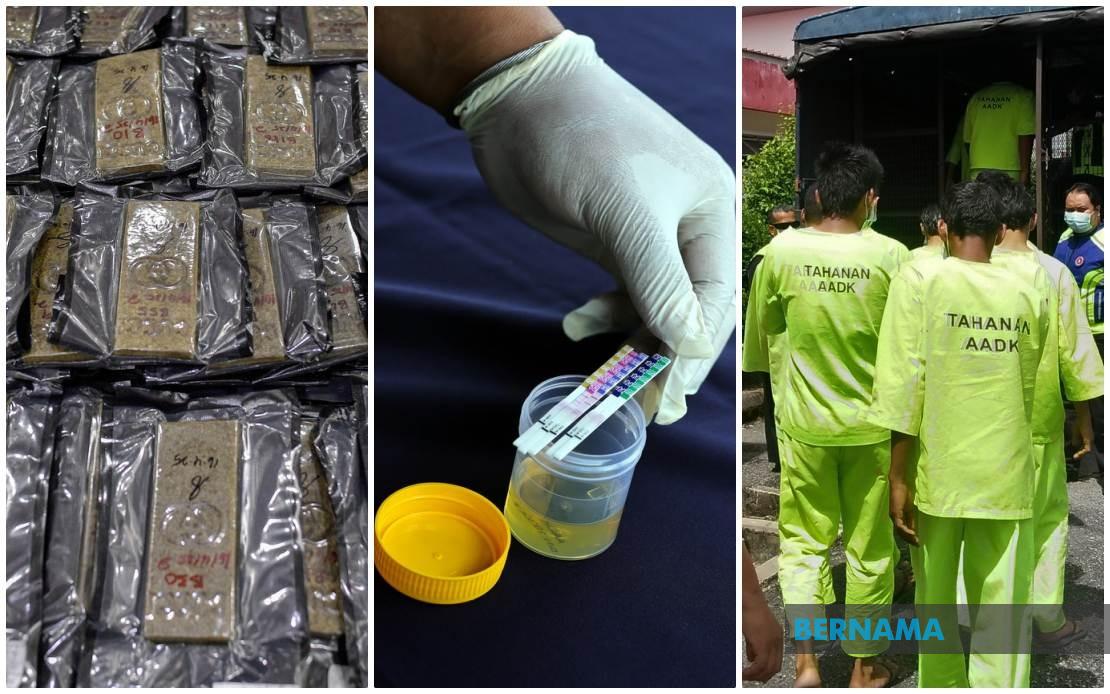
The synthetic drug crisis in Malaysia has reached alarming proportions, with Home Minister Datuk Seri Saifuddin Nasution Ismail confirming that 141,817 cases were documented last year. Speaking during parliamentary question time, he outlined a troubling upward trajectory in substance abuse figures, revealing that 145,526 cases occurred in 2023 before climbing sharply to 192,852 in 2024. These numbers underscore a deteriorating public health challenge that stretches across every corner of the nation and demands urgent, comprehensive intervention.
The substance profile driving this epidemic has shifted dramatically. Synthetic drugs, particularly Amphetamine-Type Stimulants (ATS), now dominate the Malaysian drug landscape, accounting for roughly 70 per cent of all recorded abuse cases. This represents a fundamental change in user behaviour and criminal supply patterns. The traditional narcotics that once dominated enforcement priorities—cannabis, heroin, kratom and morphine—have been substantially supplanted by laboratory-manufactured compounds that are cheaper to produce, easier to conceal, and far more addictive. The transition reflects both the globalisation of illicit manufacturing networks and the evolving preferences of a younger demographic experimenting with drugs.
Geographic analysis of the crisis reveals a deeply concerning concentration in East Malaysia's peninsula. Data synthesised from the Ministry of Health, the National Anti-Drugs Agency (AADK), Narcotic Addiction Rehabilitation Centres (Puspen) and the Royal Malaysia Police (PDRM) identified east coast states as bearing disproportionate harm. Districts including Pendang, Kuala Krai, Bachok, Besut and Mersing rank among the worst affected areas nationally. This geographic clustering suggests that specific socioeconomic, demographic and infrastructural factors in these regions are creating vulnerability to drug trafficking and addiction—a pattern that demands region-specific policy responses rather than one-size-fits-all national strategies.
Methamphetamine, colloquially known as syabu, has emerged as the dominant substance fuelling this crisis. The shift from traditional opioids to ATS reflects global trends in illicit drug markets, where synthetic stimulants offer criminal networks superior profit margins and lower detection risks compared to heroin or morphine. Users in east coast corridors have progressively abandoned older substances in favour of these potent synthetics, signalling both the effectiveness of illicit supply chains in introducing new products and the susceptibility of vulnerable populations to addiction.
A more sinister development has begun to emerge in recent months: the appearance of fentanyl in Malaysian drug seizures. Police operations targeting adulterated vape products uncovered this pharmaceutical opioid, which carries exponentially greater danger than morphine—estimates suggest it is dozens of times more potent. Though current fentanyl prevalence remains limited compared with ATS, its detection marks a critical inflection point in Malaysia's drug emergency. The substance's extreme potency means even microscopic quantities can prove lethal, transforming accidental overdose from a low-probability risk into an acute threat. Recognising this danger, the government has swiftly added fentanyl to the list of scheduled substances through amendments to the Drug Dependants (Treatment and Rehabilitation) Act and the Dangerous Drugs Act 1952, enabling law enforcement to pursue formal criminal action against traffickers and distributors.
Demographic patterns reveal that drug abuse remains concentrated among young Malaysians. Approximately 75 per cent of the 192,000 cases recorded since January this year involve individuals aged between 15 and 39 years old. This youth-centred profile carries profound implications for national productivity, public health systems and social stability. Young people caught in addiction cycles face disrupted education, employment marginality, and criminality—creating intergenerational poverty traps and straining rehabilitation infrastructure already operating at capacity.
The prison system offers a stark illustration of drug abuse's penetration into Malaysian society. Approximately 70 per cent of the national inmate population carries drug-related convictions or remand charges, whether for trafficking or personal consumption. In certain facilities such as Machang, nearly all prisoners have drug connections, transforming these institutions into de facto treatment centres rather than purely custodial facilities. This concentration reflects both enforcement priorities and the reality that addiction-driven criminality accounts for a massive share of Malaysia's criminal burden.
Digital platforms and online commerce have fundamentally complicated enforcement efforts. Home Minister Saifuddin Nasution highlighted how technological advancement has dismantled traditional geographic and commercial barriers to drug acquisition. Online marketplaces facilitate direct consumer-to-supplier transactions, often with minimal regulatory oversight or buyer verification. These platforms operate in jurisdictional grey zones where Malaysian law enforcement struggles to establish authority, creating a distribution ecosystem that bypasses conventional interdiction points and makes real-time prevention nearly impossible.
The AADK's strategic response encompasses multiple dimensions. Community-based prevention programmes, educational initiatives targeting schools and institutions, family intervention schemes and workplace awareness campaigns form the preventive backbone. Simultaneously, law enforcement coordination between the AADK, PDRM and the Customs Department targets supply-side suppression through border interdiction, manufacturing site disruption and major trafficker prosecution. Yet the scale of the crisis vastly outpaces available resources and institutional capacity. East coast states, already struggling with geographic isolation, limited healthcare infrastructure and weaker educational access, face particular implementation challenges in rolling out comprehensive prevention and treatment programmes.
The figures demand honest acknowledgment that Malaysia faces not merely a criminal justice problem but a public health emergency requiring sustained investment in addiction treatment, mental health services, socioeconomic opportunity expansion and drug policy reform. Current approaches, while well-intentioned, appear insufficient to reverse accelerating trends. The evolution from cannabis and heroin to synthetic ATS and fentanyl signals that Malaysian criminal networks and global suppliers are adapting faster than domestic policy responses. Without fundamental recalibration of enforcement priorities, treatment accessibility and prevention targeting, synthetic drug prevalence will continue climbing, particularly in vulnerable east coast communities where the crisis has already metastasised.