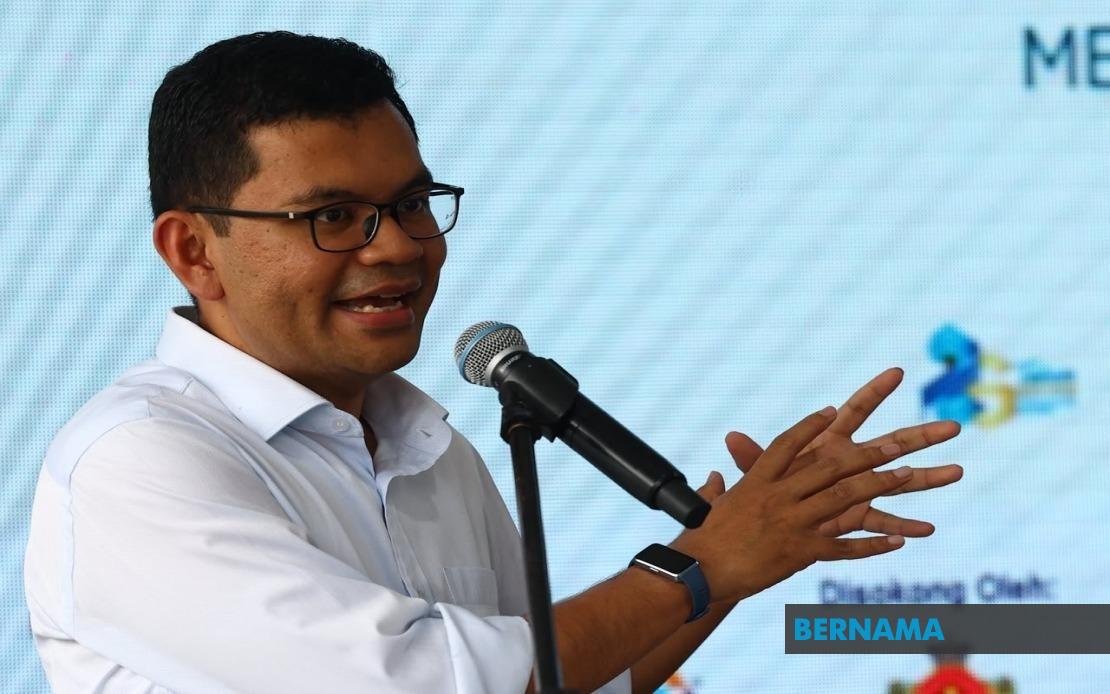
Economy Minister Akmal Nasrullah Mohd Nasir has sounded a stark warning about the persistent erosion of public resources through inadequate oversight of government-funded initiatives, attributing the problem to deeply entrenched complacency and an absence of meaningful accountability mechanisms. Speaking at an event in Alor Setar, the minister underscored a troubling pattern in which Malaysia's near-seven decades of independence have failed to produce meaningful improvements in project governance, despite multiple shifts in political leadership and successive administrations pledging reform.
The core issue, according to Akmal Nasrullah, transcends simple administrative lapses or isolated instances of poor judgment. Rather, he characterised the problem as a manifestation of institutional inertia and a resistance to fundamental change in how government bodies approach the execution of projects that directly impact ordinary Malaysians. This assessment carries particular weight given his ministerial responsibilities, which place him in a position to observe firsthand the operational shortcomings that plague public sector initiatives across multiple portfolios.
The Economy Minister's comments were prompted specifically by his ongoing experience with the Kedah water treatment plant project, a development that has exemplified many of the governance failures he seeks to highlight. This initiative has been subject to multiple institutional overseers, initially falling under the purview of the Energy Transition and Water Transformation Ministry before subsequently being transferred to coordination by the Economy Ministry itself. The project's troubled trajectory provided Akmal Nasrullah with concrete evidence of patterns he views as symptomatic of broader structural weaknesses in government management.
Throughout his involvement with the Kedah initiative, Akmal Nasrullah maintained a sustained focus on identifying and communicating concerns about the project's implementation and trajectory. He has been explicit in stating that his warnings about emerging problems went unheeded by relevant stakeholders and supervising bodies, ultimately allowing preventable difficulties to crystallise into actual operational and financial problems. This experience has fuelled his determination to speak publicly about the need for systemic change, regardless of potential political sensitivities.
Understanding the source of resistance to his public commentary is important for Malaysian readers assessing the depth of the governance challenge. Some observers have characterised his openness regarding project shortcomings as inappropriate, suggesting that a minister's responsibilities should be confined narrowly to high-level policy formulation rather than engagement with implementation realities. Others have questioned whether critical commentary constitutes a departure from appropriate ministerial conduct or simply represents transparency about problems affecting the public interest.
Akmal Nasrullah has firmly rejected the notion that scrutiny of project management falls outside his legitimate remit or that pointing out failures represents an overreach of his authority. His position reflects a growing recognition within portions of Malaysia's government that silencing criticism about operational problems serves no constructive purpose and ultimately perpetuates the very conditions that enable wasteful spending to continue unchecked. The minister's willingness to engage in this debate signals an understanding that institutional culture change requires public acknowledgment of problems rather than their concealment.
The distinction he draws between policy-level considerations and attitudinal change is particularly revealing about how he conceptualises the governance problem. While government policies naturally evolve in response to changing circumstances and emerging needs, the attitude and mindset that shape how organisations execute those policies remain far more resistant to reform. This observation suggests that technical or structural adjustments to government processes, while necessary, will prove insufficient without corresponding shifts in professional culture and institutional commitment to accountability.
For Malaysian taxpayers and citizens dependent on government services, the implications of these systemic failures extend well beyond abstract notions of administrative efficiency. When water treatment plants, infrastructure projects, or other public investments face cost overruns, delays, or incomplete execution due to inadequate oversight, the real consequences manifest in delayed access to essential services, inflated project costs borne ultimately by the public, and erosion of confidence in government capacity to deliver on commitments. The Kedah situation thus represents not merely a single failed project but a window into patterns affecting resource allocation across multiple sectors.
The regional significance of Akmal Nasrullah's concerns should not be underestimated in a Southeast Asian context where governance and institutional capacity remain critical determinants of each country's development trajectory. Malaysia's experience with government project management challenges mirrors difficulties encountered across the region, where countries grapple with similar tensions between policy ambitions and implementation capacity. The Economy Minister's public engagement with these issues contributes to a broader regional conversation about how developing nations can strengthen accountability mechanisms and improve stewardship of public resources.
Moving forward, the challenge lies in translating Akmal Nasrullah's diagnostic observations into concrete institutional reforms that address root causes rather than symptoms. This requires establishing clear lines of responsibility for project outcomes, implementing transparent monitoring systems that enable early identification of problems, and creating consequences for failures in oversight and execution. Without such structural changes, the pattern of warning-followed-by-ignored-concerns will likely continue cycling through Malaysian government agencies, perpetuating the wastage the Economy Minister has now prominently highlighted.

