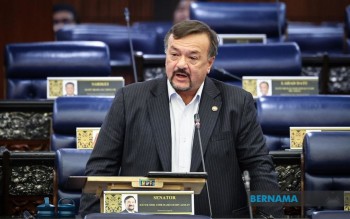
Tabung Haji (TH), Malaysia's pilgrimage fund, has suffered devastating financial losses totalling nearly RM13 billion across a portfolio of 14 poorly performing investments, according to Finance Minister II Datuk Seri Amir Hamzah Azizan. The scale of the losses underscores the severity of governance and risk management failures that have plagued the institution, with the most alarming aspect being that seven of the 14 investments resulted in complete financial wipeouts—not partial impairments but total losses that wiped out their entire value.
The minister disclosed these figures during parliamentary proceedings focused on examining the Royal Commission of Inquiry report into TH's operations, a document that has already exposed years of mismanagement and questionable investment decisions. The RM13 billion loss figure comprises two distinct components: RM10.2 billion that the Malaysian government was forced to inject as a bailout through Urusharta Jamaah Sdn Bhd (UJSB) in 2018, and an additional RM2.6 billion in impairment charges that TH itself has had to absorb between 2018 and 2025 for investments still under its management. This bifurcation of losses reveals the ongoing financial hemorrhaging affecting the fund even years after the initial crisis.
Among the troubled investments, the most significant loss involved TH's venture into Saudi Arabian real estate through Al-Rawda Real Estates Development & Project Management Co Ltd. This company, which was supposed to operate hotel properties in the holy cities of Makkah and Madinah, became the poster child for TH's failed international expansion strategy. Between 2015 and 2017, TH committed substantial resources to lease agreements, ultimately disbursing 1.4 billion Saudi riyals—approximately RM1.5 billion—to an intermediary to secure operations of four hotels designated to accommodate Malaysian pilgrims undertaking the Hajj.
The Al-Rawda arrangement was built on fundamentally flawed structural foundations. According to the minister's account, TH expected the operator to generate revenue through rental payments of 2.49 billion Saudi riyals that would compensate for the initial lease investment and generate returns for pilgrims' savings. However, the entire arrangement depended on personal promissory notes rather than concrete collateral or enforceable guarantees, leaving TH with virtually no legal recourse when circumstances deteriorated. When Al-Rawda failed to deliver the promised rental payments beginning in the first quarter of 2019, TH found itself unable to recover its investment or compel performance from a counterparty with no meaningful assets securing the commitment.
By 2024, TH was forced to formally acknowledge the complete evaporation of this investment, recognizing a full impairment loss of RM1 billion. This delayed recognition, occurring years after the initial default, highlights another dimension of TH's problems: the reluctance or inability to promptly acknowledge losses, which masked the true financial condition of the fund from stakeholders and policymakers. For Malaysian pilgrims whose savings were invested in TH, this meant their contributions were channeled into an investment that produced zero returns while enriching intermediaries and exposing the fund's operational weaknesses.
The existence of seven completely written-off investments, alongside the Al-Rawda debacle, suggests systemic failures in TH's investment evaluation and due diligence processes. These were not marginal losses from calculated risks that failed to materialize as expected; rather, they represent investments that should never have been approved by competent fiduciary bodies. The pattern indicates that investment decisions may have been driven by factors other than rigorous financial analysis, such as political connections, informal agreements, or inadequate expertise in evaluating complex international real estate and development ventures.
The government's decision to inject RM10.2 billion through UJSB in 2018 essentially represented a rescue of TH that prevented the fund from defaulting on obligations to millions of Malaysian pilgrims. This bailout, while necessary to protect beneficiaries, also transferred the burden of mismanagement from institutional leadership to Malaysian taxpayers who had no role in authorizing or approving the problematic investments. The bailout created a moral hazard by demonstrating that even catastrophic investment failures would be rescued by the government, potentially undermining future accountability and prudent decision-making.
For Malaysian pilgrims and potential Hajj participants, these revelations carry immediate implications. The losses mean that contributions made to TH by current and prospective pilgrims have been significantly diminished by prior misallocation of funds. Even with the government bailout, the fund's ability to provide attractive returns on savings or comprehensive pilgrimage support services has been constrained by the need to recover from these losses. Additionally, the governance failures documented in the RCI report raise questions about whether TH has implemented sufficient reforms to prevent future investment disasters.
The revelation of such massive losses also reflects broader concerns about corporate governance and accountability within government-linked entities in Malaysia. TH's case demonstrates how insufficient oversight, weak board structures, and limited external scrutiny can permit sustained mismanagement of public funds and beneficiary assets. The investment portfolio that generated RM13 billion in losses would have required board approval at multiple stages, suggesting either that oversight mechanisms were fundamentally broken or that warning signs were systematically ignored.
The parliamentary briefing on the RCI report represents a critical moment for establishing accountability and implementing meaningful reforms. Beyond acknowledging the losses, Minister Amir Hamzah's public disclosure signals recognition that TH's problems must be directly addressed rather than buried. However, the disclosure alone is insufficient; the real test lies in whether concrete measures will follow to strengthen governance, improve investment decision-making processes, and restore public confidence in the institution.
Looking forward, TH faces the dual challenge of rehabilitating its financial position while rebuilding the trust of millions of Malaysian pilgrims who depend on the institution. The RM10.2 billion government rescue preserved the fund's viability but did not address the underlying causes of the investment failures. Sustainable recovery requires not just financial infusion but comprehensive institutional reform, improved risk management frameworks, stronger board oversight, and greater transparency regarding investment decisions and their outcomes. Until these structural changes are demonstrably implemented and monitored, TH will remain vulnerable to repeating the patterns of poor judgment that generated these staggering losses.

