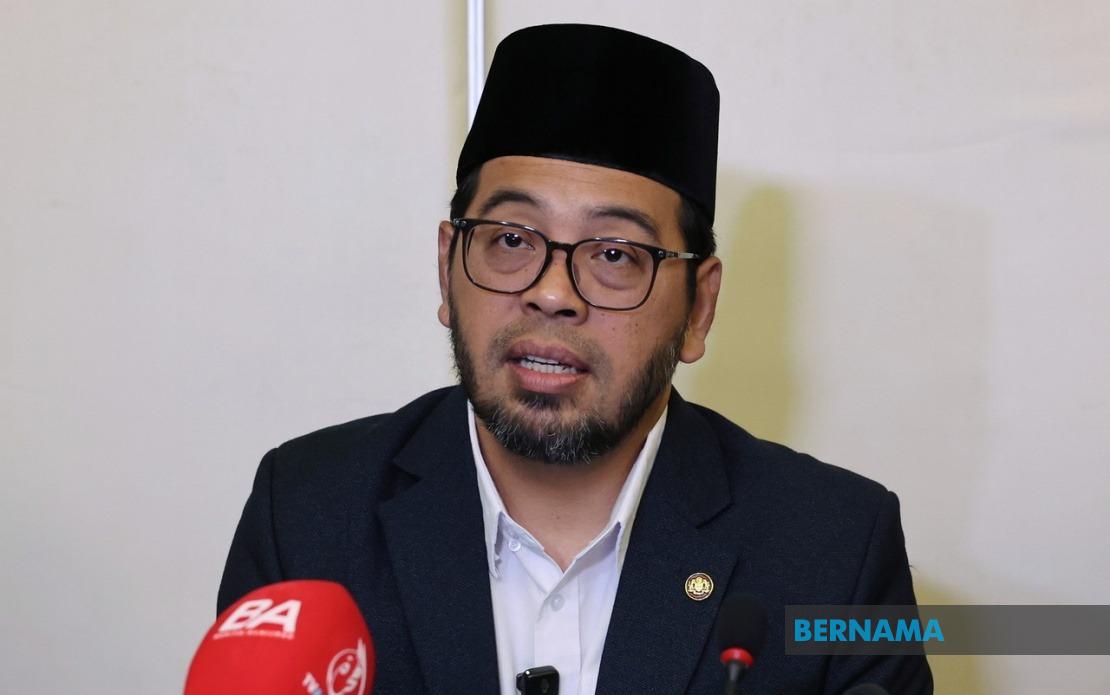
Tabung Haji has emerged from a period of institutional stress into a position of renewed stability, according to Dr Zulkifli Hasan, the Minister in the Prime Minister's Department (Religious Affairs), who outlined the recovery efforts during a special parliamentary sitting on August 11. The hajj management body faced significant difficulties stemming from problematic legacy assets accumulated between 2018 and the end of 2022, when the MADANI Government assumed office. Rather than imposing immediate changes, the administration granted the institution space to undertake a comprehensive restoration programme, which has now reached a point where transparency regarding its past difficulties can be restored without jeopardising ongoing recovery work.
The decision to release the Royal Commission of Inquiry report marks a pivotal moment in addressing public concerns about Tabung Haji's stewardship. The Cabinet unanimously approved publication on July 29, following a recommendation for a special parliamentary debate and public disclosure. This shift towards openness represents a deliberate strategy: allowing TH management to stabilise operations first, then enabling democratic scrutiny and enforcement action without disrupting the institution's function. For Malaysian depositors—primarily ordinary citizens saving incrementally for the Hajj pilgrimage—this sequencing balances accountability with the need to protect their accumulated funds.
The scale of public trust placed in Tabung Haji underscores why governance failures demand proportionate consequences. The institution holds deposits from parents funding children's spiritual journeys, educators, small merchants, retirees, agricultural workers, fishermen, rubber tappers, and taxi drivers. These are not investors chasing returns but believers making sacrifices toward a religious obligation. When institutional misconduct affects such funds, Zulkifli emphasised, concealment and minimisation are ethically unacceptable. The government cannot deflect behind statistical recovery or allow politically motivated narratives to obscure depositors' legitimate interests and the broader Muslim community's confidence in institutions designed to serve their aspirations.
Following the RCI report's release, enforcement agencies have moved swiftly. The Malaysian Anti-Corruption Commission and police have launched investigations and detained several individuals implicated in misappropriation allegations documented in the 211-page inquiry. This action reflects what Zulkifli described as an unwavering commitment to prosecuting abuse of power and criminal breach of trust without exception or favour. The approach aligns with a directive from His Majesty Sultan Ibrahim, King of Malaysia, that investigations proceed comprehensively and transparently, leaving no aspect unexplored. For regional observers, this demonstrates a willingness to pursue high-profile cases despite institutional sensitivity and potential political complications.
The RCI itself represents institutional maturity in Malaysia's governance architecture. Chaired by former Chief Justice Tun Mohamed Raus Sharif and comprising five specialists in public administration, banking, finance, shariah law, and accounting, the inquiry was formally announced in 2021, with members appointed in January 2022 before submitting findings to the King in August that year. This independent examination identified operational and management weaknesses spanning 2014 to 2020, a period encompassing multiple administrations. By institutionalising such inquiries rather than relying on partisan investigations, Malaysia establishes mechanisms for accountability that transcend electoral cycles and political allegiances.
TH's operational improvements have attracted international recognition. The institution has secured five World's Best Haj Management Awards across four consecutive years, suggesting that strengthened leadership and governance have yielded tangible improvements in pilgrimage services and financial administration. These accolades carry particular weight in Islamic finance and hajj management circles, signalling that recovery efforts have not merely stabilised balance sheets but enhanced competitive capabilities. For potential depositors, such recognition provides reassurance that institutional renewal has been substantive rather than cosmetic.
The RCI report contained 25 recommendations for systemic improvement. As of July 30, approximately 75 per cent had been implemented, with remaining recommendations actively progressing. This implementation rate indicates that the new TH management has treated the inquiry's findings not as suggestions to be selectively adopted but as a roadmap for institutional transformation. Malaysian policymakers and administrators increasingly recognise that extracting value from investigatory reports requires embedding recommendations into operational practice, measurable timelines, and accountability mechanisms. Tabung Haji appears to be exemplifying this approach.
The political economy of institutional recovery deserves scrutiny. When the MADANI Government inherited Tabung Haji, it faced a choice between immediate purges and measured restoration. The decision to prioritise stabilisation before public accountability carried risks: critics could have portrayed the delay as protective concealment. However, the subsequent public release of the RCI report and enforcement action suggest a calculated sequence designed to maximise both recovery and accountability. For Southeast Asian observers, this illustrates how democratic governments can balance institutional rehabilitation with democratic oversight without creating false choices between transparency and stability.
Tabung Haji's experience also illuminates challenges facing Islamic financial institutions across the region. Managing assets in accordance with shariah principles while maintaining competitive returns and institutional stability requires sophisticated governance. Legacy problems from previous leadership, asset quality deterioration, and market pressures create vulnerabilities that institutional cultures sometimes fail to address proactively. The RCI process has essentially provided a diagnostic framework for identifying such vulnerabilities systematically, a model other Islamic financial institutions—whether in Malaysia, Indonesia, or elsewhere—might adapt to their own governance assessments.
For Malaysian depositors, the trajectory outlined by Zulkifli offers qualified reassurance. Their savings are in an institution that has stabilised operationally, attracted international quality recognition, undertaken comprehensive independent scrutiny, and begun implementing systemic reforms. Simultaneously, those responsible for past misconduct face criminal investigation. This combination—restored institutional capacity alongside enforcement accountability—represents the outcome most depositors would rationally prefer. Trust in financial institutions serving religious and communal purposes requires both competent stewardship and demonstrated consequences for breaches.
The broader governance implications extend beyond Tabung Haji itself. Malaysia's ability to conduct independent royal commissions of inquiry into substantial institutional failures, publish findings despite political sensitivity, and pursue enforcement action demonstrates institutional mechanisms capable of managing accountability within democratic frameworks. These capabilities become increasingly important as regional economies complexify and institutional trust becomes a competitive asset. Countries demonstrating capacity to investigate failures transparently and impose consequences systematically strengthen long-term institutional credibility.

