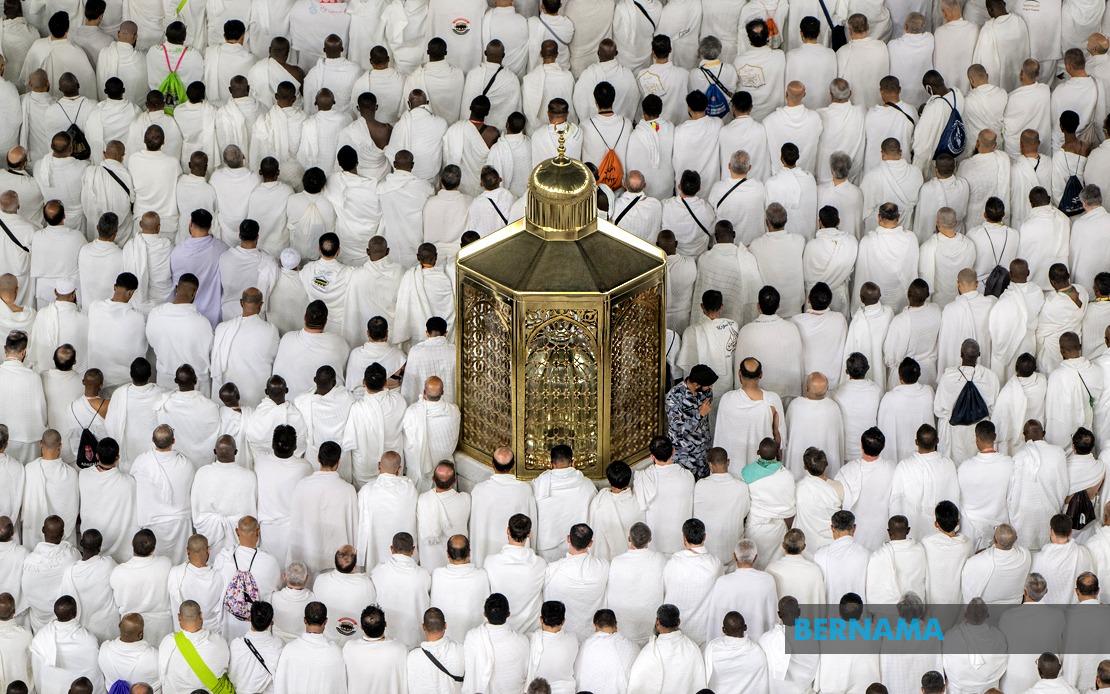
Tabung Haji has reaffirmed its commitment to allocating hajj placements strictly according to a first-registered, first-served framework, rejecting proposals to introduce preferential categories that could undermine the integrity of its decades-old waiting system. The decision, confirmed by Deputy Minister Marhamah Rosli in Parliament, represents a firm stance against calls to create expedited pathways for certain groups of pilgrims, particularly those approaching retirement or receiving large gratuity payments.
The pressure to create special categories reflects genuine tensions within Malaysia's hajj management system. Abdul Latiff Abdul Rahman, representing Kuala Krai, had specifically proposed establishing a dedicated track for compulsory retirees receiving substantial gratuity payments, arguing that their enhanced financial position justifies prioritization despite potentially lengthy existing waiting periods. This suggestion highlights the frustration felt by older depositors who may not live long enough to see their turn arrive through the conventional queue.
Marhamah's response emphasises that disrupting the existing queue system would create cascading disadvantages for the hundreds of thousands of Malaysians who have already waited years in orderly succession. The fairness principle underpinning this decision rests on the premise that all depositors deserve equal consideration regardless of their financial circumstances at any given moment. This standardised approach, she argued, aligns with the transparency and equity principles that Tabung Haji has supposedly maintained throughout its institutional history, though the organisation's credibility has faced significant challenges in recent years due to various controversies.
A critical practical barrier reinforces the queue system's necessity: Malaysia's allocation from the Saudi Arabian government remains relatively constrained. For the current hajj season, Malaysia received an official quota of 31,600 pilgrim slots. Given that Tabung Haji reportedly manages over 1.8 million active depositors, the mathematical reality means waiting periods span decades for many applicants. Against this scarcity, preferential treatment for any group becomes immediately problematic, as gains for one cohort necessitate losses for another.
Tabung Haji has attempted to address financial readiness through a new minimum savings requirement implemented this year, requiring prospective pilgrims to maintain at least RM15,000 in their account before receiving a hajj offer letter. This threshold sits substantially below the actual pilgrimage cost of RM33,300, indicating that Tabung Haji recognises the economic hardship many depositors face. The gap between minimum savings and actual cost reflects the reality that many Malaysian hajj-goers depend on additional personal savings, family support, or informal credit arrangements to complete the journey.
Every depositor receives notification of their estimated hajj year well in advance, enabling financial and spiritual preparation. This transparency mechanism theoretically allows pilgrims to plan savings systematically over years. However, the notification system's reliability has sometimes been questioned, and some depositors report uncertainty about their position in the queue. Marhamah noted that those not yet eligible for hajj offers may submit appeals that receive individual consideration based on established criteria, providing a limited safety valve for exceptional circumstances.
Marhamah disclosed that no hajj package fraud cases were reported to the dedicated Haj Fraud Task Force during the 1447 Hijrah season, crediting this outcome to enhanced enforcement and the "No Visa, No Hajj" awareness campaign. This initiative aligns with Saudi Arabia's "No Haj Without Permit" policy, which aims to prevent unofficial pilgrimage attempts. The collaboration between Tabung Haji, the Royal Malaysia Police, and the Ministry of Tourism, Arts and Culture represents institutional coordination to protect pilgrims from predatory schemes that historically victimised those desperate to perform the pilgrimage.
The question of additional quotas remains a perpetual concern for Malaysian hajj authorities. Saudi Arabia sets the worldwide allocation each year based on infrastructure capacity and domestic pilgrim numbers, leaving foreign governments little negotiating room. Marhamah confirmed that Malaysia will continue formally requesting increased quotas annually, though she acknowledged that such requests depend entirely on Saudi Arabia's unilateral prerogative. This structural reality means that expanding hajj access for Malaysians faces an external ceiling beyond domestic policy control.
For Southeast Asian context, Malaysia's hajj management system reflects broader regional patterns. Indonesia, with the world's largest Muslim population, faces even more acute allocation pressures. Thailand and Singapore manage smaller hajj-going populations. The principle of equitable queue management, despite its frustrations, represents a commonly adopted approach across the region precisely because preferential systems create allegations of corruption and discrimination that undermine public confidence in religious institutions.
The implications of maintaining the queue system extend beyond individual pilgrims to institutional legitimacy. Tabung Haji's management faced criticism during its restructuring period, and any perception that the organisation favoured particular demographic groups would resurrect these concerns. By publicly reaffirming commitment to the first-come, first-served principle, the institution seeks to rebuild trust in its fundamental fairness, even if this means accepting that some elderly depositors may never achieve their pilgrimage aspirations through no fault of their own.
The decision also reflects theological and ethical frameworks embedded in Islamic teachings. The hajj represents a fundamental Islamic obligation, theoretically accessible to all believers regardless of wealth or status. While practical constraints necessitate queuing systems, introducing preferential categories based on retirement status or financial capability would contradict the principle that spiritual commitment should determine eligibility rather than economic advantage. This theological grounding provides Marhamah's response with a foundation beyond mere administrative convenience.
Moving forward, Malaysian policymakers might explore alternative approaches that respect the queue system while addressing genuine hardship cases. These could include improved early notification systems, subsidised hajj package options, or enhanced health screening to ensure elderly applicants can safely complete the pilgrimage. However, any expansion would ultimately require either increased Saudi Arabian quotas or fundamental restructuring of Malaysian hajj management, both of which present formidable obstacles.

