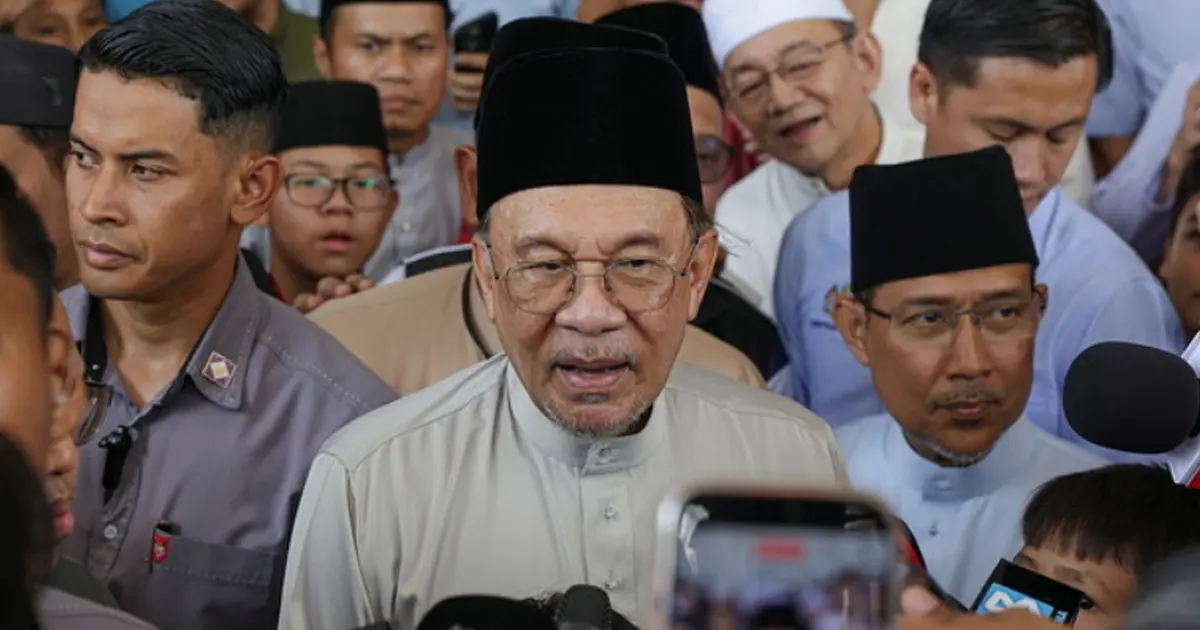
Prime Minister Anwar Ibrahim has moved to allay transparency concerns by asserting that the Royal Commission of Inquiry report examining Tabung Haji operations was released to the public without any alterations or suppression of findings. His statement represents an important moment of clarification on a matter that has attracted considerable scrutiny given the scale of controversy surrounding Malaysia's pilgrimage fund management.
The Tabung Haji investigation has commanded significant public attention across the region, as the institution manages substantial financial resources contributed by Malaysian Muslims preparing for the hajj pilgrimage. The RCI's mandate was to examine administrative practices, financial management, and governance structures within the organisation, following mounting concerns about operational irregularities and accountability gaps that had surfaced in preceding years.
Anwar's assertion that no editorial revisions were imposed on the final report carries implications for Malaysia's institutional accountability framework. The confirmation suggests that despite the political sensitivities typically surrounding such investigations—particularly those touching on religious institutions and senior officials—the government proceeded without filtering the RCI's conclusions. This approach contrasts with historical patterns in Malaysia where sensitive institutional reports have occasionally undergone modifications before public release.
The publication of an unredacted RCI report also reflects shifting expectations about governance transparency in post-2018 Malaysia. Civil society organisations and media practitioners have consistently advocated for fuller disclosure of investigative findings, arguing that public understanding of institutional failures depends on complete access to evidence and conclusions. Anwar's confirmation thus responds to this broader democratic accountability discourse that has reshaped political conversation in the nation.
Tabung Haji itself remains a consequential institution within Malaysia's Islamic finance ecosystem. The organisation manages investments and savings for pilgrims, holding billions in ringgit across multiple asset classes. Any governance shortcomings identified by the RCI carry potential ramifications for the financial security of contributors and the integrity of Islamic institutional structures more broadly across Southeast Asia. The transparency surrounding the RCI's findings therefore extends beyond domestic Malaysian politics to regional confidence in Islamic financial institutions.
The nature of concerns that prompted the RCI establishment reflects long-standing questions about institutional oversight. Reports preceding the formal inquiry had highlighted management practices that departed from conventional corporate governance standards, investment decisions of questionable prudence, and accountability mechanisms that appeared insufficient to protect beneficiary interests. The RCI's investigative scope encompassed these varied dimensions of institutional functioning.
Anwar's statement also carries significance for broader patterns of institutional reform within the Malaysian government. His administration has positioned itself as committed to rectifying governance failures inherited from previous administrations, with Tabung Haji serving as one of several institutions subject to heightened scrutiny. The unfiltered publication of the RCI report demonstrates consistency with this stated reform agenda, though translating investigative findings into substantive institutional remediation remains a separate challenge requiring political will and regulatory action.
The full disclosure approach also facilitates informed public discussion about the RCI's specific recommendations and the government's intended responses. Citizens, analysts, and media observers can now evaluate findings directly rather than relying on partial summaries or official interpretations that might emphasise certain conclusions while downplaying others. This democratisation of information access strengthens the evidence base for public debate about Tabung Haji's future governance structure and operational reform.
The implications for Malaysian Islamic institutions extend beyond Tabung Haji alone. The treatment of this RCI report will likely influence expectations regarding transparency in investigations of other religiously significant organisations. If the unedited publication becomes an established precedent, it may establish new standards for institutional accountability across the Islamic institutional landscape in Malaysia and potentially influence practices in other Southeast Asian nations with substantial Muslim populations.
Moving forward, the challenge for the government centres on translating the RCI's findings into concrete remedial action. Publishing the report without censorship represents an initial step toward institutional accountability, but sustained reform requires implementation of recommended changes, establishment of enhanced oversight mechanisms, and sustained political commitment even when corrective measures prove politically complicated. The coming months will test whether the government's transparency regarding the investigation extends to equal transparency regarding reform implementation and outcomes measurement.
The confirmation of unedited publication also carries symbolic weight within Malaysia's broader governance conversation. It signals that no institution—however politically or religiously sensitive—lies beyond the scope of public scrutiny and transparent reporting. This principle, if consistently applied across government institutions, could represent meaningful progress toward the institutional accountability standards that democratic governance requires.

