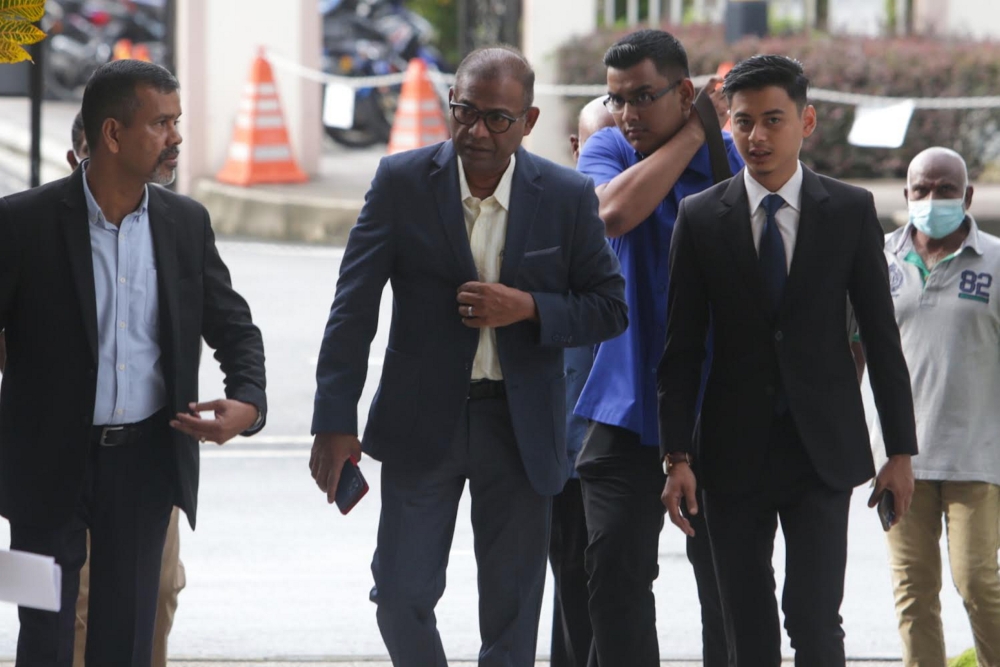
Social media speculation regarding potential involvement by a prominent former Baling Member of Parliament in the Tabung Haji scandal has been firmly rebutted by his family, who characterised online rumours of an impending Malaysian Anti-Corruption Commission arrest as baseless and lacking any factual foundation. Datuk Seri Abdul Azeez Abdul Rahim's son moved to publicly counter the circulating claims on Friday, emphasising that no such enforcement action had been taken or planned against his father.
The emergence of these unverified claims occurred against the backdrop of the ongoing Tabung Haji Royal Commission of Inquiry, which has been examining irregularities and governance failures at the Islamic pilgrimage savings fund. The commission, formally established to investigate alleged mismanagement and financial misconduct at the institution, has cast a wide investigative net across multiple levels of leadership and administration. Social media users had begun speculating about possible arrests of prominent political figures and former officials connected to Tabung Haji's troubled history.
Datuk Seri Abdul Azeez, who represented Baling as a Member of Parliament during an earlier political era, found himself inadvertently swept into these online rumours despite any concrete evidence linking him to the subject matter under investigation. The proliferation of such unsubstantiated claims underscores a broader challenge facing Malaysian public discourse, where viral social media narratives can rapidly gain traction independent of verification or established fact. His family's prompt denial represents a deliberate effort to counteract misinformation before it potentially causes reputational damage.
The Tabung Haji scandal represents one of Malaysia's more significant governance failures in recent years, with the Royal Commission tasked with uncovering the full extent of mismanagement at the fund that manages billions of ringgit in contributions from Malaysian Muslims preparing for the Hajj pilgrimage. The inquiry has revealed substantial irregularities in investment decisions, questionable loans to connected parties, and alleged breaches of fiduciary duty by board members and management. As the investigation has deepened, public attention has intensified regarding who might ultimately face accountability.
The distinction between actual enforcement actions and unsubstantiated social media speculation becomes increasingly critical in such high-profile investigations. Malaysia's legal system requires proper procedures for any arrest or charging decision by the MACC, involving documented evidence, investigation findings, and prosecutorial review. Rumours circulating on social media platforms often conflate speculation with reality, potentially prejudicing public opinion against individuals who have not been formally implicated or charged with any wrongdoing.
Datuk Seri Abdul Azeez's family statement serves as a reminder of the responsibility both public figures and ordinary citizens bear in verifying information before amplifying it across digital networks. The spread of unconfirmed reports about government enforcement actions can have significant personal and professional consequences for those targeted by such speculation, regardless of ultimate guilt or innocence. In an era where misinformation spreads with unprecedented speed, explicit denials and corrections from directly affected parties become necessary counterweights to unverified claims.
The Tabung Haji investigation itself remains a matter of legitimate public interest, as the mismanagement of funds entrusted by ordinary Malaysians for religious purposes raises fundamental questions about institutional accountability and governance standards. The Royal Commission's work represents an important mechanism for examining what went wrong and identifying the individuals and decisions responsible for the fund's difficulties. However, distinguishing between the legitimate inquiry process and internet-driven speculation requires vigilance from media practitioners and the general public.
Malaysian authorities have not publicly named Datuk Seri Abdul Azeez as a subject of the Tabung Haji investigation, nor has the MACC indicated any intention to arrest him in connection with the matter. The absence of any official statement from investigative agencies suggests that these social media claims lack credible sourcing. Such gaps between online conjecture and official action highlight the dangers of treating viral posts as equivalent to substantiated reporting.
For readers in Malaysia and the broader Southeast Asian region, this episode illustrates the persistent challenge of information literacy in digital environments where sensational claims often spread faster than careful fact-checking can manage. The Tabung Haji controversy itself reflects real governance failures that warrant serious examination and appropriate accountability, but pursuing those objectives requires distinguishing between credible evidence and speculative gossip. The family's rebuttal, while necessary for reputation management, also serves a broader public function by challenging unverified narratives before they become accepted as fact.

