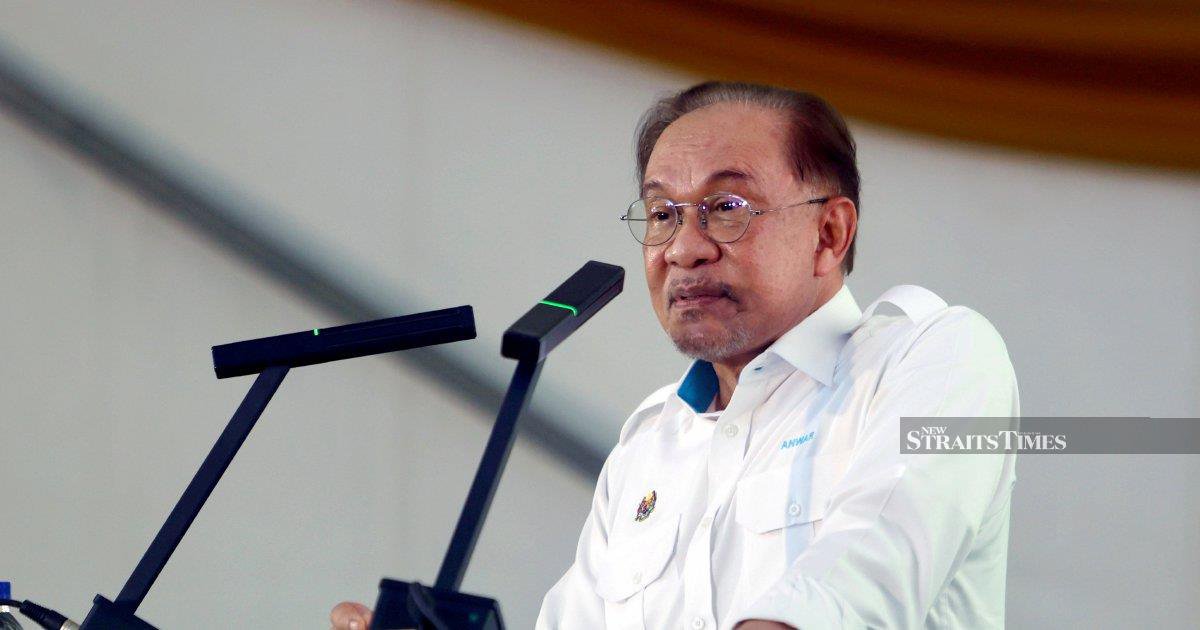
The Taiwan Chamber of Commerce & Industry in Malaysia has signalled significant apprehension regarding Prime Minister Datuk Seri Anwar Ibrahim's recent public statements characterizing Taiwan as part of China, raising questions about Malaysia's positioning on cross-strait relations and the potential fallout on critical technology investments.
The chamber's formal expression of "deep concern" reflects broader anxieties within Taiwan's business community operating in Southeast Asia about how such pronouncements might influence capital allocation decisions. Taiwan remains a pivotal source of semiconductor manufacturing expertise and investment across the region, with Malaysian operations playing an integral role in regional electronics supply chains. Any perceived shift in Malaysia's diplomatic stance could trigger reassessment of long-term commitments by Taiwan-based firms.
The semiconductor industry represents a cornerstone of Malaysia's technology sector ambitions. Over the past two decades, Malaysian manufacturing hubs have developed substantial capabilities in chip assembly, testing, and packaging, attracting billions in foreign direct investment. Taiwan-linked companies constitute a meaningful portion of this ecosystem, employing tens of thousands and contributing significantly to export revenues. Taiwan's semiconductor prowess—from foundry operations to advanced chip design—makes its investors particularly sensitive to the political climate in host countries.
Anwar Ibrahim's characterization echoes Beijing's longstanding position on Taiwan's status, though Malaysian governments have historically maintained carefully calibrated neutrality on cross-strait issues. This rhetorical alignment, even if presented as factual rather than political, signals a potential tilt that could unsettle investors accustomed to Malaysia's traditionally balanced approach. For Taiwan-based businesses evaluating expansion plans or renewal of commitments, such signals carry weight in risk assessments.
The semiconductor sector's strategic importance has intensified globally following recent supply chain disruptions and geopolitical tensions. Countries across Asia are actively courting chip manufacturing investment as part of broader supply chain diversification strategies. Vietnam, Thailand, and Singapore have all positioned themselves as alternatives to Taiwan for certain operations, creating competitive pressure on Malaysia. Any perception of political instability or shifting diplomatic alignments becomes a material factor in investment location decisions.
The chamber's warning underscores a delicate balancing act Malaysian policymakers must navigate. Malaysia has substantial economic interests with both Taiwan and China, from semiconductor manufacturing to trade relationships. Anwar's government has worked to strengthen ties with China while maintaining pragmatic relations with Taiwan as a major economic partner. Public statements, however, carry symbolic weight beyond their literal meaning and can be interpreted differently by different stakeholders.
Investment decisions by technology firms typically involve multi-year horizons and substantial capital outlays, making political risk assessment crucial. Companies consider factors including regulatory stability, intellectual property protections, and the broader investment climate. When political leaders make statements perceived as hostile toward investor home nations, it generates uncertainty that may delay or redirect capital deployment. Malaysia's attractiveness depends partly on its reputation as a stable, business-friendly destination that respects investor interests.
The technology sector's sensitivity to geopolitical positioning reflects its strategic implications. Semiconductor manufacturing capabilities relate directly to national security concerns for multiple countries, making investment flows highly political. Taiwan's government and private sector take keen interest in where advanced chip production occurs and what political sympathies exist in host nations. Malaysia's significance in global semiconductor supply chains means that investor sentiment here carries broader implications for regional technology competitiveness.
Historically, Malaysia has benefited from its non-aligned stance, positioning itself as a neutral ground where competitors can coexist. This approach has enabled the country to attract investment from multiple sources without forcing investors to choose sides. The chamber's concern suggests that recent statements threaten this carefully maintained equilibrium, potentially forcing Taiwan-based investors to reassess whether Malaysia remains a reliably neutral jurisdiction for their operations.
The broader context includes Malaysia's own technological aspirations. The government has prioritized semiconductor and electronics manufacturing as part of its high-technology manufacturing strategy, aiming to create high-value jobs and boost export revenues. Deterring Taiwan investment through perceived political hostility would directly contradict these economic objectives, potentially explaining why the chamber felt compelled to issue its warning—the stakes extend beyond individual companies to Malaysia's development trajectory.
Moving forward, how Malaysian officials respond to the chamber's concerns could signal the government's actual position on foreign investment and Taiwan relations. Whether Anwar's government clarifies its statements, reaffirms commitment to investor-friendly policies, or allows tension to persist will shape investor perceptions and potentially influence capital flows into Malaysia's critical technology sectors. The semiconductor industry's global significance means that such signals ripple far beyond Malaysia's borders, affecting perceptions of the country's role in Asia's technology ecosystem.

