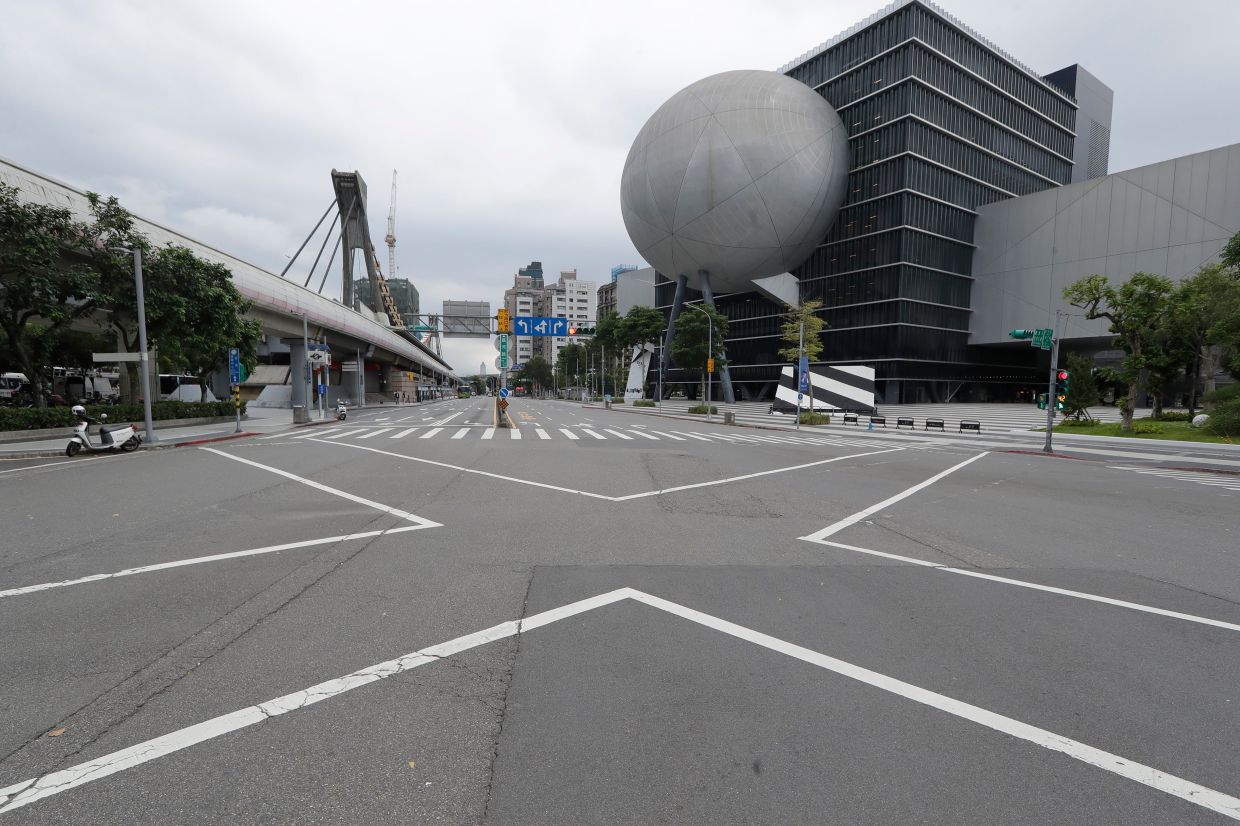
Taiwan's government orchestrated a significant disruption to daily life on August 13, deliberately throttling mobile internet speeds across Taipei and six other cities and localities as the centrepiece of the latest phase of its Han Kuang annual military exercises. The island's telecommunications operators reduced mobile web traffic to just 256 Kbps—a speed not seen in most developed nations since the early 2000s—rendering video streaming, social media browsing, and most online services virtually unusable. Residents accustomed to high-speed 5G connectivity found themselves able to send only text messages, a stark reminder of how modern infrastructure becomes a vulnerability in conflict scenarios.
The Han Kuang drills, which commenced the previous week, have evolved significantly from their traditional format. Taiwan's military has progressively elevated the complexity and disruptiveness of these exercises, moving away from low-impact simulations that barely registered with the public. In prior years, urban resilience drills—such as air raid exercises in Taipei metro stations—proceeded quietly without meaningfully disrupting passenger flow or drawing public attention. This year's approach represents a deliberate philosophical shift: authorities have decided that genuine preparedness requires tangible inconvenience, integration of civilian populations, and coordination with local government bodies to create realistic stress-testing conditions.
President Lai Ching-te publicly acknowledged the disruption and sought public forbearance, framing the exercise as a necessary measure rather than an arbitrary disruption. His statement, "We ask for your understanding and support, as this is a necessary drill," carried an implicit recognition that Taiwan faces circumstances requiring its population to embrace temporary hardship for national security purposes. The presidential intervention underscored how seriously the administration treats these exercises and signalled to the public that such disruptions may become periodic occurrences as the island strengthens its civil defence posture.
The Thursday afternoon scene at a Taipei metro station illustrated the new approach's operational reality. Station gates were deliberately sealed as part of simulated air raid procedures, trapping commuters inside for approximately 30 minutes. The staged confinement tested both the infrastructure's capacity to manage crowds and civilians' psychological response to emergency lockdowns. Allen Hsieh, a tourist from Hong Kong who experienced the 30-minute detention, offered an external perspective on Taiwan's preparations. Rather than viewing the exercise as problematic, Hsieh expressed appreciation for its authenticity and acknowledged Taiwan's security imperatives, noting that he had anticipated only receiving text messages but found the simulation considerably more convincing and comprehensive than expected.
The broadened integration of civilian participation marks a substantial departure from previous Han Kuang iterations. By deliberately inconveniencing urban populations through internet throttling and metro station closures, Taiwan's leadership is attempting to normalize the concept of emergency preparedness among its citizens while simultaneously gathering real-world data on how populations respond to service disruptions and mobility restrictions. This pedagogical dimension—teaching civilians to expect and adapt to wartime conditions—reflects a hardening of Taiwan's strategic posture and a recognition that deterrence increasingly depends on demonstrated societal resilience.
Hospital preparedness formed another critical component of the drills, with medical facilities simulating the relocation of critical operations underground. This scenario addresses one of the most pressing vulnerability categories in Taiwan's civil defence architecture: maintaining healthcare continuity during potential military operations. By staging these relocations during peacetime exercises, hospital administrators gain practical experience in operational logistics while identifying bottlenecks and resource gaps that might prove fatal during an actual emergency. President Lai's inspection of these hospital operations underscored the administration's commitment to comprehensive national preparedness beyond military and communications infrastructure.
For Malaysia and other Southeast Asian nations observing Taiwan's evolving civil defence strategy, the exercises offer instructive lessons about resilience building in an era of heightened geopolitical tension. Taiwan's willingness to impose temporary hardship on its civilian population demonstrates a commitment to operational authenticity that many nations' emergency preparedness programmes lack. The internet throttling experiment, in particular, reveals assumptions about how modern societies might function under degraded infrastructure conditions—assumptions relevant to any nation concerned with infrastructure vulnerability and civil disruption scenarios.
The Han Kuang drills reflect Taiwan's calculation that the window for building genuine civilian preparedness may be narrowing. By intensifying the realism, scale, and disruptiveness of annual exercises, the Taipei government is attempting to inoculate its population against shock while simultaneously generating valuable operational intelligence about response capabilities. The public acceptance demonstrated by figures like Hsieh suggests that carefully framed security messaging can overcome resistance to inconvenient drills, particularly when authorities acknowledge the disruption and explicitly connect exercises to tangible security threats.
Taiwan's approach also implicitly challenges assumptions about how technologically advanced societies respond to service degradation. The deliberate internet slowdown forces examination of alternative communication methods and demonstrates that text-based systems remain functional even under extreme bandwidth constraints. For a society whose economic and social functioning depends heavily on high-speed digital infrastructure, this recognition carries strategic significance in scenarios where adversaries might target connectivity as a disruptive mechanism.
As geopolitical tensions in the Taiwan Strait continue to evolve, these increasingly realistic drills represent institutional learning by Taiwan's government. The decision to make Han Kuang exercises noticeably disruptive rather than negligibly impactful reflects confidence that the public understands the necessity of preparedness. Whether through internet throttling, metro station closures, or hospital relocation simulations, Taiwan is systematically building civilian familiarity with emergency conditions while testing governmental and infrastructure responses to realistic stress scenarios. The exercises ultimately serve dual purposes: demonstrating deterrent resolve to potential adversaries while building domestic consensus around sacrifice for collective security.

