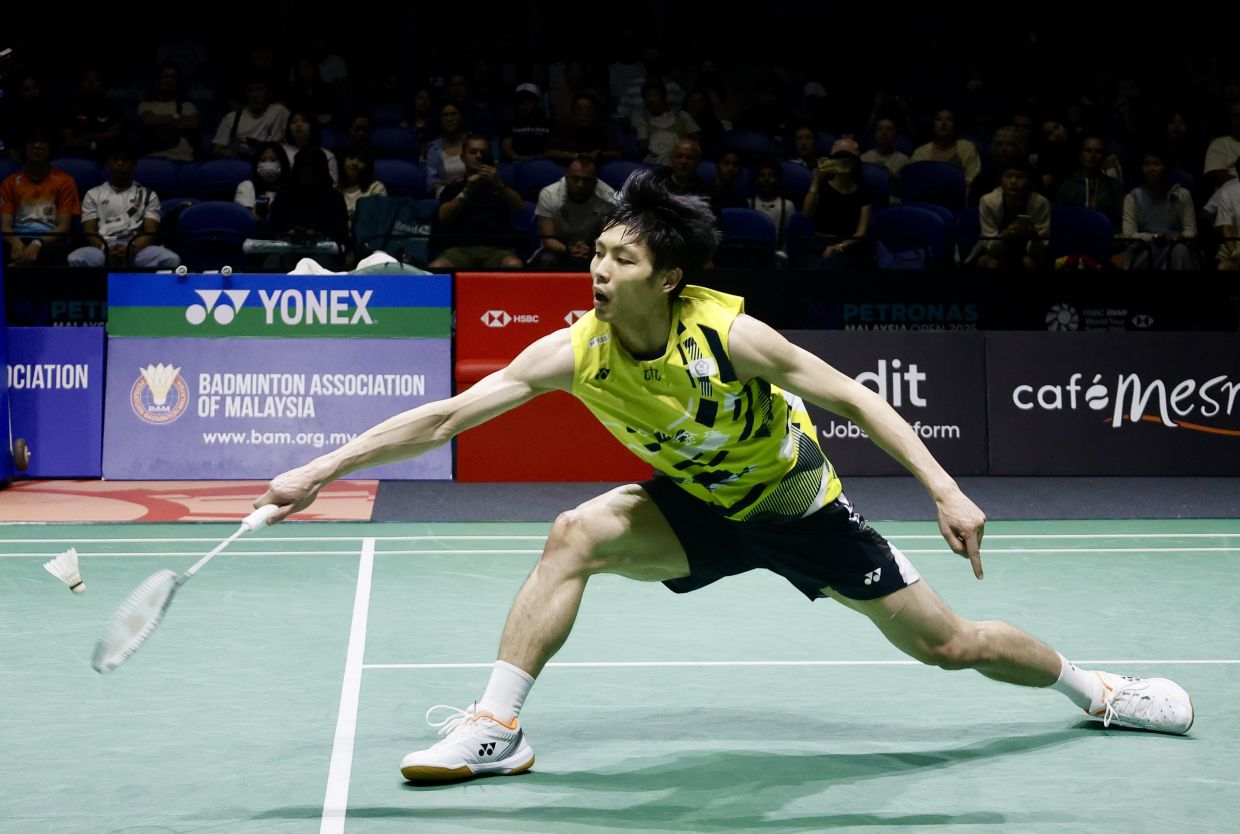
Chou Tien-chen's victory at the China Open marks a remarkable milestone in professional badminton, proving that competitive excellence need not fade with advancing years. The 36-year-old Taiwanese shuttler secured his maiden Super 1000 title by overcoming France's Toma Junior Popov in a hard-fought 64-minute final at the Changzhou Olympic Sports Centre, winning 21-15, 7-21, 21-13. The triumph carries added significance as Taiwan's first men's singles championship at this prestigious tournament since Fung Permadi's dominant era in 1996, ending a three-decade championship drought that had tested the patience of Taiwan's badminton community.
Tien-chen's path to this achievement underscores the resilience required at the veteran stage of an athletic career. Just one week prior to his Changzhou triumph, he had endured the sting of an early exit at the Japan Open, falling to Ireland's Nhat Nguyen in the opening round. Rather than allowing such disappointment to derail his momentum, Tien-chen and his support team conducted a methodical review of their preparation strategies, identifying specific areas where marginal gains could be extracted. This capacity to decompose failure into actionable insights, coupled with the discipline to implement corrections within a compressed timeframe, distinguishes champions who sustain relevance across decades from those whose performance trajectories decline more steeply.
The significance of Tien-chen's accomplishment extends beyond mere tournament victory. At 36 years old, he now holds the distinction of being the oldest player to capture a BWF World Tour Super 1000 title, a record that reshapes conventional assumptions about athletic longevity in professional badminton. His opponent Popov, a decade younger at 26, represented the physicality and agility typically associated with championship contention at this elite level. Yet Tien-chen's victory demonstrates that superior court positioning, accumulated tactical knowledge, and psychological fortitude can offset natural advantages in youth and explosive power.
Tien-chen's own reflections on his achievement reveal a mature perspective on the demands of elite sport at his career stage. He candidly acknowledged his astonishment at reaching the final itself, much less hoisting the trophy, noting that remaining competitive at his age requires extraordinary dedication to recovery and maintenance protocols. His recognition of physiotherapist Victoria Kao's contributions highlights an often-overlooked dimension of modern badminton: the extensive support infrastructure required to keep aging athletes functioning at peak levels. The combination of daily training, specialized nutrition programming, physiotherapy, and recovery work represents a commitment that transcends mere desire to compete.
The mechanics of Tien-chen's victory reveal interesting patterns about his playing style and his opponent's strengths. The opening game established Tien-chen's dominance, as he seized control 21-15 against Popov's determined resistance. The Frenchman responded emphatically in the second set, suggesting that Popov's explosive athleticism could disrupt Tien-chen's rhythm when fully activated, resulting in a decisive 7-21 reversal. This swinging momentum underscored the vulnerability that even experienced champions face when younger athletes unlock their most dangerous form. However, Tien-chen regrouped decisively in the decisive third set, reasserting control through the final 21-13 scoreline, suggesting that composure under pressure and resistance to psychological wavering were decisive factors.
From a Southeast Asian badminton perspective, Tien-chen's breakthrough carries broader implications for the sport's competitive landscape. Taiwan's extended drought without a men's singles China Open title had reflected the intensity of competition from neighbouring badminton powerhouses, particularly China and Indonesia. The resurgence of Taiwan's medal-winning capacity at such a prestigious Super 1000 event suggests that the talent pipeline remains robust, even as generational transitions occur. For Malaysian badminton observers, Tien-chen's success provides both a competitive reminder and an inspiring narrative about the possibilities that persist when systematic dedication meets strategic planning.
The mental dimension of Tien-chen's achievement deserves particular emphasis. His stated philosophy of maintaining positive mindset even in the aftermath of defeat speaks to a psychological resilience that younger athletes often must acquire through painful experience. Tien-chen's insistence that returning to the training court the day after disappointing results represents the non-negotiable foundation of sustained excellence articulates a principle that transcends badminton. This perspective likely contributed significantly to his capacity to extract learning from his Japan Open setback and translate that learning into decisive performance improvements within a seven-day window.
Tien-chen's triumph also raises interesting questions about the trajectory of professional badminton careers in an era of enhanced medical knowledge, sports science, and recovery technology. Previous generations of shuttlers typically experienced sharper performance declines in their mid-thirties, whereas Tien-chen's elevation to Super 1000 champion status at 36 suggests that the ceiling on competitive longevity may have shifted upward. His ability to sustain the explosive movements and split-second court coverage demanded by modern badminton, while managing the cumulative wear on joints and connective tissue, reflects both his individual genetic predisposition and the sophistication of contemporary athlete management.
The broader competitive context at the China Open also merits examination. The tournament's men's doubles results witnessed an Indonesian triumph, with Fajar Alfian and Shohibul Fikri defeating Korea's Kim Won-ho and Seo Seung-jae in a tightly contested final. These results reinforce the multi-centre nature of elite badminton competitiveness, with Taiwan, Indonesia, Korea, China, and Japan all maintaining championship-calibre players across multiple categories. Tien-chen's breakthrough insertion into this competitive hierarchy at an age when most athletes face declining relevance thus represents both a personal achievement and a statement about Taiwan's continued capacity to nurture championship-level talent.
Looking forward, Tien-chen's China Open victory may represent either a final-career highlight or the beginning of an extended period of sustained competitive excellence at the Super 1000 level. The answer will depend partly on his physical capacity to absorb the accumulated stress of international competition and partly on his psychological commitment to the rigorous preparation regimens that have carried him this far. What seems certain is that his achievement has rewritten prevailing narratives about age-related performance decline in professional badminton, offering a template for how sustained excellence can be pursued even in the later stages of an athletic career.

